Cape Town Cycle Tour 2026 (a.k.a. „Argus“): Visitor Guide to Riding the Cape Peninsula
November 21, 2025


Cape Town • Road Cycling • Visitor Guide
Cape Town Cycle Tour 2026: Visitor Guide to Riding the Cape Peninsula
Once a year, Cape Town closes a full loop of roads around the Cape Peninsula and hands them over to bicycles. The Cape Town Cycle Tour is a 109 km mass-participation ride that sends tens of thousands of cyclists along a traffic-free route past Table Mountain, False Bay, Cape Point and the Atlantic Seaboard. It’s both a bucket-list race and a window into what cycling in Cape Town is really like the rest of the year.
Quick take: The Cape Town Cycle Tour is the world’s largest individually timed cycle race, with around 25–35 000 riders on fully or mostly closed roads. On event day, it’s one of the safest and most spectacular ways to see the Cape Peninsula by bike. The rest of the year, Cape Town offers superb riding—but road risk and crime are both higher than in most Western European cities, so you need to choose routes, times and riding partners carefully.
Event date: 8 Mar 2026 Route: 109 km Cape Peninsula loop Start: Grand Parade, CBD Finish: Green Point, near stadium Field: ~25–35k riders Best for: fit beginners to seasoned cyclists
Always confirm dates, route details, cut-offs and safety rules on the official Cape Town Cycle Tour channels before you book flights, ship a bike or take leave.
What the Cape Town Cycle Tour is (and isn’t)
The Cape Town Cycle Tour is a 109 km road event that loops around the Cape Peninsula, starting in central Cape Town, heading through the Southern Suburbs to False Bay, climbing past Cape Point and Scarborough, and returning via Chapman’s Peak Drive, Hout Bay, Camps Bay and Sea Point. It grew out of a 1978 protest ride for safer cycling and has since become a flagship charity event and celebration of South African cycling culture.
It is not a technical mountain bike race or a criterium; think of it as a rolling road race or sportive, with everything from elite racers and hand cyclists to weekend warriors on tandems. The roads are closed or heavily controlled for the event, with marshals, medical teams and mechanical support along the way.
For international visitors, the Tour is often the anchor of a longer trip: you fly in, ride the event on closed roads, then spend a few more days exploring Cape Town by bike—this time sharing space with normal traffic and, in some places, very real crime and inequality. Understanding that difference is key to staying safe.
Cape Town Cycle Tour 2026 at a glance
The 2026 Cape Town Cycle Tour 109 km event takes place on Sunday, 8 March 2026. Entries are tiered by category (local, PPA member, African and international) and the route is the classic clockwise loop of the Cape Peninsula, starting at the Grand Parade and finishing near the DHL Stadium in Green Point.
Expect fully or mostly closed roads, several start groups seeded by ability, generous cut-offs, hydration and food stations, on-route mechanics and substantial medical support at key points and the finish village.
| Item | Details (2026) |
|---|---|
| Date & place | Sunday, 8 March 2026 • Western Cape, South Africa • Start in central Cape Town; finish in Green Point. |
| Main distances | 109 km Cape Peninsula loop (flagship event), plus a shorter 42 km route starting from the same precinct. |
| Route flavour | Rolling, hilly route with several main climbs (Wynberg / Edinburgh Drive, Smitswinkel, Chapman’s Peak and Suikerbossie) and long fast coastal sections. Expect well over 1 000 m of climbing in total. |
| Field size | Typically 25–35 000 riders across all categories, making it the world’s largest individually timed cycle race. |
| Road closures & support | Extensive road closures or managed contra-flow for motor traffic, with marshals, traffic officers, medical teams and bike mechanics along the route and at the finish village. |
| Cut-offs & pacing | Time cut-offs at several points on the route; if you miss them, you and your bike are transported by sweep bus to the finish. This keeps the route clear and manageable for services. |
| Entry fees (guide) | Tiered by category; for 2026 the 109 km general South African entry fee is in the mid-hundreds of rand, with a higher fee for international riders and discounts for local cycling-association members. Always check current pricing. |
| Who it suits | Cyclists able to ride 100 km comfortably with hills. Strong beginners can complete it with training; experienced riders can race it hard. |
| Weather profile | Late summer in Cape Town: likely warm to hot, with possible strong south-easterly winds and cool, fast conditions on the Atlantic side. |
- Start times and seeding are based on previous results or self-seeding bands—faster riders start earlier.
- There are specific grids for tandems, charity groups and various racing categories.
- Read the latest event guide for exact cut-offs, start procedures and what’s allowed in each group (e.g. ebikes, time-trial bikes).
Is it safe to ride here? Big-picture risk check
Before getting into routes and experiences, it’s worth zooming out. South Africa has a significantly higher overall road-death rate than most of Europe. Recent estimates put South Africa at around 22 deaths per 100 000 people from road crashes, compared with roughly 4.6 per 100 000 across the EU in 2022. In other words, on a population basis, South African roads are about five times more deadly overall than the EU average.
Within those crashes, vulnerable road users carry a large share. National safety reports show that, in late 2024, about 43% of road deaths were pedestrians, 30% passengers, 27% drivers and only around 1% cyclists. That low cyclist percentage reflects a mix of factors: far fewer people commute by bike than in European cities, some under-reporting, and the fact that walking along or across fast roads is often more common—and more dangerous— than cycling them.
For a visiting cyclist, this boils down to a few key realities:
On event day
- Roads are closed or tightly managed for motor traffic.
- There are medics, marshals and mechanics all along the route.
- The main risks are bunch crashes, descents, heat and wind—not crime or traffic coming from behind.
On normal days
- You share space with fast, often impatient drivers, especially on arterial roads.
- Separated bike lanes exist but are patchy; much of the riding is “on the paint” or shoulder.
- Crime is a real factor in some areas: some cyclists have been robbed of bikes and phones on quieter roads and paths.
Compared with Europe
- Infrastructure is closer to many North American or southern European cities than to Amsterdam or Copenhagen.
- You generally treat road cycling here as an adventure sport, not everyday urban transport.
- With route choice, group riding and local advice, thousands of people ride safely every week—but the margin for error is smaller.
Where to ride: event route, training loops & family rides
The Cycle Tour route itself is the headline ride, but Cape Town has a web of scenic training loops and gentler routes that can turn your trip into a week-long cycling holiday—provided you pick carefully.
On event day: the full Cape Peninsula loop
The 109 km route follows a classic clockwise loop:
- City start: From the Grand Parade, you roll past the Castle, up Nelson Mandela Boulevard and through Hospital Bend.
- Southern Suburbs & False Bay: Past the University of Cape Town and Newlands Forest, up Edinburgh Drive, then a fast run to Muizenberg, Kalk Bay, Fish Hoek and Simon’s Town.
- Cape Point side: A long drag up to Smitswinkel, then rolling coastal kilometres through Misty Cliffs and Scarborough.
- Atlantic side: Flat but often windy riding back to Fish Hoek, then the Chapman’s Peak / Suikerbossie double feature before the run through Camps Bay and Sea Point to the finish.
The experience is unique: cheering crowds on climbs, oceans on both sides of the peninsula in one day, and the rare feeling of having entire stretches of world-class coastal road reserved for bicycles.
Before & after the Tour: classic training and scenic road loops
If you want to ride in the days around the event, these are the routes most visiting riders stick to—ideally with a local club, guide or at least a small group:
- Atlantic Seaboard & Camps Bay loops — From the V&A Waterfront or Sea Point out to Camps Bay, Bakoven and sometimes Llandudno or Hout Bay. Beautiful coastal views, busy enough to feel watched, with some shoulder or bus lane space. Best ridden in daylight, avoiding peak commuter traffic where possible.
- Chapman’s Peak Drive (“Chappies”) — A toll road carved into sea cliffs between Hout Bay and Noordhoek. Iconic, with controlled access and relatively low speeds, but narrow and exposed to wind. Go in good light, obey marshals and traffic rules, and watch for gusts in crosswinds.
- False Bay / Southern Peninsula — Muizenberg – Kalk Bay – Fish Hoek – Simon’s Town – Smitswinkel. Narrow in places but very scenic, with lots of other cyclists at popular times. Avoid dawn/dusk rides alone; mid-morning weekends are busiest.
- West Coast cycle lane — A physically separated or painted cycle lane runs from central Cape Town towards Table View and Blouberg, roughly paralleling the MyCiTi bus corridor. This is one of the more “European-feeling” corridors: wide, straight and popular with road cyclists and commuters when the wind behaves.
- Winelands and inland passes (with a car shuttle) — Many riders combine a day trip by car with loops around Stellenbosch, the Franschhoek Pass or Durbanville Hills. These are superb but more rural: ride in groups, in daylight, and treat traffic and shoulders with respect.
Family-friendly & low-stress rides
- Sea Point Promenade & Mouille Point — Short relaxed rides with rental bikes or kids’ bikes, mostly off-road or on slow streets, with constant foot traffic and views of the Atlantic.
- Greenbelts and parks (Newlands, Constantia, Tokai) — Gentle off-road paths and green spaces, often shared with dog-walkers and runners. Check local signage; some sections require permits.
- Guided city rides — Several operators run guided road or e-bike tours through central Cape Town, the Bo-Kaap and waterfront. These stick to safer streets and times of day and are ideal if you’re nervous about navigating alone.
When to ride: seasons, wind & daylight
Cape Town’s riding season is shaped by wind and light as much as by temperature. Getting your timing right can make your ride feel like a dreamy Mediterranean loop—or like a survival exercise.
Season by season
- Late summer (Feb–Apr): Warm to hot, long days, generally dry. This is Cycle Tour season. Strong south-easterly winds are common; in extreme years, the event has shortened or even cancelled the route because of gale-force gusts.
- Autumn & spring (May, Sept–Nov): Cooler, more mixed weather. Great for training if you’re flexible, but expect some rain and cold fronts.
- Winter (Jun–Aug): Shorter days, regular rain and occasional storms. Locals still ride, but you need good lights, warm layers and a plan for wet roads and lower visibility.
Time of day
Most local road riders go out early in the morning, partly to beat traffic and heat. For visitors, there’s a balance: you want daylight, other cyclists around and enough passing cars to feel visible—but not the isolation of a deserted industrial road or the chaos of peak-hour traffic.
- Best training window: From shortly after sunrise until late morning (for example, roughly 07:00–10:30 in March).
- Avoid: Pre-dawn solo rides, late-evening rides and quiet backroads after dark. National data show that the majority of fatal crashes of all kinds happen in the late-afternoon to evening window.
- Heat & hydration: On hot days, tempo efforts in the middle of the day can be punishing; plan shade and water stops, and adjust pace expectations.
Safety basics: gear, bunch riding & traffic
Good kit and habits won’t remove all risk, but they dramatically improve your odds of a smooth ride—especially in a mass event with thousands of riders moving at different speeds.
Non-negotiable gear
- Helmet: Worn correctly, fastened, and in good condition; it’s mandatory for the Cycle Tour and standard on local rides.
- Lights front and rear: Even in daylight, small flashing lights make you much more visible in mixed traffic and coastal mist.
- High-visibility clothing: Bright jerseys or gilets, reflective details and a contrasting helmet colour all help.
- Spare tubes & tools: At least one tube, tyre levers, pump or CO₂, and a multi-tool. On race day there’s mechanical support, but you shouldn’t rely on it for every puncture.
- Hydration & fuel: Two bottles on the bike, plus snacks or gels. Drink regularly; the combination of wind and dry air can mask how much you’re sweating.
- ID & emergency info: A card or bracelet with your details, allergies and emergency contact, plus a charged phone.
Riding in big bunches (especially on race day)
- Hold your line, don’t overlap wheels, and avoid sudden braking.
- Signal hazards (potholes, bottles, narrowing road) with clear hand signals and short verbal calls.
- Keep both hands near the brakes on descents and exposed sections like Chapman’s Peak.
- If you’re not used to riding elbow-to-elbow, seed yourself in a slightly slower group—you’ll have more space and a better day.
Traffic etiquette & local rules of thumb
- Ride predictably: No sudden swerves onto pavements; hold a consistent position, ideally a metre out from the gutter.
- Single file by default: On busy roads or narrow shoulders, ride single file; ride two abreast only where it’s clearly safe.
- Respect red lights and stop signs: It helps drivers take cyclists seriously and reduces conflict.
- Assume drivers haven’t seen you: Make eye contact where possible; be generous, but don’t trust that you have priority.
- Left-hand traffic: South Africa drives on the left. If you’re from mainland Europe, mentally rehearse looking right-then-left at junctions before your first ride.
Crime, routes to avoid & lowering your risk
Alongside road safety, you need to think about personal security. Cape Town has had a number of incidents where cyclists were robbed of bicycles, phones and valuables, especially on quieter roads and bike paths near high-crime areas. This doesn’t mean you shouldn’t ride—it means you should ride like a local.
General principles
- Don’t ride isolated routes alone: Industrial areas, deserted bike paths and peri-urban backroads are best tackled in a sizeable group or not at all.
- Stick to popular training corridors in daylight: Routes with constant passing cars, joggers and other cyclists are usually safer than empty roads.
- Keep valuables invisible: Phone in a zipped pocket, not on the bars; minimal jewellery; no flashy watch glinting in the sun.
- Know when to let go: If you are confronted by armed robbers, don’t try to fight for your bike. Property is replaceable.
- Share plans: Tell someone your route and ETA, and use live location sharing if you’re riding in small groups.
Areas locals treat with extra caution
(Crime patterns change; this is indicative, not a definitive list. Always ask up-to-date advice from local riders.)
- Certain industrial corridors and underpasses near the city fringe, where there have been past incidents of ambushes on cyclists.
- Sections of freeway-adjacent service roads and paths near major townships or informal settlements, especially along the N2 and similar corridors.
- Very quiet farm roads in the outer suburbs at dawn or dusk, when there are few other road users around.
Use local structures
- Join a group ride: Many bike shops and clubs host regular morning rides on the Atlantic Seaboard, West Coast cycle lane or peninsula loop. Joining them is the simplest way to see safe routes and learn the local rhythm.
- Check safe-cycling resources: Local advocacy groups publish guidelines and, in some cases, maps of crash and crime “hotspots”. Use them like a weather report before choosing where to ride.
- Use guided rides for exploratory days: If you want to see a new area and aren’t sure about security, book a guide or tour rather than winging it solo.
How it compares to cycling in Europe
If you’re used to riding in the Netherlands, Denmark, Germany or other cycling-forward countries, Cape Town feels very different. It’s not “worse” in every way—scenery, winter sunshine and event organisation can be world-class—but the background risk and the mental load are higher.
| Aspect | Cape Town & Cycle Tour | Typical cycling city in Europe |
|---|---|---|
| Road-death rate | High national road-death rate (~22 per 100 000 people); pedestrians and other vulnerable road users make up a large share. | Lower road-death rate (EU average ~4–5 per 100 000), with extensive safety programmes for vulnerable users. |
| Everyday infrastructure | Patchy bike lanes; some excellent corridors (e.g. West Coast route) but many roads have no dedicated space. | In leading cities, dense networks of separated cycle tracks and traffic-calmed streets are common. |
| Driver expectations | Drivers are aware of cyclists on popular routes but may pass closer and faster; you ride more defensively. | In cycling-heavy countries, drivers generally expect and accommodate large numbers of everyday cyclists. |
| Crime risk on rides | Robbery is a real, if localised, risk on some roads and paths; route choice and group size matter. | Theft of parked bikes is common in many cities, but armed robbery on open roads is rarer. |
| Event experience | Cycle Tour offers a closed-road, festival-like day that feels comparable to major European sportives. | Major sportives (e.g. in France, Italy, UK) are similarly well-organised, but scenery differs: mountains vs. sea-cliff coastal roads. |
| Mental load | You constantly manage traffic, wind, surface, crime context and weather—a bit like riding in a big US city with added mountains. | In the best European cycling cities, everyday riding often feels routine and low-stress. |
The bottom line: if you treat Cape Town road riding like a low-risk version of Amsterdam, you’ll be frustrated and exposed. If you treat it like a beautiful but serious adventure sport, prepare well and take local advice, it can be one of the most memorable cycling destinations you visit.
Trip planning for visiting riders
Many visitors build a whole holiday around the Cape Town Cycle Tour: arrive a few days early to shake out jet lag, ride the event, then enjoy a mix of wine country, beaches and gentler rides afterwards. A bit of planning goes a long way.
Where to stay
- City Bowl & Gardens: Easy access to the Grand Parade start area, bike shops, restaurants and the V&A Waterfront.
- Green Point / Sea Point: Ideal if you want to be near the finish village and the Atlantic Seaboard training loops.
- Southern Suburbs: Quieter, leafier neighbourhoods with easier access to the peninsula, but expect a drive or ride to the start.
Bringing or renting a bike
- Bring your own if you’re racing: Airlines and local bike-transport partners handle boxed bikes routinely; use a proper bike bag and allow time for reassembly and a shakedown ride.
- Rent if you’re riding for the experience: Several reputable shops rent road and e-road bikes set up for the Cycle Tour. Reserve early for March.
- Check insurance: Make sure your travel and bike insurance explicitly cover organised events and high-value bicycles.
Admin & logistics
- Entries & seeding: International entries open well in advance; you’ll need to collect your number and timing chip at the Cycle Tour Expo in the days before the event.
- Transport on race day: Plan how you’ll get yourself (and your supporters) to the start and back from the finish. The official website outlines road closures and recommended routes.
- Post-race: There’s a secure bike park at the finish village; bring a light jacket or top in your tog bag to avoid chilling in the breeze after the ride.
After the Tour
Many riders spend a day or two decompressing before flying home: coffee rides on the promenade, a wine-tasting day in the Cape Winelands, or a short hike on Table Mountain. It’s also a good time to reflect, download photos, check your bike for any damage and let the body catch up.
Quick checklist table
| Area | Why it matters | Better approach | Common mistakes |
|---|---|---|---|
| Understanding risk | South African roads are statistically more dangerous than those in most of Europe. | Treat road riding as an adventure sport; plan routes, gear and partners with that in mind. | Assuming Cape Town will “feel like home” if you’re used to Dutch or Danish cycling culture. |
| Choosing routes | Some roads and paths are high-risk for crashes or crime. | Stick to known training corridors and guided routes; ask locals for current advice. | Letting Strava heatmaps or maps alone dictate your route without local context. |
| Time of day | Visibility, traffic density and crime risk all vary by hour. | Ride after sunrise and finish before late afternoon; avoid dark, isolated times and places. | Pre-dawn solo rides through industrial or peri-urban areas because “that’s when it’s quiet”. |
| Group vs. solo | Groups are more visible to traffic and less attractive to opportunistic criminals. | Join local club rides or go out with at least one experienced rider. | Exploring unfamiliar backroads alone on a high-end bike with your phone on the bars. |
| Wind & weather | Strong winds and heat can quickly turn a ride into a safety issue. | Check forecasts, carry extra water, and adjust your plan if gale-force winds or heatwaves loom. | Ignoring wind warnings because “it’s only 100 km” and you’ve done bigger rides in Europe. |
| Race-day behaviour | Thousands of riders in a bunch magnify small mistakes. | Seed yourself realistically, ride predictably, and respect other riders’ skill levels and space. | Starting in a faster group than you can handle; half-wheeling, swerving or sudden braking. |
| Insurance & paperwork | Medical care and bike replacement are expensive if something goes wrong. | Check that your travel and health insurance cover organised events and high-value bikes. | Assuming generic travel insurance automatically covers racing and expensive equipment. |
Use this table as a pre-trip sanity check. If you can honestly say “yes, I’ve thought about all of these”, you’re already riding more safely than many visitors.
Map: Cape Town Cycle Tour route (schematic)
The map below shows a simplified line approximating the 109 km Cape Town Cycle Tour loop around the Cape Peninsula: starting in the city centre, heading along False Bay to near Cape Point, then back via Chapman’s Peak and the Atlantic Seaboard. It’s for orientation only—always follow the official route maps, signage and GPS files from the event organisers when you ride.
Polyline and marker positions are approximate, not a GPS track. Check the official Cape Town Cycle Tour route map and rider briefing for precise navigation, cut-offs and safety notes.
Sources & official links
- Cape Town Cycle Tour official site — event dates, entry fees, 109 km route description, cut-offs and rider briefing.
- World Bank / WHO road safety data — comparative figures for South Africa and global road-death rates.
- European Commission road safety statistics — EU average road-fatality rates per million inhabitants.
- South African Road Traffic Management Corporation — “State of Road Safety” reports with breakdowns by road user group.
- Local safe-cycling campaigns & advocacy groups — guidance on passing-distance rules, training routes and hotspots.
- Local news and community cycling forums — context on recent crime incidents affecting cyclists and how routes have adapted.
Use these sources as a starting point, but always cross-check with the latest information from the Cape Town Cycle Tour Trust, local cycling clubs and current safety advisories before planning rides.
More in Annual & Seasonal Events
- Western Cape Wildfires: Worst Season in a Decade Update 26 January 2026
- New Developments: Western Cape Wildfires Update 22 January 2026
- Wildfires in Western Cape - What is the situation 19 January 2026?
- Western Cape Wildfires Update: 15 January 2026
- Why Is It Burning in Cape Town?
- AfrikaBurn 2026: Building a Different Kind of Society in the Tankwa Desert
You May Also Like
Western Cape Wildfires: Worst Season in a Decade Update 26 January 2026
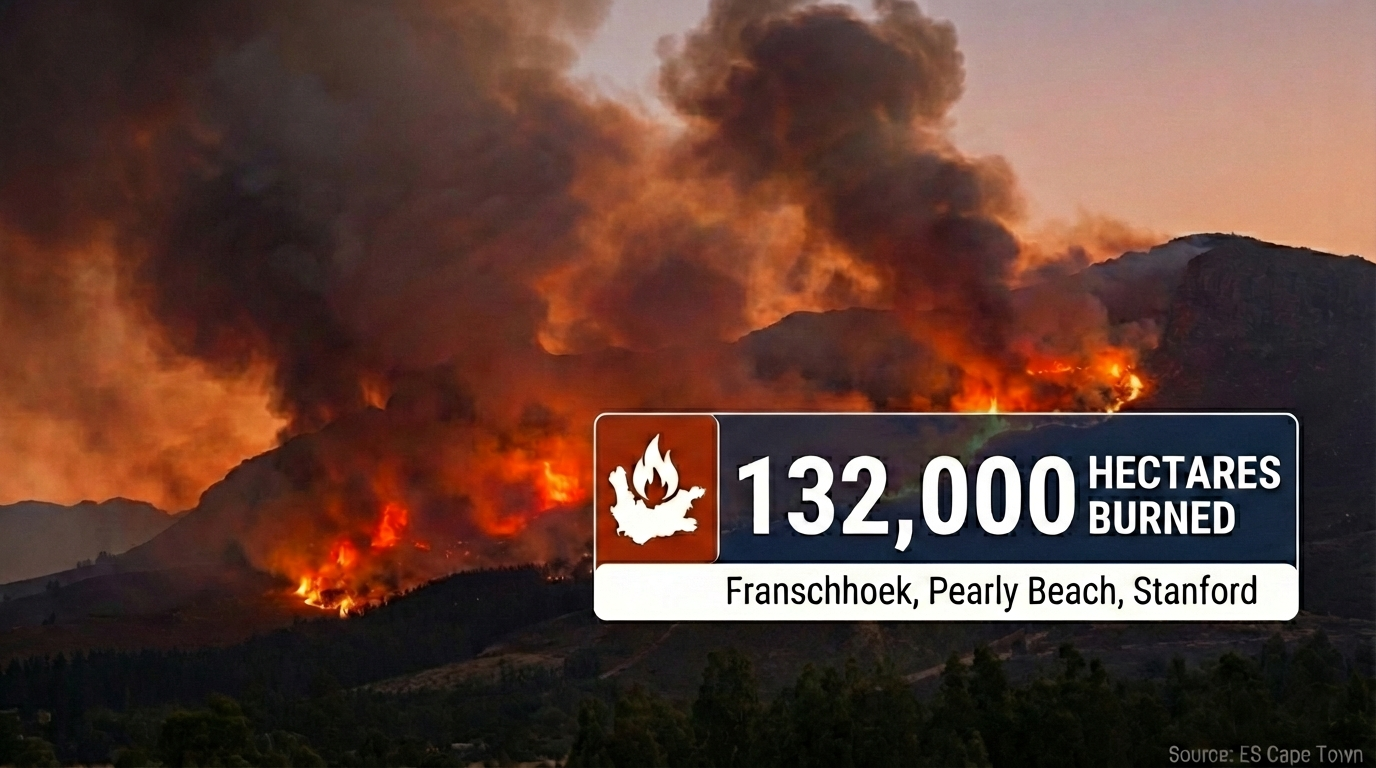
Live Update • 26 January 2026 Western Cape Wildfires: Worst Season in a Decade 132,000 hectares burned province-wide as Cabinet requests disaster declaration. Franschhoek fire…
Read Article
New Developments: Western Cape Wildfires Update 22 January 2026
Photo courtesy of: SkyPixels, CC BY-SA 4.0, Wikimedia Commons Western Cape • 19–22 January 2026 • Franschhoek CRITICAL • Signal Hill • Strand / Helderberg…
Read Article
Wildfires in Western Cape - What is the situation 19 January 2026?
Photo courtesy of: Jeff Schmaltz, MODIS Land Rapid Response Team, NASA GSFC, Public domain, via Wikimedia Commons NEW UPDATE Newest compiled information is here: Read…
Read Article
Western Cape Wildfires Update: 15 January 2026
Photo courtesy of: SkyPixels, CC BY-SA 4.0, via Wikimedia Commons Cape Town • Western Cape • Summer wildfires • Peninsula + Winelands + Overberg Western…
Read Article
Why Is It Burning in Cape Town?
Photo courtesy of: Warren Rohner, CC BY-SA 2.0, via Wikimedia Commons Cape Town • Summer wildfires • Signal Hill, Table Mountain, the Cederberg Why Is…
Read Article