Safety Tips for Driving in Cape Town and South Africa
June 9, 2025

Driving in Cape Town & South Africa: what the data actually says in 2026
What the data actually says about driving here. The airport route from a numbers perspective, the holiday road-death figures, drink-driving arrests, the new traffic system that keeps getting delayed, and the practical things every visitor should know before getting behind the wheel.
Most of what you've heard about driving in Cape Town is either too scary or too vague. So we looked at the numbers. The big surprise: 85% of "incidents" on the airport route are actually breakdowns, flat tyres or empty fuel tanks, not crime. The route is only dangerous if you stop on it.
This guide goes through what's actually risky, what isn't, and what to do about it. It covers the N2 from the airport, night driving, parking, the alcohol limit, and the new traffic system (AARTO) that has now been postponed twice. If you only read one section, read the N2 one.
The basics
South Africa's main roads are good. The N1, N2 and N3 are dual-carriageway tarmac, all signs are in English, and you drive on the left. Speed limits: 120 km/h on freeways, 100 km/h on country roads, 60 km/h in towns, unless a sign tells you otherwise.
The things that catch visitors out aren't the rules. They're the small local quirks. Traffic lights are called "robots". Four-way stops work on whoever-got-there-first, and they actually work. Roundabouts (called "traffic circles") give way to the right. Toll plazas take cash or card. Some rental cars come with toll tags built in, ask when you collect the car.
What you need to drive
An International Driving Permit if your licence isn't in English. If your licence is in English (US, UK, EU with English on the card, Australia, NZ, Canada), the licence on its own is fine. Always carry your licence and passport when driving. Rental companies will want both, plus a credit card in the driver's name.
Tolls
The N1 has tolls heading north out of Cape Town. The N2 has tolls heading east toward the Garden Route. Plazas take cash (rand only) or cards. Budget about R30–R85 per plaza. There are free alternative routes but they're slower and often less safe.
R30–R85 ≈ €1.55–€4.40 ≈ $1.85–$5.20
Driving on the left
If you've never done it, it takes about a day to feel normal. Driving in a straight line is fine almost immediately, because lane discipline is just the mirror image of what you know. The mistakes happen at three specific moments. Run through them in your head before you start.
Pulling out of a parking spot or driveway onto an empty street. With no other cars to copy, your brain defaults to your home country's lane. This is the most common rental-car prang, and it's why rental companies stick "Keep Left" notes on the dashboard.
Turning right at an intersection. Turning right here crosses oncoming traffic, the way a left turn does in the US or Europe. It's easy to drift into the wrong lane on the far side if no other car is showing you where to go.
Your first roundabout. Give way to traffic from the right. Go round clockwise. Signal left when you're about to exit. Picture it before you reach it.
Minibus taxis: the one thing every visitor needs to understand
If there is one driving habit Cape Town will force you to develop fast, it is reading minibus taxis. They are the white sixteen-seater Toyota Quantum vans you will see everywhere, and they carry the majority of working South Africans to and from work each day. They are also responsible for a large share of unpredictable manoeuvres on the road, and the official data backs this up: roughly 23% of South African road fatalities are minibus-taxi passengers, even though minibus taxis are only a small fraction of vehicles on the road.
This is not because the drivers are bad people. It's because the economic model rewards speed. Minibus drivers are paid by the trip, not by the hour. A driver who fills up faster, drops off faster and gets back to the rank faster makes more money. So the incentive is to stop wherever a passenger raises a hand, pull off again immediately, change lanes without warning, and treat any gap in traffic as theirs to take.
Two patterns show up over and over and are worth memorising. The sudden left-side stop: a taxi in front of you brakes hard and pulls into the kerb to drop or pick up. If you're tucked in close behind, you have nowhere to go. Keep at least one full car length more than you would in Europe. The unannounced lane change: taxis frequently move from the left lane to the right lane (or vice versa) without indicating, especially on multi-lane roads. Check your mirrors before you assume the lane next to you is staying empty.
The N2 airport route: what the data shows
The drive from Cape Town International Airport to the city is about 20 km on the N2 freeway. The road runs along the edge of the Cape Flats, where most of the metro's population lives. It's picked up a nickname, the "Hell Run," and a reputation that's partly earned and partly overblown. That matters, because it changes what visitors do, and visitors often worry about the wrong things.
The clearest source is the City of Cape Town Metro Police's incident log. Between November 2024 and November 2025, they recorded 2,215 incidents on the N2 and R300 combined. What was in those 2,215 incidents is what changes the picture.
Three things stand out. First, about 85% of incidents were vehicle problems, not crimes: dead batteries, flat tyres, empty fuel tanks. These are only dangerous on the N2 because a stopped car here is unusually exposed. Second, the violent incidents are real but rare: 42 brick or stone attacks in the airport area in twelve months, with five confirmed stone-throwing attacks in the most recent six. Not zero, but nowhere near every commute. Third, the logic is simple: criminals target stopped cars, not moving ones.
That changes what you should actually do. The route doesn't need clever workarounds. It only becomes dangerous if you stop. So the rule is the boring one: leave the airport with a full tank and good tyres, stay in your lane, and don't stop on the shoulder for anything short of a fire or a medical emergency. If a tyre goes flat, drive on the rim to the next petrol station. Rims are cheap. Hospital is not.
What about late at night?
The 42 brick attacks happen mostly between midnight and 4am, near specific bridges and ramps. Borcherds Quarry comes up a lot. That's one reason the UK Foreign Office tells visitors to stay on the N2 and M3 after dark, not the R300. The other reason: the R300 has fewer patrols.
None of this means avoid the N2. It means drive it the way locals do: full tank, good tyres, head down, no stops between the airport and Hospital Bend.
Night driving and parking: the smaller risks that add up
Most of the practical risk of driving in Cape Town is not what makes the news. It is the boring accumulation of small choices: where you park, whether you double-checked the door is actually locked, whether you took a shortcut at 11pm because the GPS told you it was four minutes faster.
Why night driving genuinely matters
The Road Traffic Management Corporation's annual reports are consistent on one finding that surprises a lot of visitors: about 60% of fatal crashes happen between Friday and Sunday, and a disproportionate share happen at night. The reasons are not exotic. Drink-driving rises after 10pm. Pedestrian visibility collapses on rural roads with no streetlights. Potholes and stationary obstacles are harder to see. And a meaningful share of the criminal incidents on the N2 cluster in the pre-dawn window.
For a visitor, the corollary is straightforward: do long drives in daylight. The Cape Town to Stellenbosch wine route, the Garden Route, the Hermanus coastal road, these are designed to be enjoyed in daylight anyway. If you must drive at night, stay on lit, busy main roads, keep windows up and doors locked, and do not stop on dark shoulders for any reason that is not a genuine emergency. If something on the road looks placed deliberately, bricks, debris, rubbish bins, drive around it without slowing more than necessary.
Parking: where the smash-and-grab actually happens
Most parking incidents in Cape Town are smash-and-grab thefts, not vehicle theft. The pattern is consistent: a phone, a handbag or a laptop visible on a seat, a quick window break, two seconds, gone. The single best defence is the boring one: nothing visible, ever, including phone chargers, sunglasses, supermarket bags, jackets. If it looks like it might contain something valuable, it will be tested.
What to do at a parking lot
- Park in well-lit, supervised areas. Mall parkades and hotel valet are statistically safest.
- Tip car guards R5–10 when you return (about €0.25–€0.55). They are informal but useful, and recognise regular visitors. R5–10 ≈ €0.26–€0.52 ≈ $0.31–$0.61
- Always physically pull the door handle after pressing the remote. Remote-jamming devices that block the lock signal are rare but real.
- Stow valuables in the boot before arriving at the destination, never after parking. Watchers do exist.
What to do on scenic stops
- Empty the visible parts of the car at every stop. Phones, sunglasses, water bottles, all out of sight.
- Use designated viewpoints, not random pull-offs. Chapman's Peak, Cape Point, Boulders Beach all have manned car parks.
- Hiking trailheads (Lion's Head, Table Mountain lower stations) have organised security but stay alert. Don't leave luggage in the boot all day at a trailhead. Take it to your hotel first.
- Beach car parks at Muizenberg, Camps Bay, Bloubergstrand are generally fine in daylight, busy weekends. Avoid them after dark.
Drink-driving and the new traffic system that hasn't quite arrived
South Africa's legal blood-alcohol limit is 0.05% BAC for ordinary drivers and 0.02% for professional drivers. That is meaningfully stricter than most US states (0.08%) and on a par with most of continental Europe. In practical terms, even one large glass of Stellenbosch red puts an average-weight adult close to the limit. The safe rule for visitors is therefore the simple one: do not drive after drinking. Cape Town has Uber, Bolt and InDrive at very moderate prices.
Enforcement is real and seasonal. The Western Cape Mobility Department's festive-season operation between 30 December 2024 and 5 January 2025 stopped over 29,000 vehicles at provincial roadblocks alone, with 117 arrests of which 83 were for driving under the influence. Nationally, the 2024/25 festive season saw 1,502 fatalities from 1,234 fatal crashes, a 5.3% year-on-year increase that is not yet a recovery.
The Western Cape was actually the best-performing major province in 2024/25, recording 140 festive-season fatalities (down 14% on the previous year), which is the same operational discipline visitors benefit from year-round on the metro's roads. The provincial enforcement is real: visible roadblocks on the N1 and N2 over weekends, breath-testing at major intersections in summer, and a meaningful police presence on Long Street, Bree Street and the Atlantic Seaboard nightlife strips.
AARTO: a demerit system that has now been postponed twice
Visitors driving in 2026 will hear about AARTO (the Administrative Adjudication of Road Traffic Offences Act). It is South Africa's long-promised national demerit-points system, intended to replace a fragmented municipal patchwork with a single rule book. The relevant fact for visitors is that the demerit-points portion has not actually started yet, and as of February 2026 the rollout has been suspended for six months.
The original schedule had AARTO going live in 69 metros (including Cape Town) on 1 December 2025, with full national demerit-points enforcement on 1 September 2026. In November 2025 the Department of Transport conceded that municipalities were not ready: officer training was incomplete, IT systems were not harmonised, and funding was contested. Parliament's transport committee then suspended the whole rollout for six months in February 2026. The current target dates are: phased start from 1 July 2026, full demerit-points activation on 1 September 2026, and even that is widely doubted by motoring groups and OUTA.
What AARTO will do (eventually)
- Assign demerit points for traffic offences, in addition to a fine. Speeding, running a red light, reckless driving all earn points.
- Suspend a fully-licensed driver's licence at 15 points; learner drivers at 6 points. Suspension is three months per excess point.
- Reward early payment with a 50% discount if a fine is settled within 32 days.
- Replace handwritten paper tickets with electronic infringement notices captured on handheld devices, eventually emailed to drivers.
What it means for visitors right now
- Almost nothing in 2026. The current criminal-procedure system still applies: speeding fines, drink-driving arrests and reckless-driving charges all run through the existing courts.
- If you receive a fine on a rental car, the rental company will normally settle it and bill your card with an admin fee. Read the rental terms.
- The 50% early-payment discount is not yet automatic for non-AARTO fines, but many municipal traffic departments offer informal discount windows.
- Watch the Department of Transport's announcements. The 1 September 2026 date may slip again.
Road fatalities: where the actual risk sits
South Africa's road-fatality rate is high by global standards. The country recorded approximately 11,418 road deaths in 2025, against a population of around 63 million, which works out to roughly 18 deaths per 100,000 people. That is high, about three times the EU average and roughly 50% higher than the US, but it is also the lowest figure South Africa has recorded in five years. The number has been falling slowly but steadily since the 2017 peak, and the long-term direction matters more than any single year.
The structure of who dies on South African roads is the part visitors should pay attention to. About 40% of all fatalities are pedestrians, a much higher share than in any developed-economy benchmark. The other categories that punch above their weight are minibus-taxi passengers (about 23%) and motorcyclists. Self-driving tourists in passenger cars sit in the safest category by a wide margin, roughly 28% of fatalities are passenger-car occupants in a country where cars carry the majority of vehicle-kilometres travelled.
The contributing factors, in order
The RTMC's published analysis attributes about 87% of fatal crashes to human factors, speeding, alcohol, dangerous overtaking, fatigue, ignoring traffic signals. Vehicle factors (tyre failure, brake failure) account for about 8%, and road/environmental factors for the remainder. The implication is unromantic: the path to a safe trip is not exotic. It is sober driving, the speed limit, and not overtaking on solid lines.
VIII. Emergency contactsIf something goes wrong: numbers that work
South Africa has multiple emergency numbers and they are not perfectly interoperable. The fastest way to get help is to know which one to call.
If you have a road incident on the N2, R300 or any road inside the Cape Town metro, the City of Cape Town's emergency line on 021 480 7700 is the right first call from a cellphone, or 107 from a landline. The operator will route the right service and give you a reference number that insurance companies will later require. For mountain rescue (Lion's Head, Table Mountain, Chapman's Peak), call Wilderness Search and Rescue directly on 021 937 0300; the general line can be slow to route mountain calls.
What changed between October 2025 and April 2026
October 2025 N2 deployment
The City of Cape Town deployed 40 additional Metro Police officers to the N2 corridor, airport precinct and Borcherds Quarry interchange on a dedicated 24/7 rotation. Officers are equipped with dashcam-linked stolen-vehicle detection.
December 2025 AARTO postponed
The Department of Transport's planned 1 December 2025 AARTO go-live in 69 metros was deferred at the eleventh hour after most municipalities admitted they were not ready. New target: 1 July 2026 for phased start.
January 2026 R114m for the N2
Cape Town allocated R114 million for a 9 km N2 safety package: improved lighting, pedestrian crossings, CCTV upgrades, and the embedded Metro Police rotation announced in October. Implementation is staged through 2026.
February 2026 AARTO suspended
Parliament's transport committee suspended the AARTO rollout for a further six months, citing municipal readiness, training gaps and a R1.2 billion outsourcing contract that civil-society group OUTA has flagged. The 1 September 2026 demerit-points date is now widely doubted.
Frequently asked questions
Is it actually safe to drive from the airport to my hotel?
Yes, in nearly all cases, with the conditions discussed in section III. The N2 between the airport and the city is busy, well-patrolled, and the overwhelming majority of trips happen without incident. The risk concentrates almost entirely on stopping: don't stop on the shoulder. Drive on a flat tyre to the next petrol station before changing it.
If you arrive after midnight, take a metered taxi or pre-booked transfer instead. Many hotels offer airport transfers in the R450–R650 range (about €23–€34 / $27–$40), which buys you a driver who already knows the route.
Should I just take Uber instead of renting a car?
For Cape Town city itself: yes, Uber and Bolt are excellent. Short trips inside the city centre are typically R40–R120 (€2–€6 / $2.50–$7.50), which is cheaper than parking in many cases. For the wine farms and the Garden Route: a rental car is genuinely worth it. Uber doesn't reliably reach Stellenbosch wineries, and the Garden Route is built around having your own vehicle.
What about car-jacking? Is that still a thing?
Cape Town's car-jacking rate is well below Gauteng's, and incidents almost never affect tourists in mainstream tourist areas. The standard precautions (windows up at robots, doors locked, gap to the car in front so you can pull out, avoid quiet/dark intersections at night) reduce an already low probability further. The City's quarterly crime data is published by SAPS precinct and is summarised on capetowndata.com's neighbourhood guides.
Do I need an International Driving Permit (IDP)?
Technically: required if your licence is not in English. In practice: rental companies and traffic officers accept English-language licences from the US, UK, EU member states with English on the card, Australia, New Zealand and Canada. If your licence is in German, French, Mandarin, Arabic or any other non-Latin or non-English script, get the IDP before you travel. It is cheap and avoids hassle.
Are the wine routes safe to drive?
Yes. Stellenbosch, Franschhoek, Constantia and Paarl wine routes are well-signed, well-policed and busy with tourists in season. The main risk is the obvious one: drink-driving. Use a wine tour driver service (R650–R1,200 per person for a full-day group tour), or book a private driver for a small group (R1,800–R3,000 for the day). Most Stellenbosch and Franschhoek hotels can arrange this with two days' notice.
R650–R1,200 ≈ €34–€62 ≈ $40–$73 · R1,800–R3,000 ≈ €93–€155 ≈ $110–$183
What's the deal with car guards?
Car guards are a uniquely South African informal labour category: men (mostly) in fluorescent vests who watch your car in a parking bay and direct you out when you leave. They are not employed by the parking lot. The standard tip is R5–R10, paid when you return, not when you arrive. They are useful in two ways: their visible presence deters opportunistic thieves, and they recognise regulars. Pay them. It is a small amount of money for genuine value.
Is petrol expensive? Where do I pay?
Petrol prices are regulated monthly by the Department of Mineral Resources and Energy. As of late April 2026 the inland 95-octane price sits around R22.50 per litre (€1.17 / $1.37 per litre). Petrol stations are full-service: an attendant fills the car. Tip R5–R10 if they clean your windscreen or check your oil. Most stations accept cards but some smaller rural ones still prefer cash.
Speed cameras: hidden gotchas?
Yes. The Western Cape has both fixed cameras (yellow boxes on poles, well-marked) and mobile cameras (white vehicles parked on the shoulder, less marked). Average-speed-over-distance enforcement runs on parts of the N1 and N2. Tourists are not exempt. Rental companies will pass on fines with an admin fee of R150–R350 (€8–€18 / $9–$21).
Sources & references
Government and official data:
- Road Traffic Management Corporation, State of Road Safety calendar reports 2020 through 2025, rtmc.co.za
- Department of Transport, Festive Season Road Safety statements 2021/22 through 2024/25, gov.za
- City of Cape Town Metro Police, N2/R300 incident corridor data, November 2025 release
- Western Cape Mobility Department, festive season operational summary, January 2025
- Road Traffic Infringement Agency (RTIA), AARTO rollout schedule and rule guidance, aboutaarto.co.za
News and analysis:
- IOL Weekend Argus, "Navigating the dangers of the N2 and R300," 19 November 2025
- BusinessTech and TimesLive coverage of AARTO postponements, August 2025 to February 2026
- TopAuto, "South Africa hits the brakes on new driving laws," November 2025
- Daily Maverick coverage of festive-season enforcement
Cross-references at capetowndata.com:
- Is the N2 Road to Cape Town Airport Safe?, full N2 deep-dive with detailed exit-by-exit risk
- N2 Airport routes: September–December 2025 safety update
- Cape Town traffic: peak-hour patterns and INRIX data
More in Safety Playbooks & Tools
You May Also Like
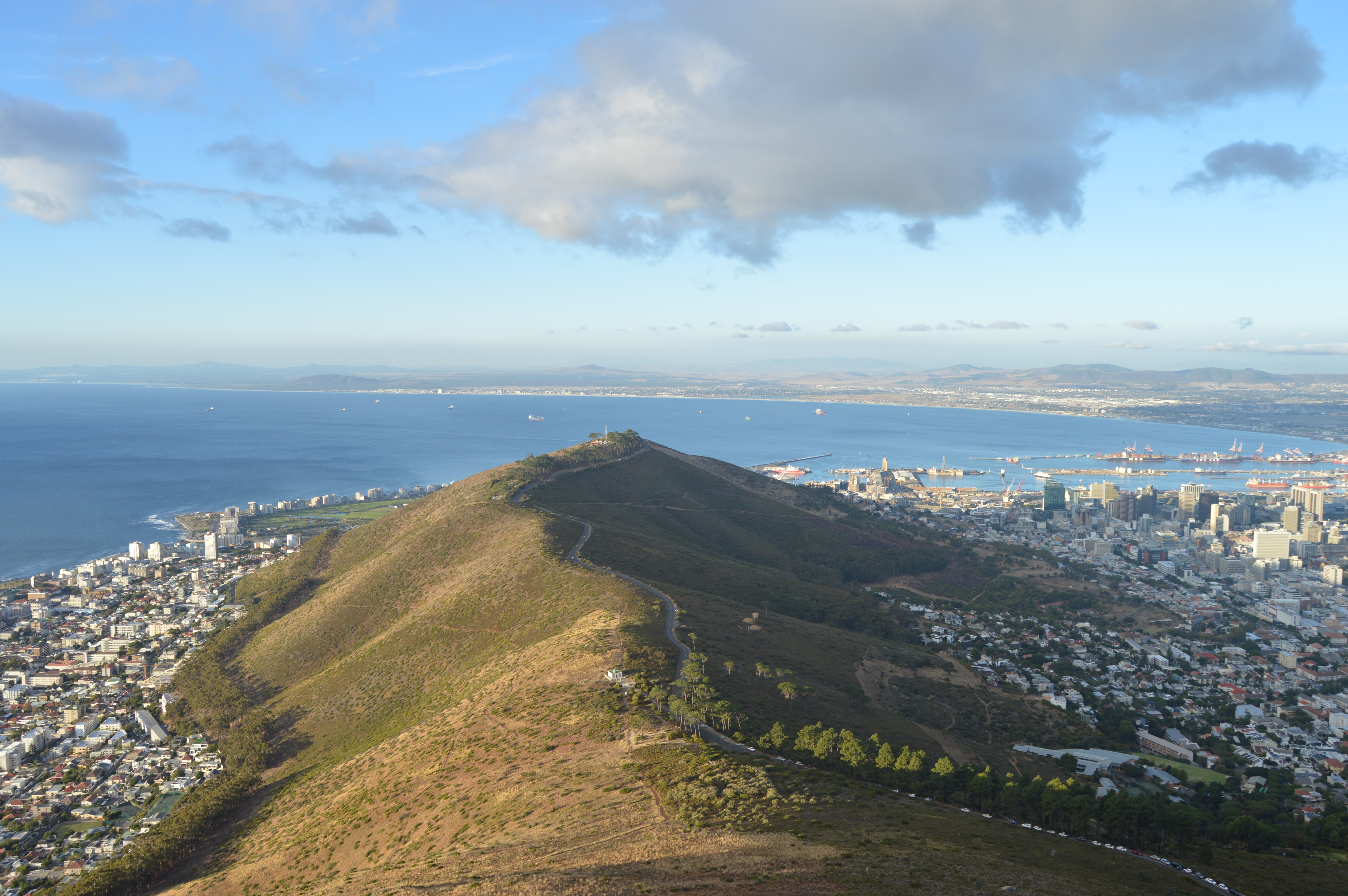
How safe is Clifton?
Photo courtesy of Warren Rohner, Wikimedia Commons, licensed under CC BY-SA 2.0 Atlantic Seaboard · Cape Town Is It Safe to Live in Clifton ,…
Read Article
Is Claremont Safe?
Cape Town Data · Safety Series Is Claremont Safe? A Data-Driven 2026 Guide Claremont is the commercial heart of Cape Town's southern suburbs, leafy on…
Read Article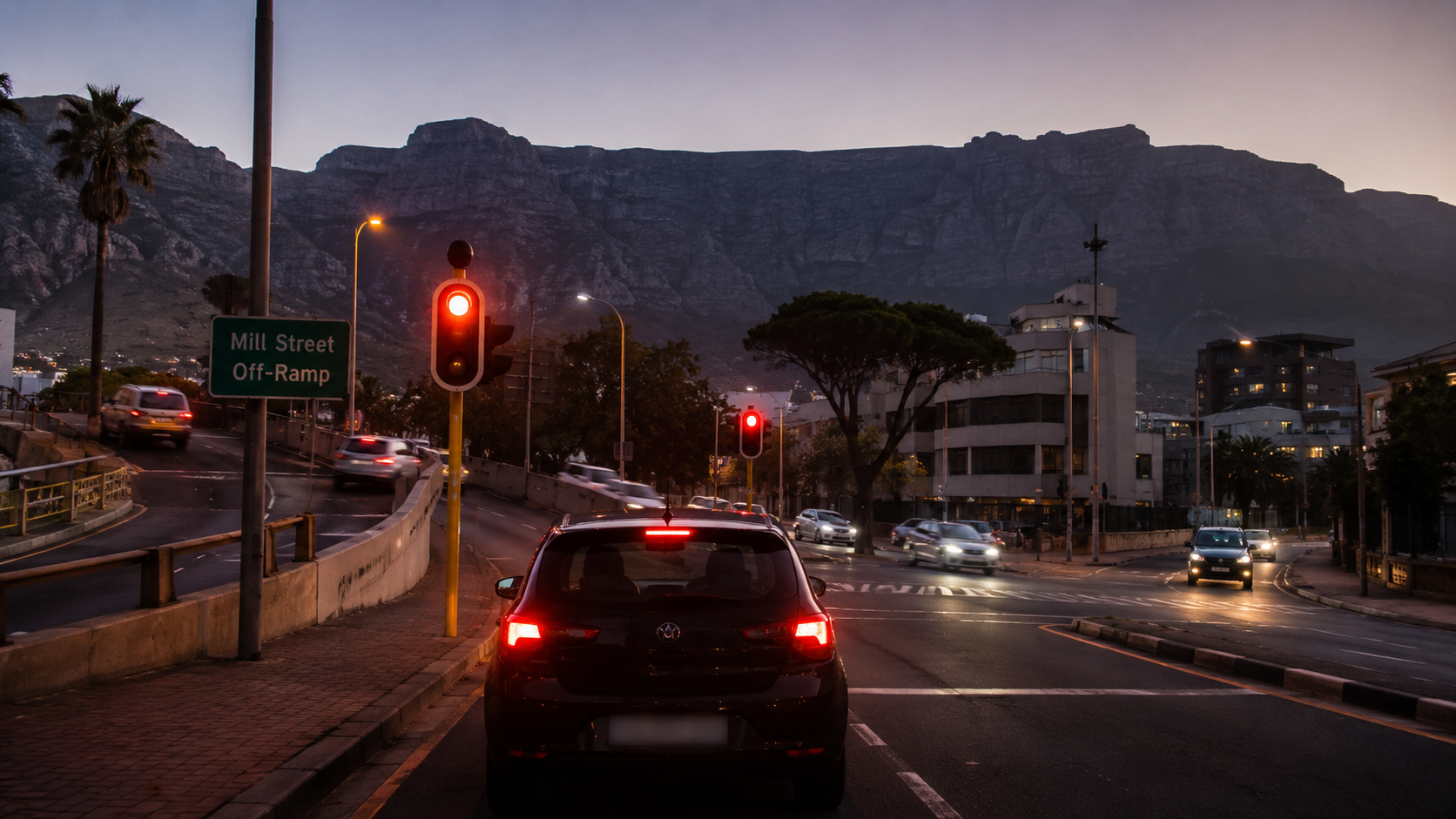
Crime Hotspot Cape Town: Garden Center Off ramp after dark
Cape Town crime hotspots · Gardens · capetowndata.com The Mill Street Off-Ramp at Gardens Centre: the Cape Town crime hotspot you should know about Pay…
Read Article
Is It Safe to Live in Constantia, Cape Town?
Photo courtesy of Zaian, Wikimedia Commons, licensed under CC BY-SA 3.0 Southern Suburbs · Cape Town Is It Safe to Live in Constantia , Cape…
Read Article
Is It Safe to Stay in Bloubergstrand, Cape Town? 2026 Safety Evaluation
Photo courtesy of Wikimedia Commons contributor, licensed under CC BY 3.0 Western Seaboard · Cape Town Is It Safe to Stay in Bloubergstrand, Cape Town?…
Read Article