Get Your Shoes Ready for the 2026 Two Oceans Marathon
November 17, 2025

.jpg)
Cape Town • Endurance • Road Running
Get Your Shoes Ready for the 2026 Two Oceans Marathon
Called “the world’s most beautiful marathon”, the Totalsports Two Oceans Marathon is a love letter to the Cape Peninsula. In 2026, thousands of runners will again chase that 56 km ultra or the huge half marathon field. This guide walks you through the route, the ballot and entries, training from abroad, and how to turn race weekend into a proper Cape Town escape.
Quick take: Two Oceans is a full long-weekend ecosystem: an iconic 56 km ultra on Saturday, a massive 21.1 km half marathon on Sunday, plus trail runs, fun runs and a busy expo in the days before. Expect spectacular Atlantic and False Bay views, serious climbs, cool autumn mornings and a festival atmosphere around Newlands, the Southern Suburbs and the finish at UCT.
2026 dates: 11–12 April* Ultra: 56 km (Sat) Half: 21.1 km (Sun) Start: Newlands Main Road Finish: UCT Rugby Fields Entry: ballot system
*Always confirm final dates, start times, routes and cut-offs on the official Two Oceans Marathon website before you book.
Why Two Oceans is on every runner’s bucket list
The Totalsports Two Oceans Marathon is an annual Cape Town classic, famous for its 56 km ultra that loops around the Cape Peninsula and its huge 21.1 km half marathon field. It’s been described for decades as “the world’s most beautiful marathon” thanks to its mix of mountain, ocean and neighbourhood energy on race day.
The ultra takes you from the leafy Southern Suburbs through False Bay, up and over Chapman’s Peak and Constantia Nek, before dropping you at the green bowl of the University of Cape Town. The half marathon is shorter but hardly easier: it packs in hills, crowds and a big-city field that feels like a street carnival with timing chips.
For visitors, Two Oceans is more than a race. It’s a reason to land in Cape Town at its best time of year—cooler autumn mornings, settled weather—and to see parts of the peninsula most tourists only watch from inside a tour bus. Run it right and you’ll leave with new legs, yes, but also new favourite coffee shops, viewpoints and sea-swim spots.
On race weekend, Cape Town wakes up early. Headlamps bob through the southern suburbs at dawn, volunteers set up water tables long before sunrise, and families stake out braai spots and camping chairs along the route. Whether you’re gunning for a seeding time, chasing a Comrades qualifier, or just hoping to finish upright before cut-off, you’re part of a moving festival of running.
Headline numbers
- 56 km Ultra on Saturday.
- 21.1 km Half on Sunday.
- Tens of thousands of runners over the weekend.
- Global field with strong local club presence.
Who it suits
- Ultra: experienced marathoners and ultra-runners comfortable with long climbs and strict cut-offs.
- Half: strong option for newer runners or those who want the vibe without 56 km of hills.
Why 2026 is special
- The 56th edition of the Ultra.
- A full return to long-term planning after recent route and logistics disruptions.
- New staging/commercial partner locked in to refine the race experience.
Key 2026 dates, distances, cut-offs & entry basics
The 2026 Totalsports Two Oceans Marathon weekend is scheduled for 11–12 April 2026. The 56 km Ultra Marathon runs on Saturday 11 April, and the 21.1 km Half Marathon on Sunday 12 April, both starting from Newlands Main Road and finishing at the UCT Rugby Fields on Upper Campus.
Entries are managed via a ballot system rather than a first-come queue, with phases for club runners, international runners, charity entries and general entries. If the race is on your dream list, treat the ballot opening date as seriously as race day itself and always cross-check final details on the official site before you book.
| Event | Distance & day | Who it suits | Headline numbers |
|---|---|---|---|
| Ultra Marathon | 56 km • Sat 11 Apr 2026 | Experienced marathoners and ultra runners comfortable with hills and long time on feet. | Start: 05:15 (TBC). Overall cut-off around 7 hours with route cut-offs. Qualifying marathon time required. |
| Half Marathon | 21.1 km • Sun 12 Apr 2026 | Strong 10K–half runners, first-timers with good base fitness, and anyone who wants the vibe without the 56 km. | South Africa’s biggest half marathon. Strict batch seeding; entries sell out quickly. |
| Trail runs & fun runs | Various distances • earlier in race week | Trail lovers, families, younger runners. | Great if you’re travelling with non-ultra partners or kids who still want a medal. |
| Item | Details (2026) |
|---|---|
| Race weekend | 11–12 April 2026 (Saturday–Sunday), early-morning starts both days. |
| Distances |
Ultra: 56 km loop around the Peninsula. Half: 21.1 km through the southern suburbs with climbs and fast descents. |
| Start & finish | Starts on Newlands Main Road near the Newlands Swimming Pool; finishes on the UCT Rugby Fields on Upper Campus. |
| Typical cut-offs | Ultra: around 7 hours total, with intermediate cut-offs at key points. Half: generous but enforced—check the official guide. |
| Entry system | Ballot-based entry with phases for club members, international runners, charities and general entries. Limited charity and tour-operator packages. |
| Weather & conditions | Autumn in Cape Town: cool mornings, potential heat later, occasional wind on exposed sections. |
- Watch the official site and social channels for ballot opening dates and qualifying standards.
- Have proof of your recent marathon/half-marathon times handy for seeding.
- International runners should consider refundable or insured bookings until entries are confirmed.
The route: what the ultra & half really feel like
The 56 km Ultra: a full tour of the peninsula
The Ultra starts in the dark on Newlands Main Road, with the smell of early-morning coffee and deep-heat everywhere. You move through the Southern Suburbs, drop down towards Lakeside and Muizenberg, then trace the False Bay coastline through Fish Hoek before cutting across to the Atlantic via Sun Valley and Noordhoek.
From there, you tackle Chapman’s Peak Drive: sweeping bends carved into the cliffs, with the ocean far below. The gradient is honest rather than cruel, but it’s long—you want to arrive here with patience and a low heart rate. After the descent into Hout Bay, the second big climb waits at Constantia Nek: shorter but often mentally harder, because the legs are tired and the crowds are thinner. Once you crest the nek, the final stretch winds past the Constantia greenbelts and up to UCT. The last kilometres are uphill, but the noise from the finish carries you in.
The 21.1 km Half: fast, crowded, and not flat
The Half starts in Newlands with seeded batches that can feel like mini races of their own. The route takes you through Claremont, Kenilworth, Wynberg and Constantia on city roads, with rollers that reward smart pacing more than pure speed. For many locals, the Half is the highlight of their running year: club vests everywhere, supporters lining quiet residential streets, and a finish at UCT that feels like a full-marathon moment.
Don’t be fooled by the distance—if you go out at reckless 5K pace, the late hills will find you. Think of it as a long progression run with a party attached.
- The course is scenic and hilly, not a pure PB factory—though many still run personal bests with smart pacing.
- Weather can flip from cool and misty to bright sun by mid-morning; pack layers and sunscreen.
- Wind is a factor some years, especially on the exposed coastal sections.
Training & preparation (especially if you’re flying in)
You don’t need to live in Cape Town to be ready for Two Oceans—but you do need to train with the route’s personality in mind: hills, camber, and time on feet.
If you’re aiming for the 56 km Ultra
- Build a marathon base first. Most runners are more comfortable if they’ve run at least one controlled marathon within the last 12 months.
- Focus on hill strength. Mimic Chappies and Constantia Nek with long, steady climbs rather than brutal hill sprints. Practice running uphill on tired legs.
- Get used to long descents. Downhill pounding can wreck quads; include downhill segments in training so your legs know the feeling.
- Back-to-back long runs. A weekend combo (for example 28 km Saturday, 18–22 km Sunday) is often better than one monster run that takes a week to recover from.
- Practice your nutrition. The race provides on-course hydration and carbs, but know what your stomach likes at 4, 5 and 6 hours.
If you’re targeting the 21.1 km Half
- Respect the climbs. Include rolling long runs and a weekly hill session. “Comfortable on hills” can be worth more than pure speed work.
- Simulate race morning. Practice waking early, eating a small breakfast and starting a harder run by 06:00–07:00 so your body knows the rhythm.
- Train with people when you can. The field is busy; learning to hold your line and pace in a crowd is a skill too.
Travelling from overseas or upcountry
- Arrive a few days early. Give yourself at least 3–4 days in Cape Town before race day to shake out travel stiffness and adjust to time zones.
- Keep the expo day light. It’s easy to spend hours on your feet; aim for a quick race-pack pickup and a short browse, then off your feet again.
- Hydrate smartly. Cape Town tap water is safe to drink; carry a bottle and sip through the day, especially if it’s warm or windy.
- Don’t cram in hikes. Save Table Mountain and Lion’s Head for after your race, not the day before the ultra.
Race week: expo & logistics
Two Oceans week builds gradually: trail events and fun runs earlier on, then the expo kicking into high gear and the city filling with club vests from all over South Africa and beyond.
Expo & race pack collection
The Two Oceans Marathon Expo is where you collect your race pack, confirm details and browse gear, nutrition and race-week specials. Expect it to be busy, especially after work hours and on the day before the ultra.
- Bring your ID/passport, race confirmation and any required medical info.
- Check the colour and details on your race number: event, distance, batch and name.
- Try not to experiment with brand-new shoes or radical nutrition bought on a whim at the expo.
Where to stay
For easiest logistics, look at:
- Newlands / Claremont: Walking distance or a short ride to the start; good for early-morning nerves.
- Rondebosch / Rosebank / Observatory: Convenient for the finish at UCT; easier to get back for a shower and breakfast.
- City Bowl / Waterfront: Better if you’re combining the race with broader sightseeing—just factor in travel time to the start.
Transport & parking
Race-day road closures are extensive. Study the official transport and parking guide:
- Many runners use park-and-ride or lifts from friends to get close to the start without driving right in.
- Ride-hailing can work, but expect congestion near the start and finish—build in a time buffer.
- Have a clear plan for how you’ll meet your supporters afterwards (UCT campus is big when you’re tired).
Race day: from 04:00 to your medal
The early hours
Both ultra and half start before the sun is fully up. Plan breakfast you’ve tested (toast, oats, a banana, coffee if you’re used to it), and aim to be in the start area at least 45–60 minutes before the gun. Factor in queues for toilets and bag drop, and the walk to your seeded batch.
On the road
- First 10 km: Let everyone else sprint; your job is to stay calm. It’s busy, your adrenaline is high, clocks don’t count here.
- Middle kilometres: Settle into your plan. Walk through tables if needed, especially on the ultra. Use the scenery as mental fuel, not an excuse to over-stride.
- Key climbs: Power-hike a few steps on the steepest pitches if that keeps your heart rate steady; it’s better than blowing up and shuffling later.
- Last 5–10 km: The campus crowds in the final stretch are loud. Even if your pace has slipped, soak it in—you only finish your first Two Oceans once.
Hydration, nutrition & medical
The course has regular water and nutrition tables; check the latest map for exact locations. Use them, but also stick to what your stomach knows. If you feel dizzy, unusually short of breath, or in chest pain, step off and speak to medical staff—there are medics along the route and at the finish.
After the finish
Past the UCT finish line, you’ll move through medals, water, goodie bags and reunion areas. Agree a side (left/right) or landmark with friends in advance. Once the post-race glow settles, think about a short walk, a gentle stretch, a nap and a hearty meal— not a heroic hike up Table Mountain.
Supporters & making it a Cape Town trip
Two Oceans is surprisingly spectator-friendly if you plan around the road closures. The official FAQ usually lists recommended supporter points and how to move between them without interfering with the race.
Good spots for friends & family
- Newlands / Claremont: Early energy and easy access on foot.
- Muizenberg / False Bay side (Ultra): Beautiful light as the sun comes up; coffee and breakfast options nearby.
- Hout Bay & Constantia Nek (Ultra): High-emotion climbing sections where a cheer can make someone’s race.
- UCT finish: Big-race atmosphere and a natural place to regroup.
Making a holiday of it
If you’re travelling in, build in at least a few extra days:
- Before the race: Short, easy shake-out runs on the Sea Point Promenade or around Newlands Forest, plus early nights.
- After the race: Table Mountain cableway or a gentle hike, a wine farm visit, a cold-water dip in the Atlantic, neighbourhood food exploring in Woodstock or Observatory.
- With non-runners: They can do the fun runs, explore markets, or join a Cape Peninsula tour while you’re at the expo.
The goal is to leave with both a medal and a sense that you’ve actually met the city—not just its kilometre markers.
Quick planning table
| Area | Why it matters | Best-practice for runners | Common mistakes |
|---|---|---|---|
| Entries & seeding | Ballot phases and seeding can determine whether you get in and where you start. | Diary the ballot date, have proof of times ready, read seeding rules before you click “submit”. | Leaving entries too late; ignoring qualifying standards; assuming there’s always a last-minute slot. |
| Training | Hills, distance and camber define the route. | Include long climbs, descents and back-to-back longs; practice early starts and race nutrition. | Only doing flat routes; no hill strength; testing new shoes or gels on race day. |
| Accommodation | Where you sleep affects start-line stress and post-race recovery. | Book Newlands/Claremont or UCT-adjacent areas if you prioritise logistics; City Bowl if you prioritise tourism. | Booking far away to “save money” and losing sleep (and nerves) in traffic and road closures. |
| Race week schedule | Expo, sightseeing and socialising all pull on the same energy budget. | Collect your pack early, keep the day before the ultra calm, save big hikes for after the race. | All-day expo plus full tourist day plus late dinner—then wondering why legs feel flat. |
| Pacing strategy | Two Oceans rewards patience more than aggression. | Start conservatively, respect the middle hills, use the final crowds to lift you. | Chasing an unrealistic time from kilometre 1; racing other people’s splits instead of your own. |
| Supporters | Good support can save your race and make their day too. | Share route links, agree meeting points, plan how they’ll move between spots. | Vague plans like “I’ll see you somewhere near the finish”. |
| Post-race | Recovery shapes how you remember the whole trip. | Refuel, rehydrate, gentle movement, and a relaxed next day with flexible plans. | Booking a 6-hour winelands tour or a big hike for the morning after the ultra. |
Use this table as a checklist, not a rulebook. Your best Two Oceans experience will balance your goals, your body and what Cape Town has to offer.
Route map: start & finish
This simple map marks the traditional start and finish zones so you can visualise where race morning and medal photos happen. For full route and aid-station maps, always refer to the official Two Oceans Marathon resources closer to race day.
Locations are approximate and for orientation only. Check the official race maps for precise start pens, finish chutes and supporter zones.
Official links & resources
- Two Oceans Marathon official website — event overview, history, eligibility and contact details.
- Ultra & Half Marathon info pages — route maps, cut-offs, start/finish logistics and seeding details.
- Two Oceans FAQ — answers on transport, upgrades/downgrades, batch changes, timing and results.
- Expo information — location, dates and what to expect when collecting your race pack.
- Specialist coaching blogs & travel packages — for pacing charts, training plans and race-week travel suggestions.
Always treat the official Two Oceans Marathon channels as your final source—details can and do change from year to year.
More in Annual & Seasonal Events
- Western Cape Wildfires: Worst Season in a Decade Update 26 January 2026
- New Developments: Western Cape Wildfires Update 22 January 2026
- Wildfires in Western Cape - What is the situation 19 January 2026?
- Western Cape Wildfires Update: 15 January 2026
- Why Is It Burning in Cape Town?
- Cape Town Cycle Tour 2026 (a.k.a. „Argus“): Visitor Guide to Riding the Cape Peninsula
You May Also Like
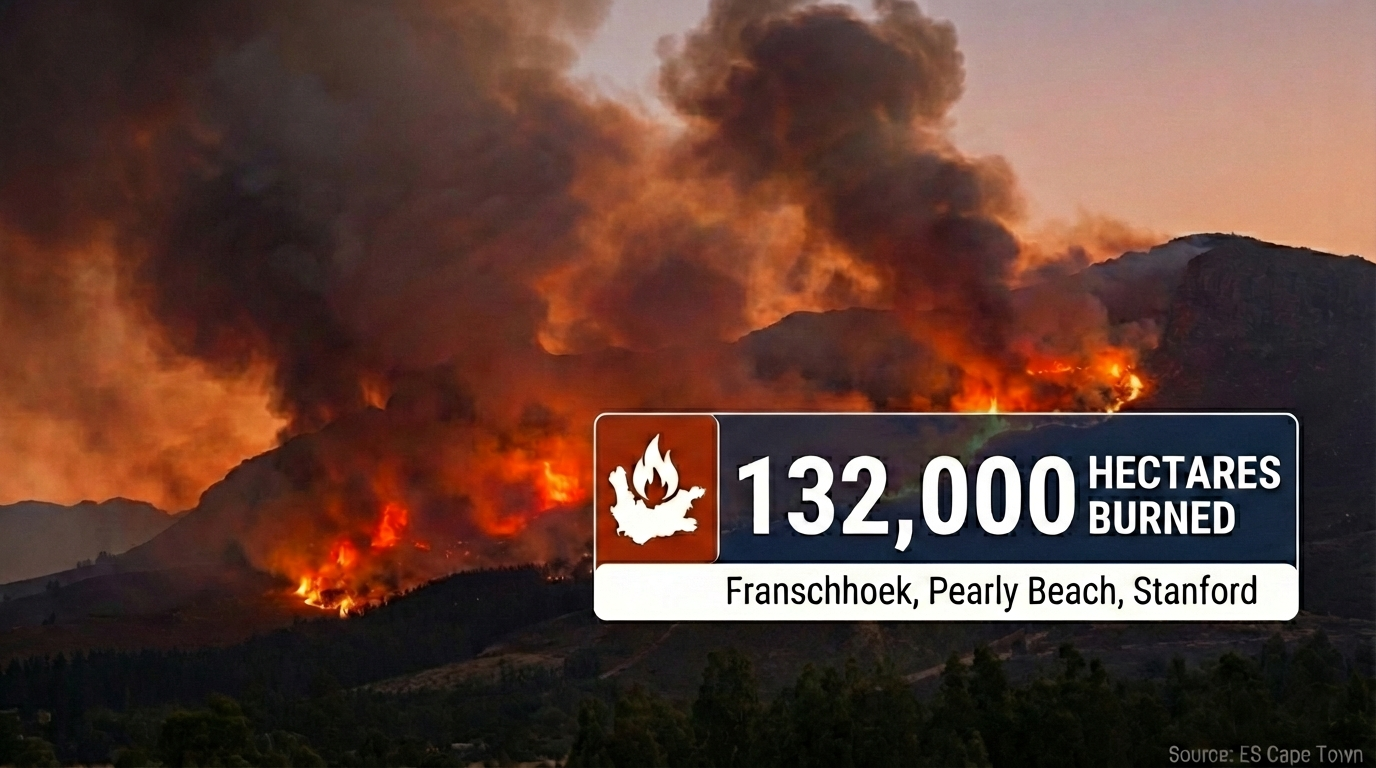
Western Cape Wildfires: Worst Season in a Decade Update 26 January 2026
Live Update • 26 January 2026 Western Cape Wildfires: Worst Season in a Decade 132,000 hectares burned province-wide as Cabinet requests disaster declaration. Franschhoek fire…
Read Article
New Developments: Western Cape Wildfires Update 22 January 2026
Photo courtesy of: SkyPixels, CC BY-SA 4.0, Wikimedia Commons Western Cape • 19–22 January 2026 • Franschhoek CRITICAL • Signal Hill • Strand / Helderberg…
Read Article
Wildfires in Western Cape - What is the situation 19 January 2026?
Photo courtesy of: Jeff Schmaltz, MODIS Land Rapid Response Team, NASA GSFC, Public domain, via Wikimedia Commons NEW UPDATE Newest compiled information is here: Read…
Read Article
Western Cape Wildfires Update: 15 January 2026
Photo courtesy of: SkyPixels, CC BY-SA 4.0, via Wikimedia Commons Cape Town • Western Cape • Summer wildfires • Peninsula + Winelands + Overberg Western…
Read Article
Why Is It Burning in Cape Town?
Photo courtesy of: Warren Rohner, CC BY-SA 2.0, via Wikimedia Commons Cape Town • Summer wildfires • Signal Hill, Table Mountain, the Cederberg Why Is…
Read Article