What is Kaapse Klopse / Minstrel Carnival (Tweede Nuwe Jaar) 2026??
November 13, 2025

Cape Town • New Year • Tradition & Street Culture
What is Kaapse Klopse / Minstrel Carnival (Tweede Nuwe Jaar) 2026?
Cape Town’s first big celebration of the year. Bright satin suits, painted faces, tiny umbrellas, banjos and the rolling ghoema beat take over the city— rooted in 19th-century history and still proudly community-led today.
Quick take: The Kaapse Klopse (also called the Cape Town Minstrel Carnival or Cape Town Street Parade) is traditionally held on 2 January (Tweede Nuwe Jaar, “Second New Year”), though the date can shift for logistics & religious calendars. Expect tens of thousands of performers and big city crowds.
Respectful language: use “Kaapse Klopse / Minstrels” or “Cape Town Street Parade”; avoid the outdated offensive term once used for the event.
What it is & why it matters
Kaapse Klopse is Cape Town’s New Year street parade led by community troupes (“klopse”) with music, dance and vivid costumes. It’s also called the Cape Town Minstrel Carnival / Cape Town Street Parade and is traditionally on 2 January—a date linked to the period when enslaved people at the Cape were given a day off after New Year. The day grew into a community celebration that still carries that history.
The parade’s signature ghoema beat (hand-drum groove heard across Cape Town) reflects African, Asian and European influences—part of a broader Cape creole music heritage. You hear choirs stretching their harmonies down the streets, brass sections answering in call-and-response, and whole families keeping time with their shoulders and feet.
Atmosphere & South African spirit
On the day, the inner city feels like one long open-air stage. Children in tiny satin suits copy the steps of older dancers, aunties bring folding chairs and snacks, and neighbours call to each other across the road. There’s a sense of South African joy and resilience that goes beyond the music: people lining the pavements to cheer on troupes from their area, celebrating community talent that has been rehearsing for months.
The mood is festive and noisy, but also deeply emotional—this is a tradition that has survived slavery, segregation and displacement. When a favourite troupe passes, you’ll see people laughing, crying, singing along and shouting out names. It’s a day when Cape Town’s layered history, humour and creativity are right on the street in front of you.
Key facts for this season
| Item | Details |
|---|---|
| Date window | Usually 2 January. Final date is confirmed by organisers and the City—some years shift (for example, the City hosted the 2025 parade on 4 January with published road-closure plans). |
| Where | Cape Town CBD—historic route includes Darling St, Adderley St, Wale St and the Grand Parade area (route changes are announced each year). |
| Scale | Large city event; recent editions have featured around 20,000 performers with big spectator numbers along the route. |
| Cost | Free to watch along the streets. You only pay for your own food, drinks and transport. |
| Good for | Families, street-photography fans, culture lovers. Expect heat, sun and crowds; arrive early and hydrate. |
Route & best places to watch
| Spot | Why pick it | Heads-up |
|---|---|---|
| Grand Parade / Darling St | Central, classic parade atmosphere; good for first-timers. | Gets packed; shade is limited—bring hat, water, sunscreen. |
| Adderley St | Long sight-lines; easy to move between blocks for variety. | Busy intersections; choose a spot with barriers and space. |
| Wale St near City Hall | Iconic backdrop; great for photos of troupes against heritage buildings. | Popular—arrive early to secure curb space. |
Exact roads and times are published by the City each year; follow official traffic & safety notices.
How the troupes & music work
Troupes (“klopse”)
Each troupe has singers, a band, dancers and a signature look (satin suits, face paint, small umbrellas). They rehearse for months and compete in various categories through the New Year period. For many performers, this is the highlight of the year and a way to carry family and neighbourhood pride onto the street.
Competitions
Alongside the street parade, Cape Malay Choir and Nagtroepe (night troupes) competitions run across summer under bodies like the Cape Malay Choir Board of the Western Cape. Check official listings for fixtures & tickets if you want to see the more formal competitive side of the culture.
The ghoema sound
The heartbeat of the day—syncopated hand-drum patterns blended with banjos, brass and harmonies—comes from the Cape’s creole music history. You’ll hear classic Afrikaans and English songs, Kaaps slang, and improvisation that makes each troupe’s sound unique.
Names & respect
Today the respectful terms are Kaapse Klopse, Minstrels or Cape Town Street Parade. The old term you may see in archives is offensive and is not used by the City or organisers.
Plan your day (families & logistics)
- Timing: Announcements drop in December. Parade roll-outs run for hours; plan snacks and water so you can stay for your favourite troupes.
- Transport: Use rideshare or public transport; check road closures and parking bans in the CBD on the day.
- Families: Aim for earlier slots and pick a spot with barriers. Ear protection helps kids enjoy the bands without getting overwhelmed.
- Meeting points: Choose a visible landmark (statue, corner shop) as a regroup point in case someone gets separated.
- Heat & sun: Cape Town summers are hot and windy—bring a hat, sunscreen, a refillable bottle and light layers for when the wind picks up later.
- Cash & cards: Many vendors take cash; some take cards. Keep small notes handy and avoid flashing large amounts of money.
- Photos & video: It’s a very photogenic event. Ask politely before doing tight close-ups of individuals, especially children.
Safety & what to watch for
The atmosphere is warm and welcoming, but it is still a big-city event with crowds, noise and road closures. A few simple habits will help you relax and enjoy the South African joy on display.
- Stay street-smart with valuables: Use a cross-body bag that zips; keep phones and wallets out of back pockets. Take only what you need for the day.
- Avoid very isolated side streets: Stick to areas with marshals, other spectators and visible security or police presence.
- Follow marshals & officials: If marshals ask you to move back from barriers, cross at a different point or clear a route, they’re making space for troupes, floats and emergency vehicles.
- Kids & elders: Write a contact number on a wristband or card for children; keep an eye on uneven pavements and kerbs for older relatives.
- Alcohol & vibe: Some people will be drinking; keep an eye on your surroundings and move away from any pockets of tension. The event is about music and community, not conflict.
- Traffic after the parade: When things wind down, roads gradually reopen. Cross streets only where it’s clearly safe and follow temporary signs.
- Listen to your gut: If a particular corner feels too crowded or chaotic, just shift a block or two along the route—there’s usually space to reset and still enjoy the show.
Quick price guide (ZAR • USD • EUR)
| Item | ZAR | USD~ | EUR~ | Notes |
|---|---|---|---|---|
| Street parade (public viewing) | Free | $0 | €0 | Arrive early for a good spot; budget only for food & transport. |
| Water / soft drink (kiosk) | R20–R35 | $1–$2 | €1–€2 | Carry cash & card; prices differ by vendor and location. |
USD/EUR shown at ~R18/$ and ~R20/€ as a planning helper. Prices change—check live on the day.
Map: parade core
Pins mark classic CBD viewing corridors. Exact route is confirmed each year—follow the City’s event notice for the final map.
Sources
- City of Cape Town — official parade road-closure notices and event announcements.
- IFAS–Research — overview of Cape creole music and the ghoema beat.
- Kaapse Klopse – Wikipedia — history, Tweede Nuwe Jaar origins, current terminology and event names.
- The Capetowner — reporting on recent parade editions, including performer numbers.
- Webtickets — fixtures and ticketing for Cape Malay Choir Board of the Western Cape competitions.
We avoid outdated and offensive terms, use current event names, and cross-check route & timing with the City’s official notices.
More in Annual & Seasonal Events
- Western Cape Wildfires: Worst Season in a Decade Update 26 January 2026
- New Developments: Western Cape Wildfires Update 22 January 2026
- Wildfires in Western Cape - What is the situation 19 January 2026?
- Western Cape Wildfires Update: 15 January 2026
- Why Is It Burning in Cape Town?
- Cape Town Cycle Tour 2026 (a.k.a. „Argus“): Visitor Guide to Riding the Cape Peninsula
You May Also Like
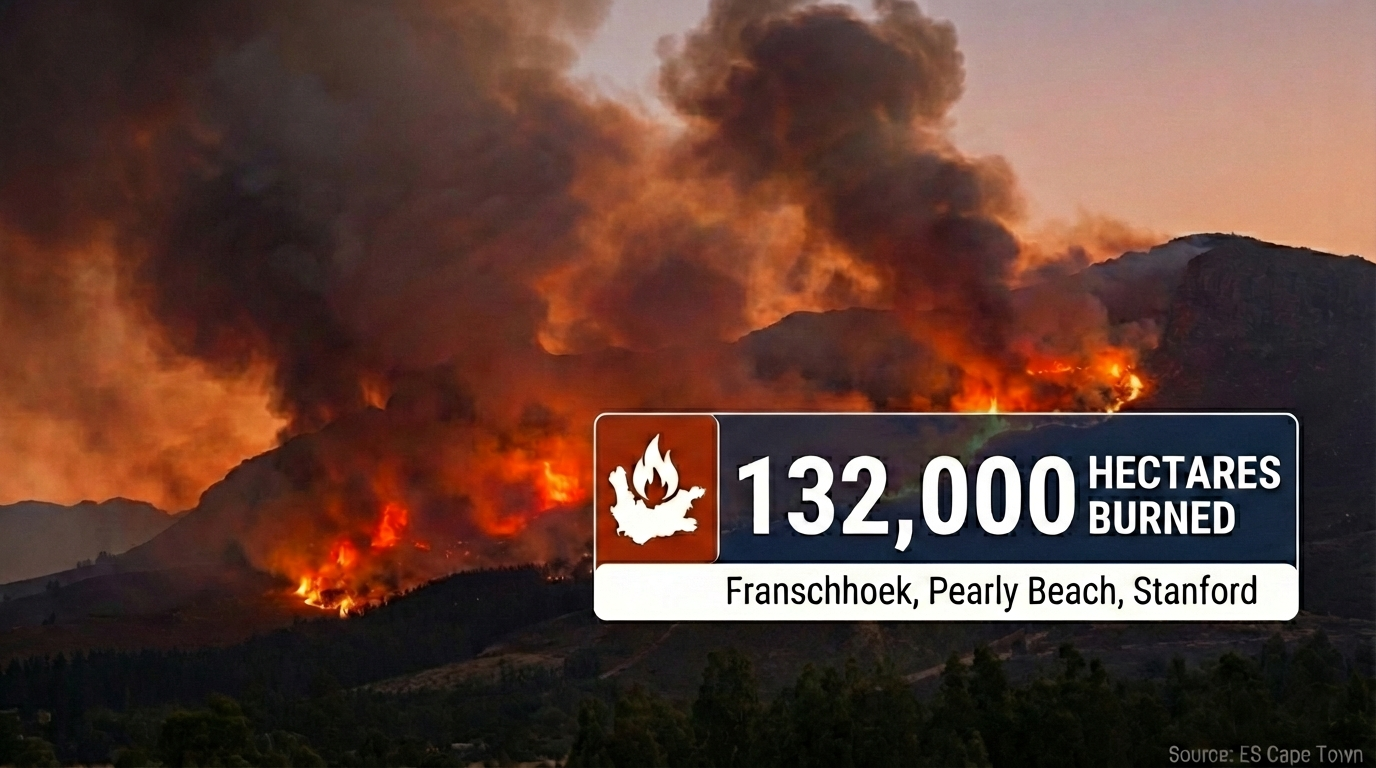
Western Cape Wildfires: Worst Season in a Decade Update 26 January 2026
Live Update • 26 January 2026 Western Cape Wildfires: Worst Season in a Decade 132,000 hectares burned province-wide as Cabinet requests disaster declaration. Franschhoek fire…
Read Article
New Developments: Western Cape Wildfires Update 22 January 2026
Photo courtesy of: SkyPixels, CC BY-SA 4.0, Wikimedia Commons Western Cape • 19–22 January 2026 • Franschhoek CRITICAL • Signal Hill • Strand / Helderberg…
Read Article
Wildfires in Western Cape - What is the situation 19 January 2026?
Photo courtesy of: Jeff Schmaltz, MODIS Land Rapid Response Team, NASA GSFC, Public domain, via Wikimedia Commons NEW UPDATE Newest compiled information is here: Read…
Read Article
Western Cape Wildfires Update: 15 January 2026
Photo courtesy of: SkyPixels, CC BY-SA 4.0, via Wikimedia Commons Cape Town • Western Cape • Summer wildfires • Peninsula + Winelands + Overberg Western…
Read Article
Why Is It Burning in Cape Town?
Photo courtesy of: Warren Rohner, CC BY-SA 2.0, via Wikimedia Commons Cape Town • Summer wildfires • Signal Hill, Table Mountain, the Cederberg Why Is…
Read Article