Woodstock in Cape Town: Safety, Highlights, and Visitor Tips
February 9, 2025

Is It Safe to Live in Woodstock, Cape Town?
Cape Town's creative heartland — where Victorian terraces, world-class street art, and the legendary Old Biscuit Mill meet a complex safety picture shaped by gentrification, gang proximity, and an award-winning City Improvement District.
Woodstock at a Glance
Population: ~16,000 residents (Census 2022 estimates) · Character: A gritty-glamorous inner-city suburb 2 km east of the Cape Town CBD, defined by a creative economy anchored around the Old Biscuit Mill, street art corridors, and a rapidly gentrifying Victorian residential fabric. Key 2025–26 developments: Cissie Gool House (old Woodstock Hospital) social housing proposal entering public comment; Heritage Western Cape ordering social impact studies on new developments; Woodstock Improvement District operating 16 security officers with 24/7 patrols and a CCTV network of 14+ cameras; and property prices climbing 10–14% year-on-year, outpacing Cape Town's 8% metro average.
Table of Contents
Suburb Overview
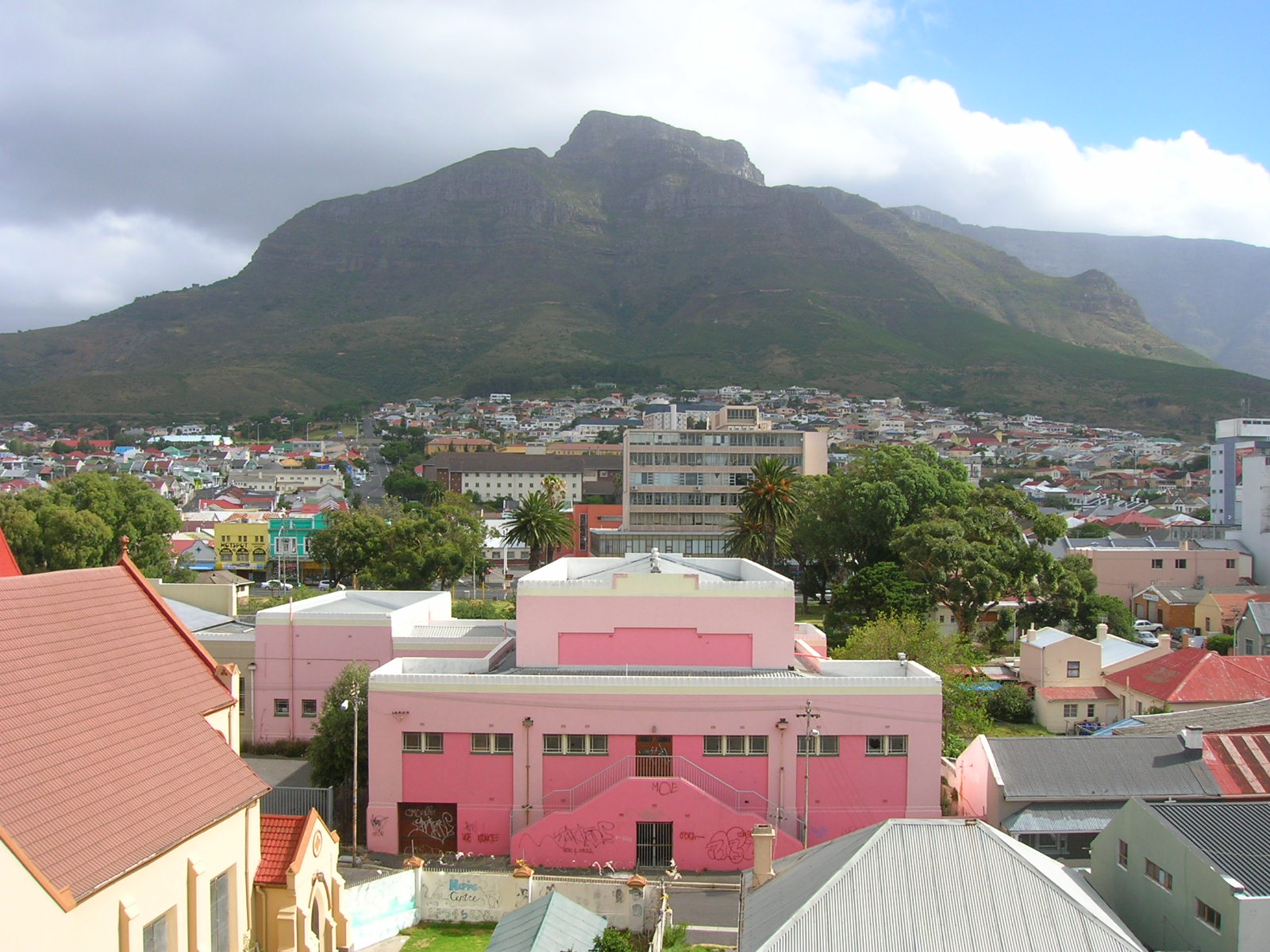
Woodstock sits on the eastern fringe of Cape Town's City Bowl, wedged between the N2 highway and the lower slopes of Devil's Peak. In less than ten minutes by car you can reach the V&A Waterfront, the Cape Town CBD, or the University of Cape Town — a positioning that has made Woodstock arguably the most rapidly transforming suburb in the country. Its main arteries — Albert Road, Victoria Road, and Sir Lowry Road — pulse with converted industrial buildings, street-art murals, craft breweries, and a mix of Victorian terraces and new-build apartment blocks that tell the story of two decades of gentrification.
The neighbourhood's immediate borders reveal its dual nature. To the west lies the Zonnebloem/District Six precinct, still partly vacant from apartheid-era forced removals. To the north, Salt River shares Woodstock's industrial-creative DNA but retains a grittier edge. To the south, the railway line and Nelson Mandela Boulevard create a hard barrier beyond which Observatory offers a more student-oriented, slightly calmer atmosphere. And to the east, beyond Roodebloem Road, residential blocks climb toward the mountain in what locals call "Upper Woodstock" — the quieter, leafier, and significantly safer pocket of the suburb.
Woodstock — situated between the Cape Town CBD and Observatory, straddling the railway line and the N2 highway.
Highlights to Explore
Woodstock is far more than a gentrification case study — it is a genuinely compelling neighbourhood to spend time in. Here are the places worth seeking out.
🎨 Art & Culture
Woodstock Street Art Trails
Over 40 large-scale murals by local and international artists line the streets between Albert Road and Sir Lowry Road. Guided walking tours led by local artists like Juma Mkwela run several times weekly — the best way to see off-main-road pieces safely.
Stevenson Gallery
One of Africa's most important contemporary art galleries, representing Zanele Muholi, Penny Siopis, and Guy Tillim. Located in a converted warehouse on Sir Lowry Road, Stevenson participates in Art Basel and Frieze London.
Goodman Gallery Cape Town
The Cape Town outpost of South Africa's blue-chip gallery, showcasing artists like William Kentridge and David Goldblatt. Regular exhibition openings double as social events for the local creative community.
🍽️ Food & Markets
Neighbourgoods Market at the Old Biscuit Mill
Saturday and Sunday from 9am. Over 100 food, craft, and artisan stalls spanning global cuisines — from flammkuchen and Korean bao buns to traditional shisa nyama. Free entry; arrive before 10am to beat the crowds. Safe parking at Cape Town College across the road.
The Pot Luck Club
Tapas-style restaurant perched above the Old Biscuit Mill with panoramic rooftop views of Woodstock and Devil's Peak. Accessed via a converted silo elevator — a signature Cape Town dining experience. Book well in advance.
Woodstock Brewery & Drifter Brewing
Two craft breweries within walking distance of each other. Drifter, an award-winning brewery with a buzzy taproom, is a favourite for post-work drinks. The Woodstock Brewery on Albert Road serves crisp lagers alongside brick-oven pizzas.
🛍️ Shopping & Lifestyle
The Woodstock Exchange
A converted biscuit factory now housing design studios, boutique shops, a Spar supermarket, yoga studios, and the Stockexchange Hotel. The creative hub hosts everything from artisan coffee roasters to letterpress printers.
Old Biscuit Mill (Weekdays)
Beyond the weekend market, the Mill houses designer boutiques like Harpers Rose, Imiso Ceramics, and Ma Mère Confections. Weekday visits are calmer and parking is available within the complex.
🏛️ Heritage & History
The Treaty Tree
A white milkwood tree at the corner of Treaty and Spring Street, said to mark the site where the British and Dutch negotiated during the 1806 Battle of Blaauwberg. A Western Cape Heritage Site.
District Six Museum (nearby)
Just 5 minutes away in Zonnebloem, this museum chronicles the forced removals of 60,000 residents during apartheid. Essential context for understanding Woodstock's own battle against displacement.
Safety & Security — 2025–2026
Woodstock's safety profile is one of the most complex in Cape Town. It is simultaneously a creative tourism hub that attracts thousands of weekend visitors to the Old Biscuit Mill, a gentrifying residential suburb with climbing property values, and a neighbourhood with documented gang presence (the Fancy Boys have been identified by the GI-TOC as operating in the area) and proximity to Cape Town Central precinct — the station with the highest volume of community-reported crime nationally. Understanding Woodstock's safety therefore requires nuance, not a single number.
Safety Rating Methodology
Upper Woodstock (Residential)
The leafier blocks above Victoria Road climbing toward Devil's Peak. Victorian terraces, quiet streets, growing number of renovated homes. Low violent crime; some property crime (car break-ins). Effective neighbourhood watch presence.
Old Biscuit Mill / Albert Road Corridor
The gentrified commercial heart. Well-patrolled by WID security, especially on weekends. Petty theft and phone-snatching occur in crowds. Safe during trading hours; thins out significantly after dark.
Lower Woodstock (Searle St / Argyle St blocks)
This pocket has documented Fancy Boys gang activity and has seen shooting incidents. The area under the Searle Street bridge and around informal settlements in the old District Six fields is a known hotspot for burglary, theft, and drug-related crime.
N2 / Railway Periphery
The edges closest to the N2 highway and the Woodstock railway station. Transit points attract opportunistic crime. Car break-ins, muggings near the station, and the informal camp clusters create elevated risk, especially after dark.
Crime Statistics — 2024/2025
Woodstock falls under the Woodstock SAPS precinct. The Woodstock Improvement District reported in late 2024 that crime had decreased across all major categories (contact crimes, sexual offences, aggravated robbery, property crimes) based on Q3 2024 data for the WID area and surrounding neighbourhoods including Salt River, Walmer Estate, and Observatory. However, Cape Town Central precinct — which borders and overlaps with some of Woodstock's activity zones — remains the number-one station nationally for community-reported crime, recording 3,332 incidents in Q1 2024 alone.
Nationally, SAPS Q4 2024/2025 data (Jan–Mar 2025) showed encouraging trends: murder fell 12.4% year-on-year, aggravated robbery dropped 10.4%, and property-related crimes decreased 8.5%. In the Western Cape specifically, LEAP deployment areas saw murder rates fall 9.4%, though the province as a whole recorded a slight 0.95% increase in overall crime.
Key local data points for the Woodstock precinct include: theft from motor vehicles remains the most common offence (136 cases in a recent annual period, roughly stable year-on-year), while theft of motor vehicles showed a slight increase. Drug-related crime statistics spiked from 456 to 1,487 in the broader Cape Town Central precinct — but police noted this increase reflects proactive policing and arrests rather than a surge in drug use. Residential burglary in the wider City Bowl area is trending down in line with national trends (a 3,520-case national decrease in Q2 2024/2025).
Recent Incidents Timeline
Community Safety Infrastructure
Woodstock has a layered safety infrastructure that, for all its challenges, is significantly better-resourced than many Cape Town suburbs.
🛡️ Woodstock Improvement District (WID)
Established 2005. Runs 24/7 patrols with 16 security officers, 2 patrol vehicles, and a CCTV network of 14+ cameras (PTZ and static). Managed by Geocentric Urban Management, which oversees 14 of Cape Town's 54 CIDs. Also supervises 2 City of Cape Town Law Enforcement Officers with powers of arrest.
🏢 Woodstock SAPS Station
Full-service police station on Victoria Road. Crime Prevention Unit (CPU) has deployed plainclothes officers for targeted foot patrols in high-risk zones. Active Community Police Forum (CPF) with regular public meetings.
👥 Neighbourhood Watches & WhatsApp
Upper Woodstock has active neighbourhood watch groups with WhatsApp alert networks. The Woodstock Village Forum and Woodstock Residents Association coordinate community responses and liaise with the City.
📱 Emergency Contacts
Crime Stop: 08600 10111 · WID 24hr: via Geocentric control room · Woodstock SAPS: 021 442 2800 · City Emergency: 107 (from landline) or 021 480 7700 · Ambulance: 10177
Practical Safety Tips
1. Join local WhatsApp groups. The Woodstock CPF, WID, and neighbourhood watch groups share real-time alerts. Ask any estate agent or neighbour for links when you move in.
2. Know your micro-zone. Upper Woodstock (above Victoria Rd) is vastly safer after dark than the blocks south of Albert Rd. Choose accommodation and walking routes accordingly.
3. Don't walk alone at night. Even on the gentrified corridor, the streets empty quickly after 9pm. Use Uber or Bolt for any trips after dark — they're cheap and readily available.
4. Secure your vehicle. Theft from motor vehicles is the most common crime. Never leave valuables visible. Use paid/guarded parking (e.g., College of Cape Town lot) for weekend market visits.
5. Be phone-smart in crowds. The Old Biscuit Mill market and Albert Road are prime spots for phone snatching. Keep your device in a zipped pocket or body bag.
6. Invest in home security. If renting or buying, ensure properties have alarm systems with armed response (ADT, Fidelity ADT), secure gates, and burglar bars. Ask about the building's track record.
7. Avoid the railway underpass and Searle St bridge area after dark. These are identified hotspots. Use main roads and well-lit routes instead.
Daily Life & Attractions
Woodstock's appeal lies in its gritty vitality — a suburb where you can have a R400 tasting menu at the Pot Luck Club and buy a R20 bunny chow from a corner shop on the same street.
Shopping & Dining
The Old Biscuit Mill complex anchors the scene with restaurants, boutiques, and the Neighbourgoods Market (Sat–Sun). The Woodstock Exchange offers weekday creative retail. Albert Road has a string of independent cafés, vintage shops, and artisan bakeries. Spar at the Exchange handles daily grocery needs.
Education & Health
Queens Park High School is the local secondary school. Ruth Prowse School of Art and The Animation School offer creative tertiary education. UCT is a 10–15 min drive. Groote Schuur Hospital (one of Africa's best) is 10 minutes away. Multiple GP practices on Victoria Road.
Creative Community
Woodstock is Cape Town's creative capital. Over a dozen galleries, multiple artist studios, a thriving street-art scene, and annual events including the Cape Town Art Fair (February) draw international attention. IPAF (International Public Art Fair) uses Salt River and Woodstock as its canvas.
Getting Around
Uber/Bolt are abundant and cheap (R30–R50 to most central destinations). MyCiTi bus routes serve the area. Woodstock railway station connects to the Southern Suburbs line, though the station area requires caution. Cycling is popular for commuting to the CBD via dedicated lanes.
Historical & Cultural Overview
Woodstock's story stretches back to the 1850s when it emerged as a small fishing hamlet on the shores of Table Bay — long before land reclamation pushed the coastline far north. During the British occupation, English influence left its mark in street names (Victoria Road, Albert Road) and rows of Victorian terraced houses reminiscent of northern English mill towns. By the early 20th century, Woodstock had evolved into a bustling portside suburb serving Cape Town's docks, with a textile industry and small-scale manufacturing base that would define its character for decades.
What made Woodstock historically extraordinary was its defiance of apartheid racial classification. While bulldozers destroyed neighbouring District Six — forcibly removing over 60,000 people under the Group Areas Act — Woodstock's community organised the "Open Woodstock" campaign and successfully resisted classification as an exclusively coloured area. It remained one of Cape Town's only multiracial spaces throughout the apartheid era, a fact that residents carry with profound pride.
Post-1994, Woodstock entered a new chapter. Tax breaks and designation as a City Improvement District in the early 2000s triggered waves of gentrification — first converting disused warehouses into galleries and offices, then attracting new-build mixed-use developments that have driven property prices sharply upward. The opening of the Old Biscuit Mill in 2005 (transforming the former Pyotts biscuit factory) became the symbolic anchor of "New Woodstock." But gentrification has been deeply contested. Organisations like Reclaim the City and Ndifuna Ukwazi have fought evictions and displacement, and the Constitutional Court's 2025 Bromwell ruling declared parts of the City's emergency housing policy unconstitutional — specifically citing gentrification-driven evictions in Woodstock and Salt River.
Key Milestones
1850s — Woodstock established as a fishing hamlet on Table Bay shores
1880s–1900s — Victorian terraced houses built; portside manufacturing grows
1960s–80s — "Open Woodstock" campaign resists Group Areas classification
2005 — Old Biscuit Mill opens; Woodstock Improvement District established
2010 — Street artist Freddy Sam sparks Woodstock's mural revolution
2017 — Reclaim the City occupies old Woodstock Hospital (Cissie Gool House)
2024 — Heritage Western Cape orders social impact study on Albert Road developments
2025 — Constitutional Court Bromwell ruling cites Woodstock gentrification
Property Market — 2025–2026
Woodstock has emerged as one of Cape Town's hottest property markets, driven by a potent combination of inner-city location, creative-economy appeal, and prices that remain accessible compared to the Atlantic Seaboard or Southern Suburbs. Cape Town property prices grew approximately 8% in 2025 (roughly double the national average), but Woodstock and Salt River outpaced even that — estimated at 10–14% annual growth, placing them among the city's fastest-appreciating neighbourhoods.
Rental Snapshot — Woodstock
Studio: R8,000 – R11,000/month · 1-bed: R11,000 – R16,000/month · 2-bed: R15,000 – R22,000/month · Short-term/Airbnb can yield R20k+ in peak season for furnished units. Vacancy rate below 2%.
Buyer Profile
Young professionals (25–40) dominate both buying and renting. International investor interest growing, particularly for furnished buy-to-let units. Gentrification has shifted the buyer profile sharply upmarket over the past decade — the median buyer age has dropped while purchasing power has increased.
The repo rate (currently around 7.5%, down from highs above 8%) is expected to edge lower through 2026 if inflation remains contained, which should further support mid-market demand. Analysts forecast Cape Town property growth of 3–7% annually over the next five years, with Woodstock likely to outperform due to its regeneration momentum and supply constraints from heritage protection.
Comparisons with Neighbouring Districts
Woodstock vs Observatory
Safety: Observatory is slightly calmer overall (6.5–7.0), with its own CID (OBSID) providing similar patrol services. Character: More student-oriented and bohemian; less gentrified commercial activity. Price: Comparable rents; Observatory has slightly lower property prices. Verdict: Observatory for a quieter lifestyle; Woodstock for creative energy and market access.
Woodstock vs Salt River
Safety: Salt River shares the same precinct and similar risks but with fewer CID resources in some blocks. Character: Grittier, less tourist-facing; more industrial conversions in progress. Price: Salt River is 10–15% cheaper on average — the "next Woodstock" for value seekers. Verdict: Salt River for entry-level investment; Woodstock for established amenities.
Woodstock vs Gardens / Tamboerskloof
Safety: Gardens/Tamboerskloof rate 7.5–8/10 — notably safer, with active CIDs and lower gang exposure. Character: More residential, leafy, and established. Price: 30–50% more expensive. Verdict: City Bowl proper for safety-first residents; Woodstock for value and creative community.
The Bottom Line
Woodstock offers the best blend of inner-city access, rental yields, and cultural richness in Cape Town — at a significant discount to equivalent City Bowl and Atlantic Seaboard suburbs. The trade-off is a more complex safety environment that requires situational awareness and smart choices about where within the suburb you live, work, and walk.
Pros & Cons
✅ Pros
- Unbeatable creative scene. World-class galleries, street art, and the Old Biscuit Mill make Woodstock culturally richer than most Cape Town suburbs combined.
- Inner-city location. 2 km from the CBD, 10 min to UCT, 8 min to the V&A Waterfront — commuting is a non-issue.
- Strong investment returns. 8–11% rental yields and 10–14% annual capital growth outperform almost every other suburb.
- Active CID and safety investment. 16 officers, 24/7 patrols, CCTV, and dedicated Law Enforcement — better resourced than many "safer" suburbs.
- Diverse, authentic community. One of Cape Town's few genuinely multiracial, multi-class neighbourhoods with deep historical roots.
- Food and drink excellence. From the Pot Luck Club to corner bunny chow, with craft breweries and weekend markets in between.
⚠️ Cons
- Sharp safety gradients. Walking 500m in the wrong direction can take you from a safe gallery precinct to a documented gang zone. Requires local knowledge.
- Gang proximity. The Fancy Boys have been identified as operating in lower Woodstock. Shooting incidents, while rare in the gentrified core, do occur in the peripheral blocks.
- Night-time dead zones. The creative corridor empties after 9pm, making late-night walking risky even on Albert Road.
- Gentrification tensions. Rising rents and developer pressure have displaced long-standing communities, creating social friction. The Cissie Gool House occupation is a visible reminder.
- Car crime. Theft from motor vehicles is persistent. "Car watchers" (informal parking attendants) are ubiquitous and can be aggressive.
- Noise and grit. This is not a polished suburb. Construction, traffic, and urban messiness come with the territory.
Future Developments & Outlook
Woodstock's next five years will be shaped by a tug-of-war between developer ambition and community resistance — with the city, the courts, and Heritage Western Cape as arbiters.
Cissie Gool House Social Housing
The City of Cape Town plans to sell the old Woodstock Hospital site to a developer for ~500 residential units, with some subsidised social housing (capped at R6,475/month rent). Over 850 current occupants — many evicted from Woodstock during gentrification — face uncertain futures. Public comment closed January 2025; outcome pending.
Albert Road Heritage Corridor
Heritage Western Cape has ordered developers (including Signatura and Indigo Properties for the WEX2 project) to redesign plans and conduct social impact studies. This first-of-its-kind requirement in Woodstock could set precedent for how development interacts with living heritage across the city.
Victoria & Albert Road Resurfacing
City of Cape Town completed major road resurfacing works on Victoria Road and Albert Road in 2025, improving pedestrian and cyclist infrastructure along Woodstock's main corridors. Part of broader investment in the inner-city precinct.
NSO Deployment & CID Expansion
Five Neighbourhood Safety Officers deployed to Ward 57 (including parts of Woodstock) in October 2025 as part of the City's 700-officer metro police expansion. The WID is entering its fifth five-year term (2022–2027) with a renewed mandate and expanded CCTV coverage.
Latest News
The Bromwell judgment found the City of Cape Town's emergency housing policy fails to address gentrification-driven evictions in Woodstock and Salt River. Judge Mathopo said the gentrification policy "seeks to achieve that which the forced removal policy of apartheid failed to achieve."
A 30-year-old woman was shot multiple times in Sussex Street by an unknown suspect. Woodstock police responded to find her body with gunshot wounds. The motive remains under investigation.
Woodstock Crime Prevention Unit officers deployed in plainclothes for foot patrols in high-risk zones, resulting in 23 arrests for theft, robbery, and property crimes. A mugger who targeted an off-duty police officer was apprehended.
About 100 people attended a meeting organised by the Woodstock Residents Association to discuss the City's plan to sell the old Woodstock Hospital (Cissie Gool House) to a developer. Over 850 residents fear eviction without access to the proposed social housing.
Five newly graduated City of Cape Town metro police constables allocated to Ward 57 (including parts of Woodstock, Salt River, Observatory, and District Six) as part of a citywide 700-officer deployment program.
The Woodstock Improvement District confirmed reductions in contact crimes, sexual offences, aggravated robbery, and property crimes based on Q3 2024 data. Managing Director Gene Lohrentz credited increased deployment of safety officers.
Developers of a block of flats on Albert Road ordered by HWC to redesign plans and take gentrification into consideration — the first time such a requirement has been imposed in Woodstock.
Conclusion & Recommendations
Woodstock is not for everyone — and that is precisely what makes it compelling. It is Cape Town's most dynamic inner-city suburb: a place where world-class art, globally acclaimed food, deep historical significance, and genuine community co-exist with real safety challenges that demand awareness and preparation.
For Visitors: Woodstock is well worth a Saturday morning visit for the Neighbourgoods Market and a guided street-art walk. Stick to the Old Biscuit Mill precinct and Albert Road corridor during daylight, use Uber/Bolt after dark, and keep valuables secure in crowds. You'll experience a side of Cape Town that tourist-heavy suburbs can't offer.
For Residents & Expats: Upper Woodstock (above Victoria Road) offers a vibrant, walkable urban lifestyle with genuine creative community spirit — at a fraction of City Bowl prices. Invest in home security, join local WhatsApp groups, and learn the micro-geography of safe and riskier blocks. The WID's presence makes the commercial core one of the better-patrolled precincts in Cape Town.
For Property Seekers: At 8–11% gross yields and 10–14% capital growth, Woodstock is one of the strongest investment propositions in the city. Focus on the Albert Road corridor and Upper Woodstock for the best balance of yield and risk. Be aware of gentrification-related regulatory risks (Heritage Western Cape requirements, social impact studies) that could affect development timelines.
Quick-Glance Summary
Woodstock Visual Tour
Explore Woodstock's streets, murals, and the Old Biscuit Mill market atmosphere.
Sources & References
Crime Data: SAPS Quarterly Crime Statistics Q2–Q4 2024/2025 (saps.gov.za); CrimeHub Wizard (crimehub.org); CrimeStatsSA (crimestatssa.com)
Gang Research: GI-TOC Western Cape Gang Monitor No. 2 (March 2024); GI-TOC Observatory of Organized Crime in South Africa; Cape Town Ward Safety Index (capetowndata.com, Jan 2026)
Safety Infrastructure: Woodstock Improvement District (wid.co.za); WID Business Plan 2022–2027; Geocentric Urban Management annual reports
Property Data: Property24 Woodstock listings and valuations; Lightstone deeds data; The Africanvestor Cape Town Price Forecasts (Jan 2026); Pam Golding Western Cape index; TPN Residential Rental Monitor Q3 2025
News Sources: News24, Daily Maverick, GroundUp, IOL/Cape Argus, EWN, The CapeTowner, CapeTownEtc
Historical / Cultural: Wikipedia — Woodstock, Cape Town; SA History Online; Garside (1993), "Residential change in Woodstock"; Wenz (2012, 2013) on Woodstock gentrification; MIT DUSP Anti-Gentrification Planning in Woodstock project
Government: Western Cape Government crime statistics commentary; City of Cape Town resource centre; SARB MPC statements
More in Neighborhood Safety Deep-Dives
- Is It Safe to Stay in Bloubergstrand, Cape Town? 2026 Safety Evaluation
- Is It Safe to Live in Walmer Estate, Cape Town? 2025–2026 Safety Guide
- Is Sea Point Safe for Tourists? A Data-Driven Analysis (2024–2026)
- Is It Safe to Live in Rondebosch, Cape Town?
- Is It Safe to Live in Oranjezicht, Cape Town?
- Cape Town Gangs: What Visitors Need to Know in 2026 | Safety Guide
You May Also Like

Is It Safe to Stay in Bloubergstrand, Cape Town? 2026 Safety Evaluation
Photo courtesy of Wikimedia Commons contributor, licensed under CC BY 3.0 Is It Safe to Stay in Bloubergstrand, Cape Town? | 2025–2026 Safety Guide Western…
Read Article
Is It Safe to Live in Walmer Estate, Cape Town? 2025–2026 Safety Guide
Photo courtesy of Axxter99, Wikimedia Commons, licensed under CC BY-SA 4.0 Is It Safe to Live in Walmer Estate, Cape Town? | 2025–2026 Safety Guide…
Read Article
Is Sea Point Safe for Tourists? A Data-Driven Analysis (2024–2026)
Is Sea Point Safe for Tourists? A Data-Driven Analysis (2025–2026) | Cape Town Data ◆ Data Analysis — February 2026 Is Sea Point Safe for…
Read Article
Is It Safe to Live in Rondebosch, Cape Town?
Photo courtesy of Zaian, Wikimedia Commons, licensed under CC BY-SA 3.0 Is It Safe to Live in Rondebosch, Cape Town? | 2025–2026 Safety Guide Southern…
Read Article
Is It Safe to Live in Oranjezicht, Cape Town?
Photo courtesy of Hansueli Krapf, Wikimedia Commons, licensed under CC BY-SA 3.0 Is It Safe to Live in Oranjezicht, Cape Town? | 2025–2026 Safety Guide…
Read Article