10-Day Cultural Immersion Itinerary for Cape Town (June)
Highlights Map
Discover Cape Town in its cozy winter glory with this 10-day cultural deep dive packed with flavor, history, and breathtaking scenery.
Day-by-Day Plan
10-Day Cultural Immersion Itinerary for Cape Town (June)
Introduction: Cape Town, fondly known as the Mother City, is a vibrant coastal metropolis tucked between the iconic Table Mountain and the vast Atlantic Ocean. Visiting in June means experiencing Cape Town in winter – days are cool (~17°C) and nights can get cold (~8°C). Rain showers are frequent and days can be cloudy, since June is one of the wettest months of the year. This off-season brings fewer tourists, offering a quieter and more affordable trip. Despite the cooler weather, June is ideal for cultural exploration: you’ll enjoy uncrowded museums, cozy restaurants, and indoor activities, with occasional clear days for outdoor adventures. In this comprehensive 10-day itinerary, we blend history, culture, scenery, and cuisine to immerse you in the authentic Cape Town experience. Each day includes morning, afternoon, and evening plans with safety tips, dining recommendations, and transport advice so you can explore confidently and comfortably.
How to Use This Itinerary: The guide begins with an overview of Cape Town’s highlights and a map for orientation, followed by day-by-day plans. Each day is crafted for a culturally curious couple, balancing famous sights with local gems. We’ve included notes on staying safe (Cape Town is generally safe in tourist areas, but caution is needed after dark) and suggestions for getting around (Uber, reputable taxis, or guided tours for farther areas). Get ready to discover Cape Town’s rich heritage, from the colorful Bo-Kaap quarter to Nelson Mandela’s prison on Robben Island, taste Cape Malay curries and world-class wines, and soak in epic mountain and ocean vistas – even in the brisk charm of a Cape Town winter.
Table of Contents
- Introduction – Cape Town in June and itinerary overview
- City Highlights – Top cultural and scenic attractions not to miss
- Map of Cape Town – Overview of key locations (neighborhoods and sites)
- Detailed 10-Day Itinerary
- Day 1: Arrival, City Centre Walking Tour & Bo-Kaap
- Day 2: Table Mountain & City Bowl History
- Day 3: Robben Island & V&A Waterfront
- Day 4: Cape Peninsula – Cape Point & Penguins
- Day 5: Stellenbosch Winelands Excursion
- Day 6: Township Visit & Kirstenbosch Gardens
- Day 7: Museum Hopping & Local Markets
- Day 8: Coastal Road Trip & Chapman’s Peak Drive
- Day 9: Free Day – Foodie Tour & Shopping
- Day 10: Farewell Cape Town (Last Morning)
- Summary Table – 10-Day Itinerary Overview
City Highlights
Table Mountain: Cape Town’s flat-topped mountain is its most iconic landmark, recently named one of the New7Wonders of Nature. Often draped in its famous “tablecloth” of clouds, the mountain rewards visitors with breathtaking panoramas of the city and ocean. A revolving cable car carries you to the summit (weather permitting), where you can wander easy trails and spot unique flora of the Cape Floristic Region (a UNESCO-recognized biodiversity hotspot).
Robben Island: A short ferry ride from the city, this island prison turned museum is a UNESCO World Heritage Site steeped in history. It’s where Nelson Mandela was held for 18 of his 27 years in prison. The preserved maximum-security prison and anecdotes from former inmate guides provide moving insight into South Africa’s apartheid era. Robben Island and its prison buildings “symbolize the triumph of the human spirit, of freedom, and of democracy over oppression” – a powerful testament to resilience.
Bo-Kaap: A historic neighborhood also known as the Malay Quarter, famous for its brightly painted houses and Cape Malay culture. Formerly home to enslaved people from Southeast Asia, Bo-Kaap became a predominantly Muslim area where many freed slaves painted their homes in vivid colors as an expression of freedom. Stroll the cobbled streets to admire the 18th-century architecture, visit the Bo-Kaap Museum (in the country’s oldest mosque building), and sample Cape Malay cuisine – a delicious fusion of Middle Eastern, South Asian, and African flavors (think fragrant curries, samosas and bobotie).
District Six Museum: A small museum with a big emotional impact, dedicated to the 60,000 residents of District Six who were forcibly removed from their homes during apartheid in the 1970s. Through handwritten notes, photographs, and maps, the museum preserves the memories of this once-vibrant multiracial community. It’s a sobering look at the past injustices, making it clear why “District Six” remains a symbol of both trauma and hope in Cape Town’s collective memory.
V&A Waterfront: A lively harborfront development and safe tourist hub, filled with shops, craft markets, eateries, and entertainment. Set in the historic docks with Table Mountain as a backdrop, the Victoria & Alfred Waterfront is great for an evening out – you can dine on fresh seafood, listen to live music, ride the giant observation wheel, or simply stroll the promenades. It’s well-lit and patrolled, making it one of the safest areas to wander in the evening, though normal precautions apply. (The Waterfront is a good spot to call an Uber from when venturing elsewhere at night.)

Photo by User Georgio on fr.wikipedia, CC BY-SA 3.0, via Wikimedia Commons

Cape Peninsula (Cape Point & Cape of Good Hope): The dramatic peninsula at the city’s southern end lies within Table Mountain National Park. A day trip here treats you to rugged coastal scenery: sheer cliffs, fynbos vegetation, and the feeling of reaching the end of the African continent. At Cape Point, you can hike or take a funicular to the lighthouse for awe-inspiring ocean vistas. Nearby, the Cape of Good Hope – the south-westernmost point of Africa – is where two ocean currents converge, and is often cited as the meeting point of the Atlantic and Indian Oceans (a symbolic designation) amid crashing waves. Keep an eye out for wildlife: baboons on the roads, ostriches on the beach, and African penguins at Boulders Beach (in the town of Simon’s Town on your way to Cape Point).
Kirstenbosch Gardens: Nestled against the eastern slopes of Table Mountain, Kirstenbosch National Botanical Garden is world-renowned. Even in winter, its landscaped gardens showcase South Africa’s indigenous plant life (protea, cycads, fragrant herbs) in a lush setting. Paved paths and an aerial tree-canopy walkway make for a pleasant afternoon stroll. If you’re lucky to visit on a clear Sunday in winter, there may be indoor concerts or special exhibitions; but even on a quiet day, the views of verdant gardens against misty mountain peaks are magical.
Wine Country (Stellenbosch & Constantia): The Cape Winelands offer both stunning scenery and cultural history. Stellenbosch, a 45-minute drive from Cape Town, is a charming university town full of Cape Dutch architecture, and the surrounding vineyards produce some of South Africa’s best wines. A day in the Winelands means cellar tours and wine tastings (Pinotage and Chenin Blanc are local specialties) at elegant estates – many of which also have top-notch restaurants set among the vines. If you prefer to stay closer to the city, Constantia is a historic wine region in Cape Town’s southern suburbs with a few estates (like Groot Constantia) dating back to the 17th century. Wine tours are a safe and enjoyable way to experience this heritage (opt for a guided tour or hire a driver so you can sip freely).
Local Markets & Cuisine: To truly experience Cape Town’s culture, engaging with its food and people is key. Highlights include the Neighbourgoods Market at the Old Biscuit Mill (a trendy Saturday market in Woodstock for local art, fashion, and global street foods), and weekday Greenmarket Square in the city center (great for African crafts and souvenirs, just watch for pickpockets in the crowd). Food-wise, don’t miss a chance to enjoy a traditional Cape Malay dinner (try restaurants like Bo-Kaap Kombuis or Biesmiellah for curry and denningvleis stew), a seafood feast in Kalk Bay or the Waterfront (fresh catch of the day or Cape rock lobster if available), and a braai (South African barbecue) experience. For a special cultural night out, consider GOLD Restaurant – it offers a pan-African dining experience with a 14-course tasting menu and live drumming/dance show (a bit touristy but very fun and informative). And for the jazz lovers, Cape Town’s jazz heritage is alive in clubs like The Crypt or Piano Bar, where you can unwind to live music (just take an Uber to/from the venue at night).
Map of Cape Town with Key Points
Cape Town map: The city spans the Cape Peninsula from the City Bowl (downtown area nestled under Table Mountain) to the Cape of Good Hope at the southern tip. This map shows the general layout, including Table Bay on the north (with Robben Island off the coast), the mountainous spine running down the peninsula, and various suburbs. Marked on the map are major areas like the City Centre, Bo-Kaap (central, just above downtown), V&A Waterfront (on the bay), Table Mountain National Park (green areas covering the mountain and Cape Point), Hout Bay (on the west coast midway down), and Simon’s Town near Cape Point (on the east coast, close to the Boulders penguin colony). The Cape Winelands (Stellenbosch, Franschhoek) lie to the east, off the map. Use this as a reference for the relative locations of each day’s activities. (June travel note: distances can be deceiving – while the city center is compact, reaching Cape Point or wine country involves a scenic drive of 60-70km, so plan full-day excursions accordingly.)
Detailed 10-Day Itinerary
Day 1: Welcome to Cape Town – City Stroll & Bo-Kaap Culture

Photo by John Mason from Edinburgh, UK, CC BY 2.0, via Wikimedia Commons
.jpg)
Morning:
Start your trip with an orientation walking tour of Cape Town’s historic City Bowl. If you’re arriving this morning (or had a rest from a late arrival), ease into the city by exploring the Company’s Garden – a peaceful park established in the 1650s by the Dutch East India Company. Stroll past the rose beds and ancient oak trees while spotting landmarks: the Parliament buildings, Iziko South African Museum, and St. George’s Cathedral (Archbishop Desmond Tutu’s former parish). Many free walking tours depart from Greenmarket Square late morning; consider joining one focused on the city’s history or apartheid sites. It’s a safe way to see downtown with a local guide. You’ll learn about landmarks like the Castle of Good Hope (1666 fort) and City Hall (where Mandela gave his first speech after release).
Safety: By day, the central areas (Long Street, Adderley Street) are busy and fine for walking – just be mindful of your belongings (use a cross-body bag and don’t flash valuables). If jet-lagged, take breaks on benches in Company’s Garden (it’s safe with occasional security around).
Transport: Walk or Uber between downtown spots as needed – distances are short, and Uber is inexpensive for conserving energy on Day 1.
Lunch: Head into Bo-Kaap – the perfect introduction to Cape Town’s multicultural heritage. There are a few small eateries in this quarter; for an authentic bite, try Bo Kaap Deli or Biesmiellah, known for Cape Malay cuisine. Enjoy a Bobotie (spiced minced meat baked with egg topping) or a fragrant Cape Malay curry with roti. Don’t skip a koeksister (sweet fried dough) for dessert if available. The neighborhood’s Muslim roots mean some restaurants are Halal (no alcohol served), but you can find a cool non-alcoholic ginger beer or falooda (rose syrup milkshake) to drink.
Afternoon:
Explore Bo-Kaap’s colorful streets on foot. This area, with its rainbow-painted houses and mosques, is very photogenic – Chiappini and Wale Streets are iconic spots for photos. Pop into the Bo-Kaap Museum on Wale St. (closed Sundays) to learn about the lives of early Cape Malay families and how enslaved peoples’ descendants made this area their own. You might hear the call to prayer from the area’s historic mosques (like the Auwal Mosque, South Africa’s oldest, dating to 1794). Consider taking a guided Bo-Kaap walking tour or even a Cape Malay cooking class in a local home (several are offered in the afternoons) – a wonderful cultural immersion where you’ll learn to fold samoosas or mix masala, and hear personal stories.
Safety: Bo-Kaap is generally safe during daylight and early evening when people are about. The community is friendly – you may get warm greetings. Still, stick to the main, photogenic streets and avoid wandering alone into deserted back lanes. Always keep your camera strapped and be respectful when photographing people’s homes. If you drove, don’t leave anything visible in the car.
The Bo-Kaap’s vibrant character: Strolling through Bo-Kaap, you’ll see rows of brightly colored houses set along steep cobbled streets. This historic neighborhood was once known as the Malay Quarter and became a center of Cape Malay culture – many inhabitants are descendants of enslaved people from Southeast Asia brought here in the 17th–18th centuries. Painting their homes in vivid colors was a post-slavery tradition symbolizing freedom and community pride. As you explore, you might smell spices wafting from kitchen windows or hear children playing – Bo-Kaap remains a close-knit residential area. Take time to greet local shopkeepers, visit a corner spice store, and appreciate how this enclave has preserved its heritage amid the modern city around it.
Evening:
Enjoy a relaxed first evening to recover from travel. For dinner, delve deeper into African flavors at GOLD Restaurant (if you have the energy for a lively outing). They offer a 14-dish tasting menu (with Cape Malay, Ethiopian, Xhosa and more) plus interactive drumming – a fun introduction to African music and food. Alternatively, try Marco’s African Place in Bo-Kaap for a mix of Xhosa dishes and live music in a more casual setting. If you prefer something low-key, the V&A Waterfront is a good choice tonight: it’s safe, well-lit and bustling with options. You could dine at Karibu (serves game meats and Cape dishes) or Harbour House (seafood) overlooking the harbor. After dinner, take a short walk around the Waterfront’s quays to see Table Mountain lit up at night.
Safety: The Waterfront is patrolled – stick to inside the complex. If your hotel is nearby, it’s okay to walk back in a group; otherwise, take an Uber. In fact, Uber is the go-to mode at night – locals often Uber even for 2-minute trips instead of walking in the dark. So when in doubt, call a car. Get a good night’s rest – tomorrow, the mountain awaits!
Transport tips: No car needed on Day 1. Use Uber or the MyCiTi bus to get around the city center as needed (MyCiTi has a convenient route along Long Street and to the Waterfront). If staying in the City Centre or Waterfront area, many sites are within walking distance. Just avoid deserted areas after dark – when in doubt, Uber. You’ll notice that even locals seldom walk after hours and prefer quick Uber rides for safety.
Day 2: Summit of Table Mountain & City History Delve

Photo by Pavel Špindler, CC BY 3.0, via Wikimedia Commons

Morning:
Wake up to Cape Town’s most famous sight – Table Mountain. Check the weather first thing: if it’s clear or only partly cloudy, seize the opportunity to go up Table Mountain today (the cableway closes for strong winds or heavy rain, which are common in winter). Arrive early at the Lower Cable Station (opens ~8:30–9am in winter) to beat any crowds. Ride the rotating cable car up 1,067m to the flat summit. At the top, take your time soaking in the 360° views: the city and harbor spread out below, flanked by Lion’s Head peak and Signal Hill; the Twelve Apostles range running along the coast to the south; and Robben Island visible in Table Bay. In winter the air is crisp and the visibility can be superb on a clear day. Walk the easy Dassie Walk or Agama Trail on the plateau for different vantage points – you’ll encounter unique plants (gnarled proteas, restios) and perhaps a furry dassie (rock hyrax) sunning on a rock.
Safety: Stay on the marked paths atop the mountain; the cliff edges are sheer with no railings in places. Watch for sudden changes – clouds can roll over the “Tabletop” quickly, causing white-out conditions. Bring a warm jacket; it’s colder and windier up there. If visibility drops or rain starts, head back to the cable station.
Transport: To reach the cableway, you can drive (10 minutes from city, free parking area but it fills up) or take an Uber/taxi. Alternatively, the City Sightseeing Hop-On Bus (Red Route) is a convenient option – it stops at the cableway and you can continue using it after (the bus ticket is valid all day and is a safe way to get around tourist sites).
If Table Mountain is too cloudy or cable car closed: Don’t worry – postpone it to another day. Instead, spend the morning at Signal Hill (drive or Uber up for a lesser but still lovely city view) or visit Lion’s Head trailhead for a short hike up partway (if not raining). Or use the time to visit a museum: the District Six Museum would fit well this morning if weather is poor, giving you more indoor time (you can swap the District Six visit from Day 7 into here).
Lunch: After descending Table Mountain (typically by late morning or midday), head to the City Bowl for lunch and historical exploration. Nearby Kloof Street (in Gardens neighborhood) has trendy cafés – try Mzansi Coffee or Bootlegger for a quick bite, or for something hearty, Bacini’s on Kloof is a beloved local pizzeria. If you’d rather stay near Table Mountain a bit longer, the Lower Cable Station Cafe serves simple sandwiches and has a deck with views – but with so many great eateries in town, it’s worth heading into the city for more variety.
Afternoon:
Dive into Cape Town’s history this afternoon. A great stop is the District Six Museum (if you didn’t go in the morning) to reflect on apartheid’s impact. It’s a small building packed with personal stories – allow ~1 hour and perhaps take a guided tour led by an ex-resident for deeper insight. From there, you can walk (15 min) or Uber to the Castle of Good Hope, the star-shaped colonial fort. Explore its barracks, bastions, and small museums inside (military and art exhibits) to imagine life in the 17th century Cape Colony. History buffs may also enjoy the Slave Lodge on Adderley Street – a museum in a former slave house that chronicles the lives of enslaved people and the Cape’s dark past of slavery. It’s a sobering but important visit to understand the city’s multicultural roots.
If museums aren’t your preference today: Consider a walking tour of the City Centre focusing on architecture and culture: stroll down St. Georges Mall pedestrian street for buskers and craft stalls, peek into the Company’s Garden again to perhaps visit the South African National Gallery (with local art and photography), or do some shopping on Long Street (known for books, African fashion, and curious antiques). You could also stop by Truth Coffee Roasting on Buitenkant Street – a “steampunk” cafe frequently ranked among the world’s best coffee shops – for an afternoon pick-me-up in a very cool setting.
Safety: By afternoon, you might be in quieter parts of downtown. Remain alert on side streets; avoid displaying expensive cameras or jewelry. It’s best to Uber between far-apart sites if the streets look empty. In museums and attractions, your belongings are safe but keep them close. The Castle is generally safe with staff around, but its surrounding area is less busy – so use Uber or the hop-on bus to arrive/leave rather than walking through desolate sections.
Evening:
Tonight, enjoy dinner in the City Centre or nearby neighborhoods like Gardens or Tamboerskloof. For a stylish yet traditional experience, try Cape Malay Kitchen at the Cellars-Hohenort (if you’re willing to go to Constantia for an upscale Cape Malay tasting menu in a historic manor) or stay central and go to Mama Africa on Long Street, which offers a tourist-friendly introduction to African game meats (crocodile, springbok) and often has marimba bands performing. Another great choice is Aubergine (Gardens area) for Cape fusion fine dining in a cozy converted home (higher-end, reservation recommended). If you’re craving something warm and casual after a long day, opt for hearty local braai (barbecue) food at Karibu or even a simple Gatsby sandwich from a local takeout (a Gatsby is a Cape Town specialty gigantic sub – fun to share!).
After dinner, you might want a low-key night. If you’re up for entertainment and it’s a weekend, check out Jazz: The Crypt Jazz Club (under St. George’s Cathedral) hosts live jazz in an atmospheric venue, or Asoka on Kloof Street has live music on Tuesdays.
Always arrange transport to/from by Uber. Cape Town’s downtown does quiet down on weeknights; for safety, avoid walking far in the dark and stick to well-lit, populated places or take a short Uber ride to your hotel.
Day 3: Robben Island & Waterfront Wonders

Photo by Bernard DUPONT from FRANCE, CC BY-SA 2.0, via Wikimedia Commons
.jpg)
History brought to life: A visit to Robben Island is a profound experience. This island prison held many political prisoners during apartheid – including Nelson Mandela, who spent 18 years here behind bars. Today it’s a museum and World Heritage Site where ex-prisoners often guide tours. Seeing Mandela’s tiny cell and the limestone quarry where inmates toiled is humbling. Robben Island has come to symbolize the triumph of freedom over oppression, as noted by UNESCO. Touring the facilities and hearing personal accounts will give you deep insight into South Africa’s journey to democracy.
Morning:
Make your way to the V&A Waterfront by 8:30am for the Robben Island ferry (advance booking is essential, as trips can fill up). Dress warmly – the 30-45 minute ferry ride across Table Bay can be cold and choppy in winter. The first tour usually departs around 9am. On the island, you’ll board a bus for a guided drive around historic sites (like the leper cemetery and military bunkers) and then take a walking tour through the prison itself, often led by a former political prisoner. You’ll see the cell where Mandela lived and learn about the inmates’ harsh living conditions. The guides’ stories – sometimes harrowing, sometimes inspiring – make this a moving visit. The tour and boat ride will take about 4 hours round-trip.
Safety: The ferry and island tour are very safe; just mind the gangplanks when boarding as it can be slippery. If you’re prone to seasickness, take precautions (sit on the lower deck center). Also, keep your belongings close on the ferry and at the Waterfront terminal, as it can be crowded.
Lunch: You’ll return to the Waterfront around lunchtime, which is perfect because the Waterfront has myriad dining options. For a quick, casual bite, wander into the V&A Food Market (an indoor market with stalls selling everything from bunny chow – a curry in bread – to burgers and sushi). Or sit down at Waterfront Wharf for some fish and chips with a view of the harbor (seafood is a great choice given the setting). If you fancy something more upscale, Den Anker is a Belgian-Cape pub with craft beers and great mussels, or V&A Hotel’s Ginja offers diverse menu and patio seating facing Table Mountain.
Afternoon:
Spend the afternoon exploring the Waterfront. This area is pedestrian-friendly and packed with attractions. Must-sees include the Nobel Square (with bronze statues of South Africa’s four Nobel Peace Prize laureates, including Mandela and Tutu – great photo op and historical plaques explaining each). You can also visit the Chavonnes Battery Museum (maritime history with some old cannons and archaeological ruins of a fort) or the Two Oceans Aquarium – a hit if you enjoy marine life, featuring sharks, penguins, and a touching pool, and conveniently located right at the Waterfront (a good indoor option if it’s raining heavily this afternoon).
A highlight at the Waterfront is the Zeitz MOCAA (Museum of Contemporary African Art), housed in a striking converted grain silo. If modern art interests you, set aside 1–2 hours for this world-class museum showcasing cutting-edge works from across Africa. Even the architecture – with its cathedral-like concrete atrium – is impressive.
If you’d rather be outdoors and the weather is mild, consider a short harbor cruise (many boat operators offer 1-hour scenic trips or even a pirate-themed cruise for fun). You’ll get fresh air and unique views of the city skyline and possibly spot seals lounging on the docks. Another option: ride the Cape Wheel, a giant Ferris wheel offering a gentle ride and nice views (it’s a bit touristy, but a cute activity especially near sunset).
Safety: The Waterfront is a secure area with lots of security personnel and tourists. Pickpocketing is rare but can happen in crowds – keep your bag zipped and maybe avoid keeping your wallet in your back pocket when jostling through busy markets. Otherwise, you can relax here. It’s fine to walk around with a camera during the day. Any purchases you make can be safely carried, but if you buy a lot of souvenirs, maybe drop them at your hotel (if nearby) before evening activities.
Evening:
Tonight, embrace the Waterfront’s vibrant atmosphere. Start with sundowner drinks if the weather allows: Skybar at The Granary (part of the Silo Hotel above Zeitz MOCAA) has a chic rooftop with phenomenal views – perfect for a pre-dinner cocktail (note: dress a bit smart and be prepared for wind on the roof in winter). Alternatively, keep it casual at Quay Four, a lively pub with live music on weekends.
For dinner, you’re already in the right place – the Waterfront has choices for every taste. Seafood is fitting: Baia or Sevruga for an upscale seafood dinner, or Codfather (Camps Bay transplant at Waterfront) for fresh fish and sushi. If you haven’t tried Cape Malay cuisine yet, Karibu offers some traditional dishes in a tourist-friendly setting. Or go Italian at Meloncino for pasta/pizza with a harbor view.
After dinner, you can enjoy the nightlife at the Waterfront or nearby. The Waterfront is typically safe and active until about 9–10pm with families and tourists. After that, things quiet down, but on weekends some bars stay open later. If you want more local nightlife flavor, consider heading to Long Street in the City Centre – it’s the hub for bars and clubs. However, be cautious on Long Street: it can get rowdy and there are pickpockets targeting revelers. If you do go, stick to a particular venue (e.g., Beerhouse for a huge craft beer selection, or Fiction for dancing) and don’t wander alone. Always take an Uber to and from. If you prefer to stay put, the Waterfront area has a few pubs where you can comfortably have a nightcap.
Reflection: By now, you’ve covered significant historical ground – from apartheid prison to modern renaissance at the Waterfront. Tomorrow, you’ll venture out along the Cape’s shores to see its natural wonders.
Day 4: Cape Peninsula Adventure – Cape Point, Cape of Good Hope & Penguins

Photo by kallerna, CC BY-SA 4.0, via Wikimedia Commons

Morning:
Get ready for a full-day road trip around the breathtaking Cape Peninsula. It’s best to start by 8:00 AM to maximize daylight (June days are short, darkness by ~5:30 PM). You have two main travel options: self-drive by hiring a car, or join a guided day tour. For flexibility and a private experience, a rental car is great (just remember, in South Africa you drive on the left; roads are good and well-marked). If driving, make sure you’re comfortable with winding coastal roads. Alternatively, numerous tour companies offer Cape Peninsula day tours – a convenient, safe choice if you prefer not to drive; plus you get a guide narrating the sights.
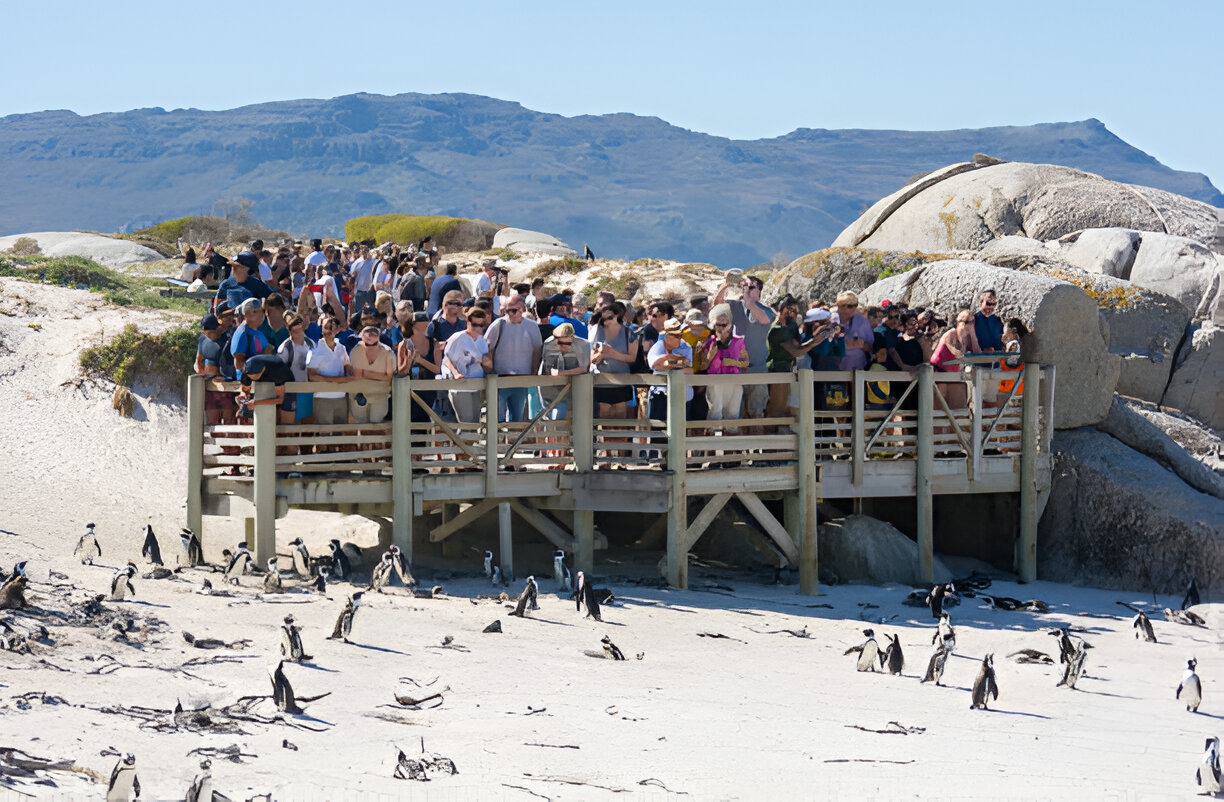
Head south out of the city via Muizenberg on the False Bay (east) side. If you’re a surfer or just curious, do a quick stop at Muizenberg’s Surfer’s Corner to see the colorful Victorian beach huts on the sand – it’s an iconic photo op. Continue along the coastal route to Simon’s Town, a charming naval town famous for the Boulders Beach penguin colony. By mid-morning, arrive at Boulders Beach (part of Table Mountain National Park). Walk the boardwalks at Foxy Beach to view hundreds of African penguins in their natural habitat – they’ll be sunning on rocks, waddling awkwardly, and maybe swimming in the chilly sea. June is breeding season, so you might spot fuzzy penguin chicks in nests. The raised boardwalk lets you get within a few feet of these adorable creatures without disturbing them.
Entry fee: There is a SANParks ticket fee which helps conservation.
Safety: Beware of penguins under cars or bushes in the parking area – they bite if you try to pet them, so observe only. Guard your food from baboons and seagulls here as well (don’t feed any animals). The area is very safe, with park staff around.
Lunch: After hanging with the penguins, drive a short way into Simon’s Town for lunch. This quaint town has several seaside restaurants. A popular choice is Bertha’s Restaurant by the old harbor, offering fresh fish ‘n chips, pastas, and lovely views of the bay – you might even see naval vessels or resident seals. Another cozy spot is The Lighthouse Cafe, with great seafood chowder and warm service. If you fancy a quick bite, there are cafés and a bakery on the main street (try Monocle & Mermaid or The Sweetest Thing for pastries). Enjoy a relaxing lunch; you’ll need energy for the afternoon’s nature walks.
Afternoon:
Continue your journey into the Cape Point section of Table Mountain National Park (entry fee required at the gate). The scenery ramps up as you enter – rolling fynbos-covered hills and ocean on both sides of the peninsula. Drive all the way to Cape Point (the parking lot near the Cape Point lighthouse). From here, you have two options to reach the old lighthouse on the peak: hike up the steep pathway (~15–20 minutes) or take the Flying Dutchman Funicular for a quick ride. At the top, soak in the stunning vistas – waves crashing on cliffs, infinite ocean stretching south. There’s a signpost showing distances to world cities (fun photo spot).
If you’re feeling adventurous and time allows (and weather is clear), consider the hike to the new lighthouse or along the ridge to the actual Cape of Good Hope viewpoint – it’s about an hour round-trip from Cape Point parking and gives you bragging rights of standing at that famous Cape. Otherwise, you can drive down to the Cape of Good Hope itself (a few minutes drive within the park). There, at the parking area, walk to the iconic brown “Cape of Good Hope” sign for a must-do photo at this south-western corner of Africa. Take in the dramatic scenery – perhaps spot cormorants flying past or dassies on the rocks.
Wildlife: Ostriches sometimes roam the beach here, and baboons are common.
Safety: Do not feed or approach baboons – keep car doors closed and windows up if they’re around. Also, the cliffs have sudden drop-offs; stay behind fences and on marked paths at viewpoints. The park is generally safe, just remote – have a charged phone and don’t stray too far off trails. There is cell signal at Cape Point main areas, but weaker in some spots.
Return Route: On your return route, take the Atlantic coast side of the peninsula for a change of scenery. Drive up the winding road through Scarborough and Misty Cliffs (aptly named if the weather’s misty) and then via Kommetjie. Aim to reach Chapman’s Peak Drive (the famous cliff-hugging coastal road between Noordhoek and Hout Bay) before sunset if possible – the gates typically close around sunset or earlier if weather is bad.
Chapman’s Peak Drive: This is a toll road (keep some cash or card for the toll) but absolutely worth it: 9km of jaw-dropping views as the road snakes along mountainside ledges above the ocean. There are several viewpoints to pull over – do stop for photos of the sun dipping toward the Atlantic and the curving coastline.
Safety: Drive slowly and carefully on Chapman’s; it has many bends (speed limit ~20–40 km/h). Watch for rockfall warning signs – if heavy rain occurred recently, sometimes the drive closes for safety. Obey all road instructions. If you’re on a tour, your guide will handle it while you enjoy the view.
As you round the final bend, you’ll descend into Hout Bay. If there’s daylight and time, you can detour to the Hout Bay harbor to see if the resident Cape fur seals are lounging by the fish market (or skip if it’s late). Then continue along the coastal road past Llandudno beach (beautiful but likely dark by now) back toward Camps Bay and the city.
Evening:
After an epic day, you’ll likely arrive back in the City around 6 or 7 PM. Freshen up at your accommodation. For dinner tonight, you might crave something easy and comforting. How about a nice meal in Camps Bay? This trendy beach suburb (which you’ll pass through on your return) has a strip of oceanfront restaurants. Paranga or Codfather (if you didn’t do it at the Waterfront) are excellent for seafood or sushi; The Hussar Grill is great for steaks. Camps Bay is lovely in the evening, though quieter in winter – you’ll have no issue getting a table. The sound of the waves and a glass of South African wine will be a perfect cap to the day. Alternatively, back in the City Bowl, try Kloof Street House – a whimsical Victorian house-turned-restaurant with delicious eclectic menu and cozy lounges (ideal for a chilly night). If you still have energy, end the night at a wine bar like Publik to sample more local wines, or at Cause Effect Cocktail Kitchen for Cape-inspired cocktails.
Transport/Safety: If self-driving, you’ve returned your car to your hotel (or will tomorrow morning if keeping it). Camps Bay at night is safe around the restaurant strip, but use valet or secure parking, and don’t leave anything in the car. After dinner, it’s best to Uber back rather than drive if you’ve had wine or are tired – the coastal road is dark. If on a tour, you were dropped off, so use Uber to dinner or ask to be dropped in Camps Bay on the way back and Uber from there. This was a long day, so prioritize rest – you have a slightly slower pace tomorrow in the Winelands.
Day 5: Stellenbosch Winelands – History in a Glass

Photo by Matthias Bethke, CC BY-SA 4.0, via Wikimedia Commons

Morning:
After four action-packed days, enjoy a leisurely start and a change of pace. Today you’ll venture to the Cape Winelands, specifically Stellenbosch, for wine tasting and cultural charm. It’s about 50 km east of Cape Town (a 45–60 minute drive). Again, you can self-drive (so someone has to be designated driver and sip lightly!) or, better yet, book a wine tour or hire a private driver. Given the focus on wine, many travelers opt for a guided Winelands tour – there are group tours (fun social vibe) or private drivers who can customize stops. Another option: use the Wine Tram in Franschhoek (further out) which is a hop-on tram between estates – but that’s a bit far for a day. Stellenbosch and its surrounds have more than enough for a full day.
Aim to leave Cape Town by 9 AM. The morning light on the mountains as you drive to Stellenbosch is gorgeous. Once there, start with a walk through Stellenbosch town – it’s a university town with oak-lined streets and whitewashed Cape Dutch buildings. Grab a coffee at Oom Samie se Winkel (an old-time general store) or a trendy café like Blue Crane or De Warenmarkt. Stroll Dorp Street to see its historic thatched buildings and the University campus area which is lively on weekdays.
Late Morning: Head to your first wine estate. A great one to begin with is Vergenoegd Löw (known for its duck parade in the mornings – hundreds of trained ducks march through the vineyard to eat pests, quite a sight if you arrive around 9:30–10AM). Or go to Spier Wine Farm, one of the Cape’s oldest, which offers not only tastings but also a craft market and a chance to see birds of prey at their Eagle Encounters sanctuary (if interested). At your first estate, do a wine tasting flight – you’ll typically try 4–5 wines. Learn about Pinotage (South Africa’s signature red varietal) or Chenin Blanc (a widely produced white wine). The ambiance in winter is cozy; many tasting rooms have fireplaces.
Safety: Wine estates in Stellenbosch are very safe and used to visitors. Just ensure you have a transport plan if you’re drinking – do not drink and drive. Even one glass can be tricky on unfamiliar roads. If self-driving, spit during tastings or focus on the scenery and buy bottles to enjoy later.
Lunch: Enjoy lunch at a winery restaurant for the full Winelands experience. Top picks include Delaire Graff Estate (luxury estate with incredible views and art – their Indochine or farm restaurant are pricy but memorable), Tokara (modern estate with a great restaurant and olive oil tasting), or Lanzerac (historic manor with a delectable vineyard lunch). Many estates have outdoor seating with vineyard views or indoor farmhouse charm. If you prefer something casual, try a picnic lunch: some estates like Warwick or Spier offer picnic baskets in summer; in winter, they may still do them on nice days or have deli fare to enjoy by a fire. Pair your meal with a glass of estate wine – it’s part of the indulgence! As you dine, admire the backdrop of mountains – Stellenbosch is surrounded by the Cape Fold Mountains, which might even have a dusting of snow on peaks in June.
Afternoon:
After lunch, visit another one or two wine farms to round out your tasting tour. Perhaps head to Franschhoek (another town 30 km from Stellenbosch, known for French Huguenot heritage and wineries) if time allows – but that might be ambitious in one afternoon. It could be better to focus on Stellenbosch area itself: for example, Muratie is a charming, rustic winery dating to 1685 with cobwebs in the tasting room and a famous Pinot Noir. Or go to Kanonkop for award-winning reds. If you enjoy bubbly, JC Le Roux offers a fun MCC (sparkling wine) tasting with sweets. And if you want a stunning view to cap the day, Ernie Els Winery or Rust en Vrede have beautiful settings in the Helderberg area.
While in Stellenbosch, also soak up some culture: you can visit the Stellenbosch Village Museum (a collection of preserved houses from different eras) or Oom Samie se Winkel (the old general store, a quirky step back in time). Simply walking under the ancient oaks and past the Moederkerk (old church) gives a sense of the Afrikaans culture and history here – Stellenbosch is the second-oldest European settlement after Cape Town and has a strong wine-making and academic tradition.
Return to Cape Town: Begin your return to Cape Town by late afternoon (before darkness). The N2 or N1 highways back are safe but busy; try to avoid peak commute times (4–6 PM) leaving Stellenbosch to miss traffic. If you prefer to linger and have an early dinner in the Winelands, that’s an option too (there are some wonderful dinner venues, but note you’d then be driving back in the dark – which is fine on highways, just be alert).
Evening:
Tonight, you might be pleasantly tired from wine and fresh country air. It’s a good evening to take it easy. If you returned to Cape Town early, maybe unwind at your hotel (some hotels have spas or cozy lounges). For dinner, since you had a big lunch, consider something light or fun like Cape Town’s night markets or casual eateries. On Wednesday evenings, the Hope Street Market in Gardens offers local food stalls in a covered venue – a nice laid-back place to graze and mingle with locals. Otherwise, grab a light dinner at Oranjezicht City Farm Market (if it’s a weekend evening; in winter it may operate Saturdays), or simply order in something like Nando’s (peri-peri chicken takeaway – a South African staple!).
If you want to elevate the romance and didn’t do a fancier dinner in Stellenbosch, you could book a table at Signal Restaurant (at the Cape Grace Hotel) back at the Waterfront for an elegant Cape Malay-influenced fine dining meal, or La Colombe (a bit out of town, in Constantia – consistently one of SA’s top restaurants). These would be more of a splurge and require advance reservations. It depends on your energy level after the wine tour.
Transport/Safety: If you rented a car for the day, ensure it’s returned or parked securely at the hotel tonight. Uber can take you to dinner if you go out. Though Cape Town’s suburbs are generally safe to drive through, nighttime + possibly wine consumption means it’s better not to self-drive far in the evening. Downtown, as usual, stick to popular areas or just relax at your accommodation. You’ve seen city, sea, and vines by now – tomorrow, it’s time to connect with the community.
Day 6: Township Tour & Botanical Garden Serenity

Photo by Discott, CC BY-SA 4.0, via Wikimedia Commons

Morning:
One of the most meaningful cultural experiences in Cape Town is a township tour – seeing the vibrant communities on the city’s periphery and learning about local life and resilience. This morning, visit Langa, Cape Town’s oldest township, or Khayelitsha, its largest. It’s crucial to go with a reputable guide/tour company (never venture into townships alone). Many tours are offered that will pick you up at your hotel around 9 AM. A guided tour (often by a township resident) will let you visit community centers, arts projects, and homes in a respectful, insightful way.
In Langa, you might visit the Guga S’Thebe Arts & Culture Centre – a hub where local artists and crafters showcase their work and where you can hear about community upliftment projects. You could also stop by a local school or day care (if arranged) or a shebeen (neighborhood pub) for a non-alcoholic taste of local brew and music. Engage and ask questions – township residents are often very open to sharing their stories, from the challenges of apartheid’s legacy to the thriving culture of music, dance, and entrepreneurship that exists now.
Expect to walk a bit through streets of simple homes, see spaza shops (informal shops), and maybe meet local entrepreneurs (some tours visit a bakery or traditional healer, etc.).
Safety: With a guide, these tours are safe – the community generally welcomes visitors associated with known tour operators because it benefits them directly. Still, dress modestly (keep it casual), don’t flash jewelry or wads of cash (you can discreetly buy crafts or snacks, but avoid appearing too showy), and always stay with your group. Photography is usually okay (ask for permission before snapping portraits, and your guide will advise where it’s appropriate). The guide ensures a safe and positive encounter for all.
Lunch: Many township tours include a lunch component – perhaps a home-cooked meal in Langa or a stop at a local eatery. If you get the chance, try a braai lunch in the township. For example, some tours stop at Mzoli’s in Gugulethu (a famous open-air braai spot where you choose your meat and have it grilled while enjoying a party-like atmosphere). Mzoli’s is more of a weekend scene and can be crowded; whether you go there or somewhere similar, you’ll get a taste of shisa nyama (barbecue) culture – expect grilled meats like wors (sausage), steak or chicken, spiced and served with pap (maize porridge) and chakalaka (spicy relish). Eating with your hands and sharing at communal tables is part of the fun.
If your tour doesn’t include lunch, you might ask your guide for a recommendation – maybe a family-run food stall selling vetkoeks (fried bread dough filled with mince) or a trusted sit-down in Khayelitsha like 4Roomed EKasi, which offers modern gourmet twists on township classics. Whichever way, the food will be hearty and the hospitality warm.
Afternoon:
After an intense and enriching morning, shift gears with a peaceful afternoon at Kirstenbosch National Botanical Garden. It’s a perfect contrast – from the bustling township to the tranquility of nature. Located on the eastern slope of Table Mountain, Kirstenbosch is about a 30-minute drive from Langa. If you’re on a private tour, you can have them drop you there; otherwise Uber from your hotel or Langa (ask your tour guide to help arrange). Spend a couple of hours wandering these magnificent gardens.
Though June is winter, Kirstenbosch is still green and there are always some flowers in bloom (especially proteas and ericas). The Boomslang Canopy Walkway – a curved bridge through the treetops – offers great views of the gardens and looming mountain behind. Check out the protea garden, the cycad collection (with life-size dinosaur sculptures peeking from foliage), and if interested, the conservatory of rare desert plants. If it’s rainy, you can shelter in the conservatory or the visitor center exhibits/gift shop, which has beautiful botanical art and books.
Safety: Kirstenbosch is very safe, with security at entrances. Just stick to main paths and don’t climb onto any remote trails outside the garden boundary (the Skeleton Gorge trail up Table Mountain starts here, but not advised now unless you are with a hiking group and prepared).
Have a relaxing coffee or tea at the Kirstenbosch Tea Room or Moyo restaurant in the garden – perhaps enjoy a slice of cake or a scone while listening to birds. By doing so, you also avoid rush hour traffic back to the city by leaving after 4 PM.
Evening:
For your evening plan, consider a comfortable night in or a low-key activity – you’ve had a socially and emotionally rich day. If you’re staying in an apartment or hotel with self-catering, you might even feel like cooking tonight, perhaps using spices you bought in Bo-Kaap or a bottle of wine from yesterday’s Winelands trip. Otherwise, a nice dinner in the Southern Suburbs could be convenient after Kirstenbosch.
For example, Foresters Arms (“Forries”) in Newlands is a cozy pub (fireside seating, local beers, good pizzas and pies) popular with locals – a short drive from Kirstenbosch. If you prefer to return to the city center for dinner, maybe try Gold (if you didn’t on Day 1) or NUBA in Gardens for contemporary African cuisine in a stylish setting.
Transport: After dark, the Southern Suburbs (Newlands, Claremont, etc.) are generally safe to drive through, but taking an Uber is wiser if you’ll be going back to City Bowl afterward. It’s a 20–30 minute Uber ride from Kirstenbosch to City Centre. If you have a rental car, it’s fine – just use the highways and main roads. Always park in well-lit areas and don’t leave valuables visible.
Day 7: Museums, Art and Market Finds
Morning:
By Day 7, you’ve covered many of the big highlights. Today is about diving deeper into culture and art, and maybe picking up some souvenirs. Start with a visit to the Zeitz MOCAA (if you didn’t do it on Day 3). Arrive at opening (around 10 AM) to have the galleries mostly to yourself. Explore the thought-provoking contemporary art exhibits from all over Africa – it’s a feast for art lovers, housed in a spectacular converted grain silo. Give yourself 1–2 hours; take the elevator up and wind your way down the levels. Don’t miss the view from the rooftop sculpture garden.
If contemporary art isn’t your thing, an alternative morning activity is visiting the Heart of Cape Town Museum (in Observatory) – a fascinating museum dedicated to the world’s first heart transplant, performed in Cape Town in 1967, complete with preserved operating theaters. It’s quirky and off-the-beaten-path, but quite interesting historically and medically.
Lunch: Head to Woodstock, Cape Town’s hipster-artistic neighborhood, known for its street art and the Old Biscuit Mill. If it’s a Saturday, you’re in luck – the Neighbourgoods Market at the Old Biscuit Mill is in full swing from late morning to early afternoon. This market is a festive gathering of food stalls (everything from gourmet burgers to Ethiopian injera, vegan bakes to local biltong) and design vendors. Grab lunch from the variety – perhaps a falafel wrap or a Cape Malay curry roti – and enjoy it at communal tables with live music in the background.
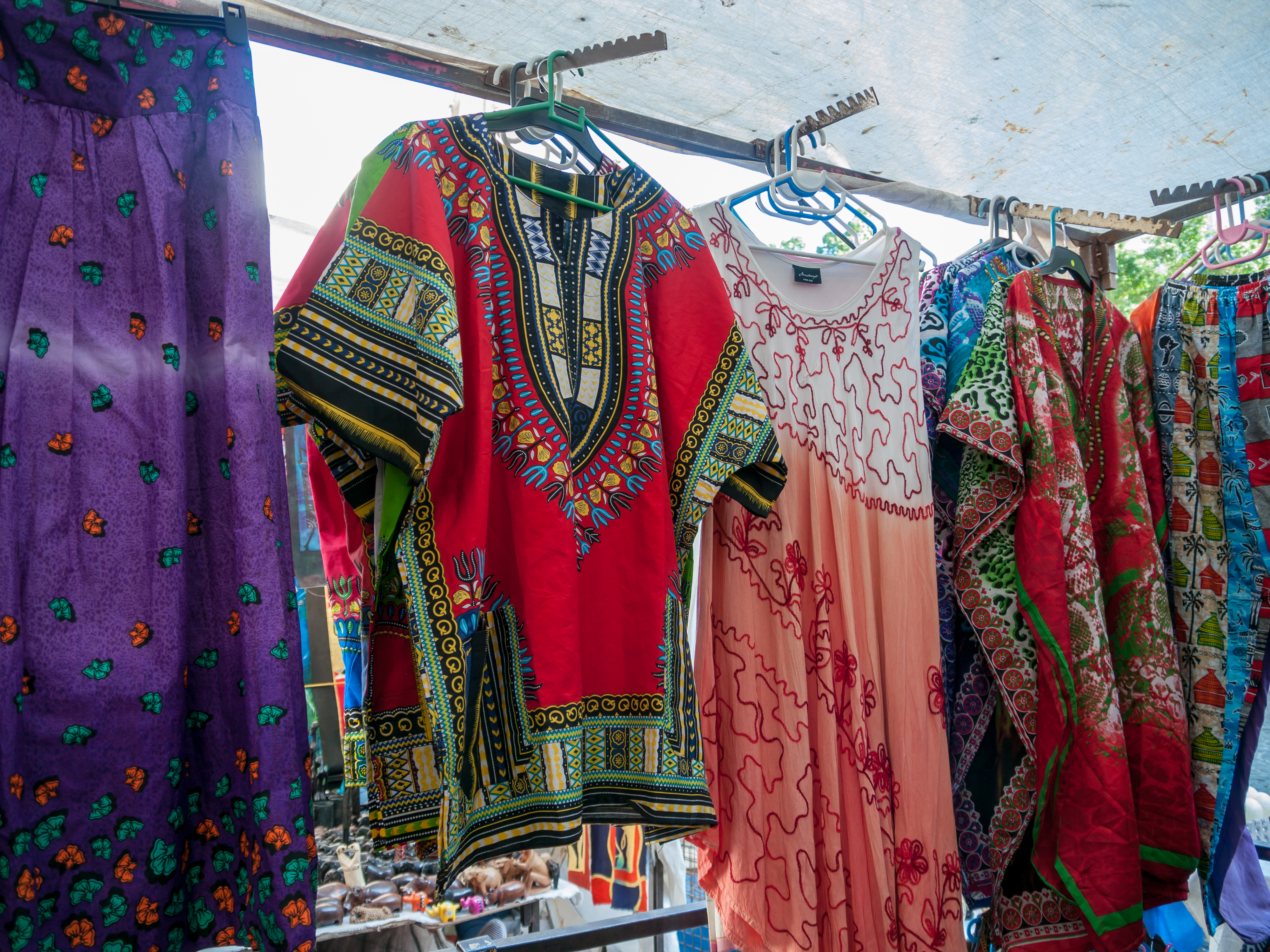
Photo by Matti Blume, CC BY-SA 4.0, via Wikimedia Commons
.jpg)
On other days, the Biscuit Mill still has some eateries: The Pot Luck Club (if you can get a lunch reservation, it’s fantastic tapas with city views atop the silo) or Redemption Burgers for casual bites. You can also roam Woodstock’s street art alleys around Albert Road either before or after lunch – consider a guided graffiti tour to hear the stories behind the murals on building walls (tours can be arranged through local art collectives).
Afternoon:
Continue the artistic/cultural exploration. Two options:
-
District Six Museum & Castle of Good Hope: If you skipped District Six earlier or want more museum time, combine the District Six Museum (if not done yet or if you want to support them by popping into their gift shop which sells books and crafts) with a visit to the nearby Castle of Good Hope (if not done on Day 2). The Castle often has a noon ceremonial cannon firing and some guided tours of the dungeons, etc. It closes around 4 PM.
-
South African Museum & Company’s Garden area: Perhaps you’d like a natural history fix – the Iziko South African Museum (also by Company’s Garden) has exhibits on indigenous rock art, African wildlife, and sea creatures (including a whale well). Nearby is the Planetarium, which in winter might have an earlier show (check schedule) – a cozy indoor treat if it’s raining, exploring the southern skies.
If you prefer more shopping and city strolling: browse Greenmarket Square in the CBD for African crafts (bargain respectfully; it’s expected). Long Street has antique shops and bookstores (like the famous Clarke’s Bookshop for Africana). For upmarket African crafts/design, visit African Trading Port at the Waterfront or the Watershed Market (a craft hall at the Waterfront) later in the day.
By mid-afternoon, you might enjoy a coffee and a sweet treat at Truth Coffee (as mentioned, great vibe) or Charly’s Bakery (famous bakery with pink decor, known for iced cookies and cakes).
Evening:
Tonight, celebrate your final weekend night in Cape Town with some local flavor. If it’s a Saturday, there may be special events: check if there’s a concert at Kirstenbosch (winter concerts are rare, usually a summer thing, but sometimes they have indoor performances). Alternatively, a theater show could be on – see what’s playing at the Artscape or Baxter Theatre (could be drama, dance, or music). For a truly African celebration, consider dinner at Mama Africa (if not yet visited) or a jazz evening.
Since you may not have had a chance for a true Cape Malay home-cooked meal, one option is Cape Malay Home Dining experiences (some locals host dinner in their Bo-Kaap home via Airbnb experiences or tour companies – it’s intimate and memorable).
For a classic finish, go to the Mount Nelson Hotel for their famous afternoon High Tea (actually from 3–5 PM, so you could do this in late afternoon if you prefer something instead of coffee). It’s an old colonial-style treat with dozens of teas and a lavish spread of savories and cakes in a beautiful lounge – very cozy on a rainy day.
Dinner itself could be at Signal or Gold if you haven’t done those, or something like The Africa Café (family-style pan-African dishes in a colorful setting). If you’re up for nightlife after dinner, Cape Town Comedy Club at the Waterfront is a fun pick – a comedy show with local comedians (show usually at 8:30 PM) in a safe venue, where you can laugh off any travel stress.
Safety: By now you know the drill – stick to known areas at night. If you go to Long Street or any bars, watch your drinks and each other. Overall, Cape Town’s tourist areas remain friendly, but always use the same street smarts you would in any big city.
Day 8: Scenic Drive – Chapman’s Peak & Coastal Charm

Photo by Martinvl, CC BY-SA 4.0, via Wikimedia Commons

Morning:
Today is your final big scenic outing, and it’s all about embracing the coastal beauty of the Cape. If you didn’t manage to drive Chapman’s Peak on Day 4, now’s your chance to enjoy it at leisure. Even if you did, it’s worth repeating in better light or slower pace.
Start with breakfast in Camps Bay – perhaps at The Lawns at the Roundhouse (gorgeous views and a forest-meets-ocean vibe) or at Bootlegger on the beachfront. From there, head south along the Atlantic Seaboard toward Hout Bay. The coastal road from Camps Bay to Hout Bay is already stunning – cliffs plunging to the sea, with the blue-grey of the Atlantic crashing beside you.
Stop in Hout Bay if you didn’t before – maybe visit the harbor, see the seals lounging on docks, or take a short Seal Island boat cruise (if the weather’s clear; these run for about 40 minutes). There’s also Bay Harbour Market (weekends) for food, crafts, and live music.
Late Morning: Drive Chapman’s Peak Drive again, stopping at as many viewpoints as you like – do the drive slowly and deliberately. You can even bring coffee/snacks and sit at a picnic spot. Take photos at the iconic curved viewpoint overlooking Hout Bay – it's one of the most photographed spots in the country.
Continue on to Noordhoek. Here, the beach is wild and windswept – great for a long walk if it’s not raining or for horseback riding along the sand (booked in advance). Otherwise, visit Noordhoek Farm Village – a lovely cluster of shops, cafés, and a tasting room. It’s a great place for artisan shopping and light lunch. Café Roux is a favorite for simple fare in a family-friendly setting.
Afternoon:
Continue the slow loop around the southern peninsula. Depending on your energy and what you saw earlier in the trip, you could:
- Revisit Simon’s Town and the penguins (if you want a second look or if the weather was bad on Day 4).
- Explore Kalk Bay: a bohemian fishing village full of charm. Visit the antique shops, bookstores (like Kalk Bay Books), and quirky cafés. You can grab an ice cream and walk the old wharf or even try the Brass Bell for a drink right by the crashing waves (the ocean sometimes slaps the windows!).
- Lunch at Olympia Café (if you haven’t yet – a local legend), or Salt for great views.
Drive further north through Muizenberg – stop if you want beach hut photos or to watch surfers braving the chilly waves. There’s also an area called St. James with tidal pools and a tiny beach strip that’s picturesque.
Evening:
Wind your way back into Cape Town via the M3. If you’re in the mood for a sundowner (and weather’s good), consider a stop at the top of Signal Hill – especially if you didn’t manage it earlier. It’s a popular local spot for watching the sunset (bring a jacket; it’s windy!).
Return to your accommodation and freshen up. For dinner tonight, go easy – maybe return to a favorite restaurant or explore something new in the Southern Suburbs, City Bowl, or Waterfront. You could repeat a favorite (many people go back to Gold or their top dinner spot twice).
If you’re craving Italian or European food, try Villa 47 (Italian fine dining), or for hearty comfort food, Black Sheep on Kloof Street is a winner. If it’s a weekend, perhaps live music again – or even a wine-and-cheese night in your hotel room with all the goodies you’ve collected during the week.
Reflection: You’ve now seen both city and coastline, from penguins to proteas, from apartheid history to artistic rebirth. You’ve tasted wines, met local residents, and walked historic streets. The rhythm of Cape Town in winter – cooler, quieter, cozy – has shaped your experience. Tomorrow is your last full day; use it as a flex day to tie up anything you’ve missed or just soak up the atmosphere one more time.
Day 9: Flexible Day – Foodie Finds, Shopping & Relaxation

Photo by Sparrow (麻雀), CC BY-SA 4.0, via Wikimedia Commons

Morning:
After over a week of exploration, today is your “flex day” – time to revisit a favorite spot, catch anything you missed, or just relax. If you’ve checked off all the major attractions, consider a food-focused day with casual exploration. Sleep in a little, enjoy breakfast at your hotel or a cozy café (Jason Bakery is a top pick for pastries and egg dishes).
Option 1 – Foodie Tour: Book a half-day food tour through the city – several operators offer walking tastings through the CBD and Bo-Kaap, combining culture, history, and bites. You might sample biltong (cured meat), bunny chow, Cape Malay sweets, local cheeses and wines, or even stop in a spice shop to learn about local cooking. It’s fun, interactive, and fills you up! These usually start mid-morning and last 3–4 hours.
Option 2 – Last-Minute Shopping: If you haven’t bought souvenirs yet, now’s your chance. The Watershed at the V&A Waterfront is the best spot – it’s indoors, safe, curated, and features South African crafts, design goods, and artisan wares. Look for hand-woven baskets, beaded jewelry, township art, or South African skincare products. It’s a one-stop shop with fixed prices (no haggling), ideal for gifts. If you prefer open-air, try Greenmarket Square, but beware of aggressive sellers.
For more high-end shopping, the V&A Mall has clothing, leather goods, and local fashion brands (look out for Amanda Laird Cherry or Tshepo Jeans). For books, head to Clarke’s Bookshop or the Book Lounge in the City Bowl – both have great selections on African history, art, and fiction.
Option 3 – Spa or Relaxation: If your feet are tired, treat yourself to a massage or spa session. The One&Only Spa (Waterfront), Mount Nelson Hotel Spa, or Jiva Spa at Taj Cape Town are top-tier (book in advance). Even a foot massage at a boutique spa will be welcome after all the walking you’ve done.
Lunch: For a relaxing final lunch, go where you’ll have a view or memorable flavors. The Silo Rooftop (if you can get in) offers light plates with harbor views. Alternatively, SeaBreeze Fish & Shell in the City Bowl has incredible seafood, or Kloof Street House’s garden setting is a long-lunch favorite. If you want to linger, book a wine pairing lunch – Utopia (rooftop restaurant) is another great view option.
Afternoon:
Enjoy a final walk – perhaps through Company’s Garden to reflect on your trip. Visit any museum or gallery you skipped earlier. Take a last stroll along the Sea Point Promenade (flat, scenic, with benches) if it’s sunny. Or do one final wine tasting at a Constantia estate like Groot Constantia or Beau Constantia (open into the late afternoon).
If you’ve bought wine or art, arrange packing/shipping with your hotel or the shop – South Africa has good services for getting goods home safely.
Evening:
Celebrate your final night with a special dinner. This is your moment for that last splurge if desired. Highly recommended final dinners include:
- La Colombe (Constantia): Multi-course tasting menu with forest setting. One of the country’s top restaurants (book far in advance).
- FYN (City Centre): Afro-Japanese fusion with dramatic interiors and a skyline view.
- Pier (Waterfront): Modern fine dining with harbor view and exceptional seafood.
- Aubergine or Salsify at the Roundhouse: Refined and romantic.
If you’re more low-key, just return to a favorite. After dinner, consider a final cocktail at a rooftop bar (Silo Hotel, Gigi Rooftop, or Sky Bar at The Ritz) or watch the city lights from your balcony. Reflect on your journey.
Packing Tip: Begin packing tonight so you’re not rushed tomorrow. Secure fragile souvenirs with clothing. If you bought wine, check airline rules on quantity and packaging (some shops offer airline-approved boxes). Set aside your passport and chargers. Confirm your airport transfer for tomorrow.
Safety/Transport: As always, use Uber tonight. Most areas you’ve now seen multiple times, and you likely feel more confident. Still, remain alert – don’t walk far alone after dinner. Keep your last night stress-free and celebratory.
Day 10: Farewell Cape Town – Easy Morning & Departure
Morning:
It’s your final morning in the Mother City. Depending on your flight time, you might have just enough time for a last stroll, breakfast, and a few photos. If your flight is midday or later, consider these gentle morning activities:
- Walk the Sea Point Promenade: Watch locals jogging, dogs playing, and waves crashing. Grab a coffee from a seaside kiosk.
- Enjoy a final breakfast at a favorite café: Jarryds, Clarke’s, or Hemelhuijs are favorites for slow mornings.
- Visit Oranjezicht City Farm (if it’s a Saturday/Sunday): A farmer’s market near the Waterfront with smoothies, fresh produce, and friendly atmosphere.
- Do a quick museum stop (like the Springbok Rugby Museum or a final art gallery).
If time is tight, relax at your hotel, double-check your passport and documents, and savor your last Rooibos tea.
Check-out & Airport Transfer: Most hotels have an 11 AM check-out. If your flight is later, ask about luggage storage. Airport transfers can be arranged via Uber, shuttle, or hotel car. Allow at least 60–90 minutes to get to Cape Town International Airport, and arrive at least 2–3 hours before an international flight (even if the airport is small, lines can be long).
Tip: If you bought wine or liquids, be sure they’re packed in checked luggage (not carry-on). Check customs regulations for your home country.
Departure: As your plane takes off, glance out at Table Mountain one last time. Cape Town will stay with you – in the flavors you tasted, the stories you heard, and the friendships or insights you made along the way. Come back again – perhaps in a different season, with new curiosities to explore.
Summary Table – 10-Day Cape Town Itinerary at a Glance
| Day | Theme/Focus | Highlights |
|---|---|---|
| 1 | Arrival + City Introduction | Walking tour, Company’s Garden, Bo-Kaap, Malay cooking class |
| 2 | Table Mountain + History | Cableway, City Bowl, District Six, Castle of Good Hope |
| 3 | Robben Island + Waterfront | Ferry tour, Mandela’s cell, Zeitz MOCAA, Aquarium, Dinner out |
| 4 | Cape Peninsula Road Trip | Cape Point, Penguins, Chapman’s Peak, Hout Bay |
| 5 | Winelands Excursion | Stellenbosch, Wine Tastings, Cape Dutch history |
| 6 | Township Culture + Nature | Langa tour, Braai lunch, Kirstenbosch Gardens |
| 7 | Museum + Market Day | Neighbourgoods Market, Art Tours, Greenmarket Square |
| 8 | Scenic Drive + Beach Towns | Camps Bay, Hout Bay, Kalk Bay, Noordhoek |
| 9 | Flex Day / Food + Shopping | Foodie tours, Artisan markets, Rooftop dinner |
| 10 | Departure Day | Strolls, Packing, Airport transfer |
Was this itinerary helpful?
Anmelden to rate this itinerary.