The Culture of Township Economies in Cape Town | Spaza Shops, Salons, Street Food & Informal Innovation
März 5, 2026
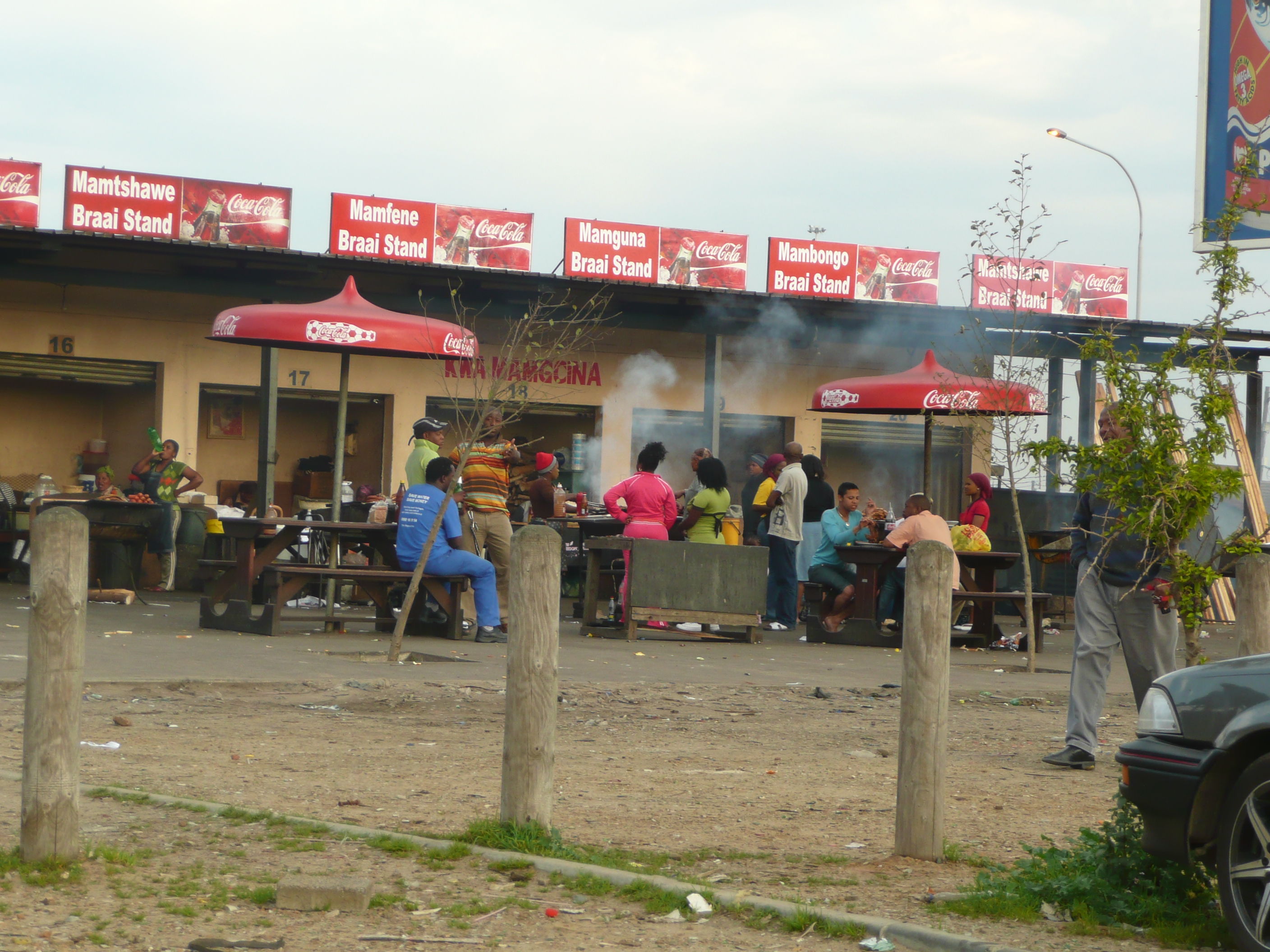
The Culture of Township Economies in Cape Town
Spaza shops, hair salons, shisa nyama stands, stokvels, and tech hubs — the economic engine of the Cape Flats is far more than a footnote. An estimated 1.5–2 million people live in Cape Town's townships, powering a vibrant informal economy worth hundreds of billions of rand.
Estimated national value

In This Guide
Who Lives in Cape Town's Townships? It's Not Just About Gangs
When international media covers Cape Town's townships, the headlines almost always centre on gang violence, poverty, and crime. The reality is infinitely more textured. Cape Town's townships are home to an estimated 1.5 to 2 million people — ordinary working families, entrepreneurs, students, artists, healers, and dreamers — whose daily lives are defined far more by economic hustle, cultural vibrancy, and community solidarity than by the violence that grabs global headlines.
The population numbers are contested and imprecise, which itself tells a story. The 2011 Census counted 391,749 people in Khayelitsha alone, but community organisations and researchers estimate the actual figure at between 500,000 and 1.2 million. Mitchells Plain had over 300,000 residents at the 2001 census. Gugulethu, Langa, and Nyanga add tens of thousands more. When you include Philippi, Crossroads, Mfuleni, Delft, and other Cape Flats communities, a conservative estimate is that at least 1.5 million people — and possibly many more — live in areas historically designated as townships.
These townships exist because of apartheid spatial planning. Langa was established in 1923 as a segregated dormitory for Black male labourers. Nyanga followed in 1946. Gugulethu (from the isiXhosa igugu lethu, meaning "our pride") was created in 1959 to house families forcibly removed from District Six and other areas. Khayelitsha ("our new home") was announced in 1983 as one of the apartheid regime's final attempts at spatial control. Mitchells Plain, home to the Cape's largest Coloured community, was designed as a "model township" in the 1970s but quickly became overcrowded.
Despite three decades of democracy, the spatial geography of apartheid endures. Most township residents still commute long distances to work — Khayelitsha is 30 km from the CBD, and the collapse of the Central Line rail service since 2019 has made this worse. But within these communities, a complex, dynamic economic ecosystem thrives — often invisible to formal economic statistics, but fundamental to millions of livelihoods.
Cape Town's Major Townships
The Cape Flats, stretching from Langa near the airport to Khayelitsha on False Bay — home to over a million residents and the engine room of Cape Town's informal economy.
Core SectionSpaza Shops: The Corner Store That Feeds a Nation
The word spaza comes from isiZulu, meaning "hidden" — a reference to the apartheid era, when Black South Africans were legally prohibited from owning formal businesses. Enterprising individuals set up informal shops inside their homes, selling basic goods to neighbours who lived far from the expensive formal retail areas where they were not welcome. These hidden stores — born of necessity and defiance — became the backbone of township commerce.
Today, there are an estimated 150,000 spaza shops operating across South Africa, contributing approximately 5.2% to the country's GDP and employing around 2.6 million people. The broader township economy is valued at roughly R900 billion, with spaza shops forming the largest single component of informal retail. Trade Intelligence research estimates the spaza sector alone at approximately R197 billion (2023), with over 11 million regular customers.
Walk any street in Khayelitsha's Site C, Gugulethu's NY1, or Mitchells Plain's Eastridge and you will see them: converted shipping containers, front rooms of houses, or freestanding shacks with hand-painted signs advertising airtime, bread, paraffin, cold drinks, and cigarettes sold singly. A spaza shop typically opens early and closes late, stocking whatever its community needs that day — from loose mielie meal and sugar to prepaid electricity tokens and SIM cards.
Home-Based Stores
Traditional ModelMany South African-owned spaza shops operate from the front room or garage of a family home. The business is typically run by women, and inventory is financed through personal savings, stokvel contributions, or informal credit networks.
Container Shops
Growing FormatConverted shipping containers — often with refrigeration, shelving, and digital payment systems — represent a more formalised model. Many are operated by foreign nationals (Somali, Ethiopian, Bangladeshi entrepreneurs) who pool capital through cooperative ownership models.
The Ownership Debate
Ownership patterns in the spaza sector have shifted significantly since the 1990s. Research by the Sustainable Livelihoods Foundation, which surveyed over 6,000 microenterprises across nine townships, found that foreign nationals now run more than 60% of spaza shops in many areas. These operators often leverage strong social networks to access collective capital and enable bulk purchasing at lower costs — a competitive advantage that many South African-owned shops struggle to match.
This shift has fuelled tensions. In late 2024, the deaths of several children from contaminated food purchased at spaza shops triggered a national crisis. President Cyril Ramaphosa mandated all spaza shops to register within 21 working days. By the February 2025 deadline, roughly 43,000 applications had been received and approximately 19,300 approved. The R500 million Spaza Shop Support Fund, launched by the Department of Trade, Industry and Competition, aims to help South African-owned shops compete through working capital, refrigeration, bulk-buying cooperatives, and formalisation support.
Street Food & Shisa Nyama: Where Flavour Meets Community
If spaza shops are the economic backbone of the townships, then food — braai smoke, the sizzle of slap chips, the scent of chakalaka — is their cultural heartbeat. Township food culture is not a sanitised culinary trend; it is an expression of survival, creativity, and joy that has evolved over generations and is now influencing mainstream South African dining.
Shisa Nyama: The Open-Flame Economy
Shisa nyama (isiZulu for "burn the meat") is both a cooking method and a social institution. Township butcheries — sometimes little more than a counter and an oil-drum braai — serve as restaurants, music venues, and community gathering places in one. Customers choose their cuts from the butchery, pay by weight, and the meat is grilled over wood or charcoal by experienced braai masters. The result is served in colourful plastic containers with pap (maize porridge), chakalaka (spicy relish), and coleslaw.
The most famous example was Mzoli's in Gugulethu, founded in 2003 by entrepreneur Mzoli Ngcawuzele, who started by selling meat from his garage. Mzoli's grew into one of Cape Town's most popular destinations — internationally praised by chefs including Jamie Oliver — attracting up to 30,000 visitors per weekend at its peak. It was a township-born business that put Gugulethu on the global map, employed dozens of local residents, and demonstrated that township entrepreneurship could operate at scale. After closing in 2021, the site was reopened as Teez Lounge and continues the shisa nyama tradition.
The Gatsby
Cape Town OriginalCape Town's answer to the bunny chow — a footlong roll stuffed with slap chips, masala steak or polony, lettuce, and spicy sauce. Born in the Cape Flats in the 1970s as an affordable meal for workers, it remains a beloved local staple shared between friends.
The Kota / Skhambane
Township ClassicA hollowed-out quarter loaf of white bread filled with chips, polony, egg, cheese, atchar, and Russian sausage. The kota originated in Gauteng mining townships but has spread nationwide. Spaza shops sell them from R15 upwards — affordable fuel for students and workers alike.
Vetkoek / Amagwinya
Street FavouriteDeep-fried dough balls filled with mince, jam, cheese, or polony — sold from street stalls and home kitchens across the Cape Flats. Quick, affordable, and deeply traditional, they remain one of the most popular street snacks for school children and commuters.
Mogodu & Walkie-Talkie
Deep TraditionSlow-cooked tripe stew (mogodu) and braised chicken heads and feet ("walkie-talkie") represent a culinary tradition rooted in making the most of every part of the animal — practical, flavourful, and deeply connected to African cooking heritage across the continent.
Hair Salons & the Beauty Economy
If spaza shops anchor the food economy and shisa nyama stands anchor the social economy, then hair salons anchor the identity economy. In Soweto, research by Frontline Market Research found that salons and barber shops make up roughly 16% of all informal businesses — the third-largest category after spaza shops and taverns. Cape Town's townships follow a similar pattern.
Walk through Langa or Khayelitsha and you'll see the evidence everywhere: converted shipping containers and small rooms with hand-painted signs advertising braids, weaves, relaxers, fades, and the increasingly popular loc styles. These are not just places of commerce — they are social hubs where news is shared, relationships are built, and cultural identity is literally woven into place.
Women-Led Business
The majority of South African-owned township salons are run by women, making the hair economy one of the most significant vehicles for female entrepreneurship in the informal sector. Many operate from home or rented containers with minimal startup capital but high skill levels.
Pan-African Exchange
Cape Town's salons reflect the city's growing diversity. Braiders from the DRC, Cameroon, Nigeria, Zimbabwe, and Namibia bring techniques and styles from across the continent, creating a rich cross-cultural exchange. The Long Street hair salon corridor in the CBD has become a tourist attraction in its own right.
The salon economy extends beyond hair. Nail services, skincare, makeup artistry, and traditional healing are all part of the broader beauty and wellness sector that operates in Cape Town's townships. For many young women, starting a small salon — even if it's just a chair and a mirror in someone's back room — represents their first step into economic independence.
Financial InnovationStokvels: Africa's Original Savings Technology
Long before fintech apps and digital wallets, South Africa's townships invented their own community financial system: the stokvel (from "stock fair," an early settler-era term adapted through generations of Black South African practice). Stokvels are rotating savings clubs where members contribute a fixed amount regularly — weekly, fortnightly, or monthly — and the pooled fund is either distributed to each member in rotation or saved for a collective purpose.
Stokvels come in many forms. Grocery stokvels (40% of respondents in the 2025 Township CX Report belong to one) allow members to pool resources for bulk food purchases. Burial societies (30% membership) ensure families can afford funeral costs — a culturally essential obligation. Property stokvels enable co-investment in real estate that no individual member could afford alone. There are even investment stokvels that buy shares or fund small business ventures.
The Masakhe Ladies' Stokvel in Cape Town illustrates the transformative power of this model. Founded in 2019, the group of 40 women each contributed R2,500 monthly. Within three years, the stokvel had built 36 new houses and improved others — a remarkable achievement born from collective discipline and trust, not government grants or bank loans.
Informal Innovation & Tech Hubs
The image of the township as a place of deprivation, waiting passively for aid, is not just inaccurate — it obscures one of the most dynamic innovation ecosystems in South Africa. Cape Town's townships are producing tech entrepreneurs, app developers, and social enterprises that are solving problems the formal economy has ignored.
Khayelitsha Bandwidth Barn
At the top of Lookout Hill in Khayelitsha sits one of the most significant experiments in township-based innovation: the Khayelitsha Bandwidth Barn, described as South Africa's first township tech hub. Operated by UVU Africa, the Barn has supported over 3,000 township-based entrepreneurs and trained more than 500 informal traders in smart technology. Its programmes include a Digital Citizen Literacy course for 18–34 year olds, a 10-day entrepreneurial bootcamp, and pitch competitions where township startups compete for prize money and mentorship.
Silulo Ulutho Technologies
Success StoryFounded by Luvuyo Rani, who started selling refurbished computers from his car boot in Khayelitsha in 2004. The company now employs over 200 people, has trained 31,000+ students in IT (80% women), and is expanding to every province. Rani sold his first computers to teacher stokvels — community savings clubs that pooled funds for technology.
Yebo Fresh
Supply Chain InnovationA logistics company specialising in fast-moving consumer goods for spaza shops and informal sellers. By strengthening supply chains for township retailers, Yebo Fresh addresses food security, quality control, and pricing challenges that individual shop owners cannot solve alone.
Philippi Village
Community HubA former cement factory in Philippi repurposed into a five-storey retail, business, and recreation hub. It houses offices, conference facilities, a library, a college, a crèche, and the Philippi Container Walk — shipping containers converted into retail spaces for local artists and designers.
Khaya-Plain Chapter
Business NetworkThe Cape Chamber of Commerce established a dedicated Khayelitsha and Mitchells Plain Chapter to bridge the gap between formal and informal business sectors — providing access to procurement workshops, supplier development, and networking with established companies.
The Container Economy
One of the most visible expressions of township innovation is the shipping container. Walk through Khayelitsha, Langa, or Philippi and you'll see rows of containers converted into spaza shops, hair salons, car washes, phone repair stations, computer training centres, welding workshops, carpentry studios, and even art galleries. The container is the township's answer to the office lease — affordable, relocatable, and endlessly adaptable.
Township Tourism: Authentic or Exploitative?
Township tourism in Cape Town occupies a genuinely contested space. Guided tours through Langa, Gugulethu, and Khayelitsha have been offered for over two decades, typically including visits to shebeens (informal taverns), craft markets, schools, traditional healers, and braai spots. For many visitors — particularly international tourists — these tours offer a perspective on Cape Town entirely invisible from the V&A Waterfront or Camps Bay beach.
Langa: The Most Visited
Cape Town's oldest township (est. 1923), just 1.5 km², with around 70,000 residents predominantly from the Xhosa community. Its compact size, proximity to the N2, and well-established tour infrastructure make it the most accessible township for visitors. The Guga S'Thebe arts centre, braai culture, and hostel dormitories (remnants of the migrant labour system) are key stops.
Gugulethu: Cultural Heartbeat
Home to the Gugulethu Seven Memorial (commemorating activists killed by security forces in 1986), the Cape Town Jazz Safari, the Maboneng Township Arts Experience, and the legendary Mzoli's/Teez Lounge braai spot. Gugulethu Square, created in 2009, serves as the township's central business district.
Critics argue that township tourism risks "poverty tourism" — reducing lived communities to spectacle, channelling revenue to outside tour operators rather than residents, and presenting a sanitised version of township life for comfortable consumption. Defenders counter that well-run tours create direct employment, support local businesses (guides, cooks, artisans, musicians), and challenge harmful stereotypes by letting visitors experience the vibrancy and humanity of these communities first-hand.
Challenges & the Path Forward
Celebrating township economic culture does not mean ignoring the structural challenges that constrain it. These communities and their entrepreneurs face obstacles that formal-sector businesses never encounter, rooted in apartheid-era spatial planning that was explicitly designed to disadvantage Black economic activity.
Strengths & Opportunities
- Entrepreneurial culture: Township residents show remarkably high rates of informal business activity despite systematic barriers to formal entrepreneurship.
- Community finance: Stokvels move R50 billion annually, demonstrating extraordinary collective financial discipline.
- Young population: The majority of township residents are under 35, representing a massive potential workforce and consumer base.
- Tech adoption: WhatsApp has become the primary commercial platform for township businesses — 70% of consumers who increased spaza spending rely on Facebook and WhatsApp to discover products.
- Cultural exports: Township culture — from amapiano music to shisa nyama cuisine to kota street food — is increasingly influencing mainstream South African and global culture.
- Government investment: The R500M Spaza Shop Support Fund and MyCiTi bus expansion to the South-East corridor signal growing policy attention.
Challenges & Barriers
- Distance from markets: Khayelitsha is 30 km from the CBD, and collapsed rail services force expensive minibus taxi commutes.
- Access to capital: Banks have historically underserved township entrepreneurs. Without collateral, formal loans are nearly impossible.
- Extortion crisis: Criminal protection rackets demand R1,500–R4,500/month from spaza shops, taverns, and construction sites — forcing many to close.
- Infrastructure gaps: Unreliable electricity, water, and sanitation undermine business operations and food safety.
- Regulatory burden: Registration requirements designed for formal businesses create compliance barriers for informal traders.
- High unemployment: Khayelitsha faces ~47-54% unemployment, limiting the consumer base and pushing many into dependency.
The path forward is not about charity or handouts — township entrepreneurs have made that clear repeatedly. What they need is what the formal sector takes for granted: reliable infrastructure, accessible finance, protection from criminal extortion, and regulatory frameworks designed for informal realities rather than corporate compliance departments. When the City of Cape Town expanded the MyCiTi bus network to connect Khayelitsha and Mitchells Plain with Wynberg and Claremont — the largest infrastructure project in the Western Cape — it signalled a welcome recognition that the spatial legacy of apartheid cannot be solved by township initiatives alone. The city itself must be restructured.
Latest News & Developments
Spaza Shop Registration Deadline Extended
The South African government extended the spaza shop registration deadline to 28 February 2025 after confusion about the original December 2024 cutoff. By the deadline, approximately 19,300 applications had been approved nationally, with 41% of township residents reporting increased trust in registered shops.
R500M Spaza Shop Support Fund Launched
Minister Parks Tau launched the R500 million fund to support South African-owned spaza shops with working capital, refrigeration, cooperative bulk-buying models, and formalisation assistance. The Township Entrepreneurs Agency (TEA) began rolling out readiness workshops to help owners qualify.
Capitec Bank Integrates Stokvels
Capitec Bank announced plans to incorporate stokvel products into its formal banking services, recognising the R50 billion annual market. The move signals growing mainstream financial recognition of community savings systems long considered "informal."
MyCiTi South-East Corridor Under Construction
Cape Town's largest-ever infrastructure project — the MyCiTi bus service expansion connecting Khayelitsha and Mitchells Plain with Wynberg and Claremont — continues construction. The project addresses one of the most fundamental barriers to township economic participation: affordable, reliable transport.
Khayelitsha Bandwidth Barn Expands Programmes
UVU Africa's township tech hub at Lookout Hill surpassed 3,000 entrepreneurs supported, with new programmes in Web3, biotech, edtech, and marketing. The hub also launched a digital service centre model, bringing formal-sector administrative work into the township.
Children's Deaths Trigger National Spaza Crisis
The deaths of six children from contaminated food purchased at spaza shops led to a national regulatory crackdown, mandatory registration, health inspections, and the R500M support fund. Experts noted the root cause was broader — pesticide contamination, weak border controls, and decades of neglected health inspection budgets — not solely the shops themselves.
Conclusion: An Economy of Ingenuity
The culture of Cape Town's township economies is not a niche topic, a development footnote, or a poverty story. It is the economic reality for between 1.5 and 2 million people — roughly a third of the entire city — and it generates hundreds of billions of rand annually through a web of spaza shops, hair salons, braai stands, stokvels, taverns, transport operators, construction teams, tech startups, and creative enterprises that the formal economy has largely chosen not to see.
For policymakers and investors: Township economies are not waiting to be "activated" — they are already active. What they lack is not entrepreneurial spirit but structural support: reliable infrastructure, protection from criminal extortion, accessible capital, and regulatory frameworks that work with informal realities rather than against them.
For everyone: The story of Cape Town's townships is not one of gangs, poverty, and helplessness. It is a story of people who — in the face of an economic and spatial system designed to exclude them — built their own. That is not a development case study. That is ingenuity on a city-wide scale.
Quick-Glance Summary
Sources & References
Population & Demographics: MacroTrends (Cape Town metro population), Statistics South Africa (Census 2011), Western Cape Government Socio-Economic Profile 2023, Wikipedia (Khayelitsha, Gugulethu, Langa, Mitchells Plain).
Township Economy: UCT Graduate School of Business (Spaza Shop Support Fund analysis), Trade Intelligence (spaza sector valuation), Sustainable Livelihoods Foundation (microenterprise survey), SA-TIED/UNU-WIDER (Why the Township Economy Matters), CPLO Briefing Paper 606.
Spaza Shops: BusinessTech (R200B sector analysis), Mail & Guardian (spaza formalisation), The South African (R500M fund), IOL (ownership dynamics).
Stokvels: National Stokvel Association of South Africa (NASASA), Sowetan Live (stokvel economy), Cape Town Today (Capitec integration), Shamillah Wilson (Masakhe Ladies' Stokvel).
Innovation & Tech: SA Innovation Summit (Bandwidth Barn), UVU Africa, World Economic Forum (Luvuyo Rani interview), Ventureburn (Cape Town township economy), Cape Chamber of Commerce (Khaya-Plain Chapter).
Food & Culture: Eat Out Magazine, LiveKindly (Kota history), Wikipedia (Mzoli's, Spaza shop, Spatlo), Cape Town Magazine, TripAdvisor community.
Salons: Frontline Market Research (Soweto Retail Census), Fresha (Cape Town salon data).
Township Tourism: Destination Cape Town, Sun International, Cape Fusion Tours, This Is Cape Town.
Images: FreddieA, Wikimedia Commons (CC BY-SA 3.0).
Das könnte Sie auch interessieren

Was sind die größten Herausforderungen für Kapstadt im Jahr 2026?
Foto mit freundlicher Genehmigung von SkyPixels, Wikimedia Commons, lizenziert unter CC BY-SA 4.0 Die größten Herausforderungen Kapstadts im Jahr 2026 | Datenbasierte Analyse Analyse ·…
Artikel lesen
The Minibus Taxi System as Social Infrastructure | Cape Town's Invisible Transit Network
Photo courtesy of FreddieA, Wikimedia Commons, licensed under CC BY-SA 3.0 The Minibus Taxi System as Social Infrastructure | Cape Town's Invisible Transit Network |…
Artikel lesen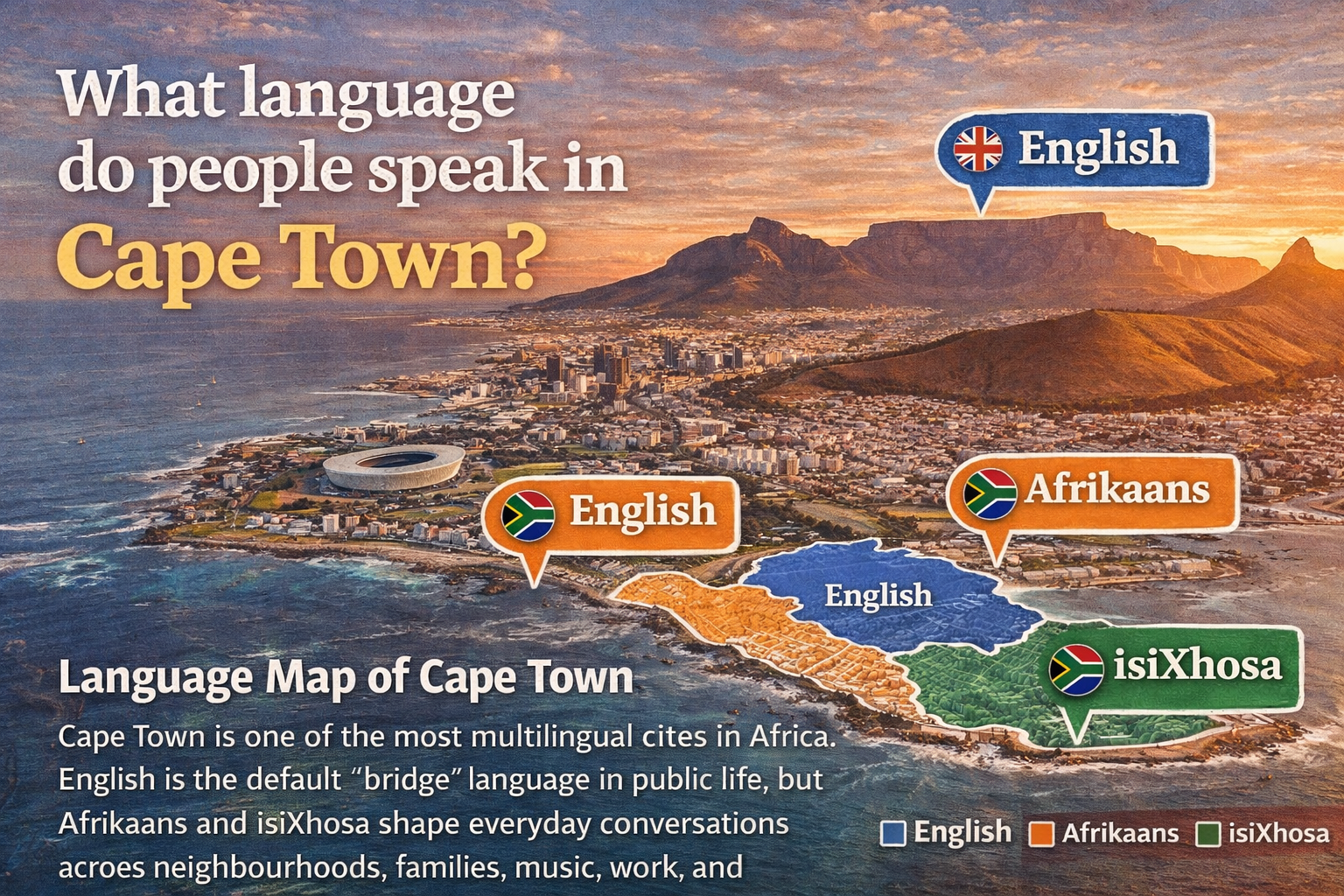
What language do people speak in Cape Town?
Cape Town Culture Guide · 2026 Language Map of Cape Town Cape Town is one of the most multilingual cities in Africa. English dominates in…
Artikel lesen
Warum „Kill the Boer“ weiter nachhallt: Ressentiment, Macht – und die Realität von Hass | Analyse
Zum Artikel springen Start / Analyse / Südafrikanische Geschichte & Politik Link kopieren Teilen Springe zu Analyse · Südafrikanische Geschichte & Politik Warum „Kill the…
Artikel lesen
So spendest du und engagierst dich in Kapstadt so, dass langfristige, würdige Lösungen unterstützt werden – statt ungewollt Menschen auf der Straße zu halten, ungesunde Systeme zu füttern oder lokalen Organisationen die Arbeit schwerer zu machen
Foto: Chris Parsons (CC BY-SA 4.0) – via Wikimedia Commons. Responsible Travel • Spenden • Lokale Wirkung So spendest du und engagierst dich in Kapstadt…
Artikel lesen