What is going on with South Africa's electricity?
June 3, 2025
South Africa's Electricity: From Crisis to Recovery
After years of crippling blackouts, South Africa has entered 2026 with its most stable electricity supply in five years. Here's how the country generates its power, what changed, and what visitors need to know about the grid today.
Consecutive days without load shedding as of January 2026. Only 26 hours of outages in all of 2025, down from 332 days of cuts in 2023.
Current State of the Grid (2025–2026)
After years of rolling blackouts that damaged the economy and daily life, South Africa's electricity system has made a dramatic recovery. The country entered 2026 with its strongest and most reliable grid in five years, driven by Eskom's Generation Recovery Plan launched in April 2023.
The improvement is measurable. The Energy Availability Factor (EAF) — the share of time Eskom's fleet can produce electricity — reached 69.14% in December 2025, up 12.57% from the same month in 2024. The fleet hit or exceeded the 70% benchmark on 49 occasions during 2025. Unplanned outages have dropped by over 5,500 MW year-on-year, and diesel spending has fallen dramatically as emergency generation is no longer routinely needed.
No Load Shedding Projected Through Mid-2026
Eskom's September 2025 Summer Outlook projects no load shedding through March 2026, with sustained improvements expected to carry the grid through to the 2026 winter assessment. The only interruptions in the 2025/26 financial year were 26 hours in April and May 2025 — a stark contrast to the 332 days of cuts in 2023.
The recovery is attributed to intensive planned maintenance on the ageing coal fleet, better operational discipline, reduced emergency interventions, and the steady addition of renewable and nuclear capacity. While the system is structurally stronger, Eskom and analysts caution that vigilance is still required — the fleet is old, and complacency could reverse the gains.
Coal — The Backbone

Lethabo Power Station, Mpumalanga. Photo by Robosk, licensed under CC BY-SA 4.0
Coal is the backbone of South Africa's electricity supply. The country sits on abundant reserves, particularly in Mpumalanga province, and since the mid-20th century has built numerous large coal-fired stations that collectively provide the bulk of electrical output — historically around 74–85% of generation. Plants like Medupi and Kusile (each ~4,800 MW) and longstanding stations such as Kendal, Majuba, and Lethabo (each 3,600–4,100 MW) rank among the largest coal-fired stations in the world.
Most coal stations are located near the mines in the northeast, minimising transport costs. Coal power has historically given South Africa access to cheap electricity, but it comes with heavy environmental costs (greenhouse gas emissions and air pollution) and ageing plants have become increasingly unreliable due to deferred maintenance — a root cause of the load shedding crisis.
Coal's Declining Share
The IRP 2025 plan commits to reducing coal's share from approximately 74% today to 27% by 2039. About 34 GW of coal capacity is earmarked for decommissioning by 2050, to be replaced by renewables, gas, and storage. However, coal will remain the workhorse of the grid for at least another decade as the transition unfolds.
Nuclear — Koeberg Power Station
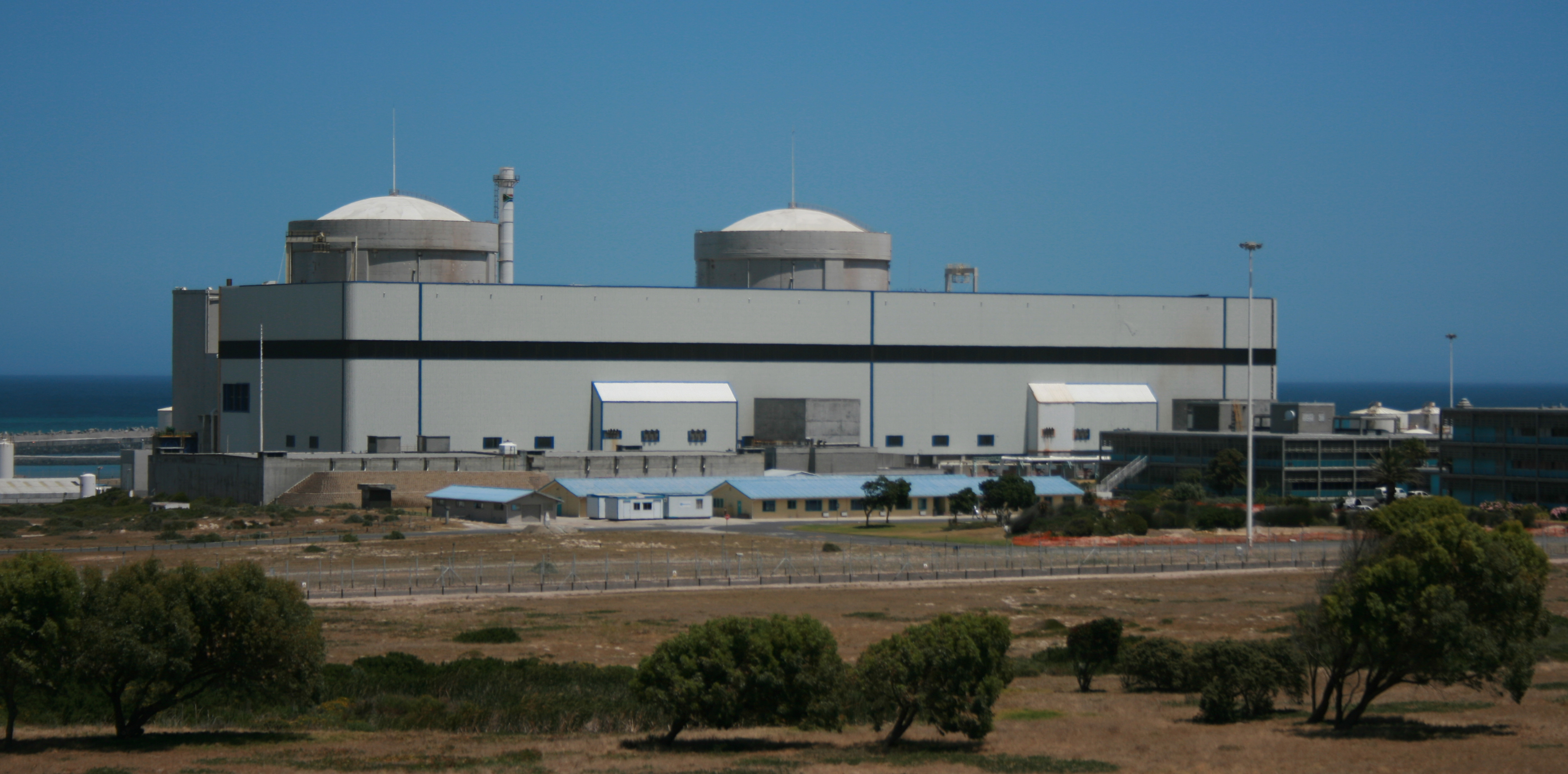
South Africa operates the only nuclear power plant in Africa — the Koeberg Nuclear Power Station, located 30 km north of Cape Town. Its two pressurised water reactors provide a combined 1,860 MW of clean baseload power, contributing 4–5% of national electricity generation since coming online in 1984–85.
Unit 1 Licensed to 2044
Unit 2 Licensed to 2045
Koeberg's location near Cape Town reduces reliance on long-distance transmission from coal stations in the northeast and provides vital voltage stability to the Western Cape grid. The plant sits within a 3,000-hectare nature reserve and has earned over 14 NOSCAR safety awards. South Africa's IRP 2025 keeps the door open for new nuclear capacity, though large-scale projects remain uncertain given cost and the availability of cheaper renewables.
Solar & Wind — The Fastest-Growing Sources
Solar Power
South Africa is blessed with abundant sunshine — it receives more than twice as much solar radiation as Germany, where solar is already widely deployed. The country averages over 2,500 hours of sunshine per year, with solar irradiance of 4.5–6.5 kWh/m². Utility-scale solar farms and rooftop installations have made solar the fastest-growing energy source in the country.
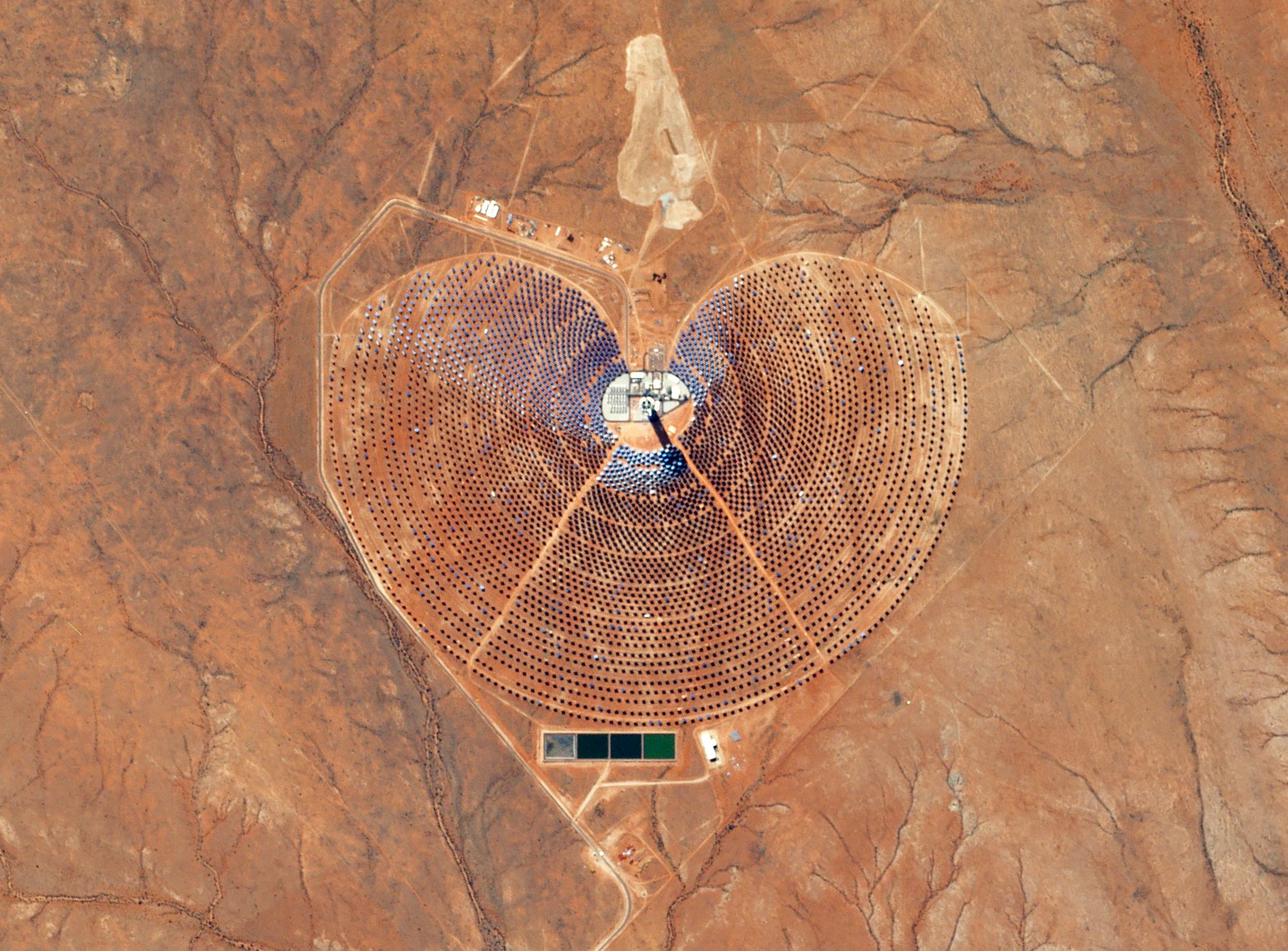
Khi Solar One, a concentrated solar power tower in the Northern Cape. Photo by Planet Labs, licensed under CC BY-SA 4.0
By 2023, installed solar PV capacity reached approximately 7.8 GW — nearly 50% of all installed solar on the African continent. Embedded (rooftop) PV capacity has almost doubled that of utility-scale PV, as homeowners and businesses installed panels both for cost savings and as insurance against load shedding. Solar contributed roughly 8% of total electricity output in 2024, making it the largest clean energy source.
Wind Power
Strong wind corridors along the Eastern Cape and Western Cape coastlines have driven rapid growth. By 2023, installed wind capacity reached approximately 3,442 MW across 34 operational wind farms, with an additional 1.3 GW under construction and 53 GW in the development pipeline. Wind contributed about 5% of total generation in 2024. South Africa accounts for over 39% of Africa's total wind capacity.
The Renewable Energy Independent Power Producer Procurement Programme (REIPPPP), running since 2011, has attracted R292 billion in investment into nearly 15,000 MW of wind and solar capacity, with about half currently under construction. The programme has made South Africa a magnet for both local and international clean energy developers.
Hydropower & Pumped Storage
Hydropower plays a modest role in South Africa's energy mix due to limited rainfall and river systems. Total installed hydropower capacity is only around 2,300 MW — a small fraction of the national total. In 2022, hydro (including pumped storage) accounted for roughly 3% of electricity generation.
A significant portion of that capacity comes from pumped storage schemes rather than natural river flow. Facilities like Drakensberg (1,000 MW) and Ingula (1,332 MW) use off-peak electricity to pump water uphill, then release it to generate power during peak demand. They act as giant batteries, critical for grid stability but not creating new energy — they store energy produced by other sources. Small conventional stations like Gariep and Vanderkloof on the Orange River contribute modest additional capacity.
Regional Imports
South Africa is part of the Southern African Power Pool (SAPP), a regional grid network enabling electricity trade. The most significant import is hydropower from Mozambique's Cahora Bassa Dam on the Zambezi River, delivered via a 1,920 MW HVDC transmission line. In 2022, South Africa imported about 10,800 GWh — roughly 5% of consumption.
Imports ~10.8 TWh/year
Exports ~12.3 TWh/year
Key Statistics
Capacity Breakdown (2025) Installed MW
Generation Mix (2024 est.) Output TWh
The Crisis Years & What Went Wrong
Since 2007, South Africa has suffered rolling blackouts — locally called "load shedding" — due to insufficient generation capacity, ageing infrastructure, and maintenance backlogs. Outages are scheduled in stages (Stage 1 to 8), each removing 1,000 MW of demand. The crisis peaked in 2023, when power cuts occurred on 332 of 365 days, reaching Stage 6 and devastating the economy.
Root Causes
Ageing Coal Fleet Primary
Medupi & Kusile Delays Billions Over Budget
Financial Strain R400B+ Debt
Corruption & Mismanagement State Capture Era
The Recovery Timeline
Coping with Load Shedding
Although load shedding has largely stopped, South Africans have built up extensive coping infrastructure over the crisis years — and it's worth understanding these systems as a visitor, since they remain in place and are occasionally needed.
Backup Power Widespread
Load Shedding Apps EskomSePush
Alternative Cooking & Lighting Adapted
Load Reduction ≠ Load Shedding Ongoing Issue
Tips for Tourists During Outages
With load shedding largely behind South Africa, visitors in 2026 are unlikely to experience blackouts — but it's smart to be prepared, just as you'd carry a rain jacket "just in case." Here's what to know:
Practical Advice for Visitors
- Download EskomSePush: The free app shows the load shedding schedule for any area. Even in the current stable period, it's your best real-time source for grid status.
- Choose backup-powered accommodation: Most hotels and major guesthouses have generators or inverters. Confirm when booking if power continuity matters to you (elevators, Wi-Fi, air conditioning).
- Carry a small flashlight or power bank: Streets and corridors can go dark during an outage. A phone torch works, but a proper flashlight is better for walking at night.
- Road safety during outages: Traffic lights may not work. Treat any dark intersection as a four-way stop. Avoid unnecessary driving during load shedding periods.
- Charge devices proactively: If an outage is scheduled, charge your phone and power bank beforehand. Plan showers around hot water availability if your accommodation uses electric geysers.
- Enjoy the upside: Load shedding occasionally means clearer night skies in suburban areas — take the opportunity for impromptu stargazing.
Map of Major Power Stations
Future Outlook & IRP 2025
South Africa is at a crossroads in its energy journey. The cabinet-approved Integrated Resource Plan 2025 (IRP 2025) is the most ambitious energy blueprint the country has ever produced, committing to 105,000 MW of new generation capacity by 2039 — two-and-a-half times Eskom's current fleet.
Nearly 80% of new capacity is renewable — a far greater proportion than any previous energy plan. Electricity Minister Ramokgopa has described IRP 2025 as a "pivot" from greenhouse gas emissions, while also arguing it doesn't mean abandoning baseload coal. The plan includes 16 GW of gas-to-power and keeps the door open for small modular nuclear reactors.
Reasons for Optimism
- Generation Recovery Plan working: 4,400 MW added, EAF up 12.57% year-on-year
- REIPPPP proven model: R292 billion invested in ~15 GW of renewables since 2011
- Koeberg secured to 2044–45: 1,860 MW of clean baseload locked in for decades
- Private generation booming: Licence-exempt solar and wind by businesses and households reduces grid strain
- Eskom restructuring: Unbundling into generation, transmission, and distribution to improve efficiency
- R390 billion in transmission projects: Grid expansion to integrate renewables at scale
Remaining Risks
- Ageing coal fleet: Many stations still past design life — maintenance must continue
- Eskom's debt: R400B+ burden limits investment capacity
- Transmission bottlenecks: Grid infrastructure lags behind renewable capacity additions
- Implementation track record: Medupi/Kusile delays show large projects can stall
- Load reduction continues: Illegal connections and infrastructure overload remain problems in some areas
- Just transition concerns: Coal regions face job losses as plants close — social support needed
Bottom Line for Visitors (2026)
The electricity situation has improved dramatically. Load shedding is no longer a daily reality — 2025 saw only 26 hours of cuts in the entire year. Most accommodation, restaurants, and attractions have backup power anyway. Download EskomSePush for peace of mind, pack a power bank as you would for any trip, and enjoy South Africa without worrying about the lights going out.
More in Energy & Utilities
You May Also Like

What is Cape Town's Loadshedding about?
Cape Town • Practical Guide • Electricity & Outages ✅ National status: Not load-shedding (check live) Load-shedding in Cape Town (2026): what’s the situation and…
Read Article
Cape Town’s Traffic Woes in 2025 – Part 2: Tourist Survival Guide -Driving in Cape Town
Why People Want to Live in the City Bowl Despite the notorious traffic, Cape Town’s City Bowl remains one of the most desirable places to…
Read Article
Cape Town’s Traffic Woes in 2025 – Part 1: Geography, Congestion Patterns, and Commuter Coping Strategies
Photo courtesy of Wikimedia Commons, licensed under CC BY-SA 4.0 Table of Contents Cape Town’s Unique Geography: The City Bowl and Beyond Peak-Hour Gridlock: When…
Read Article