Safety Tips for Driving in Cape Town and South Africa
June 9, 2025
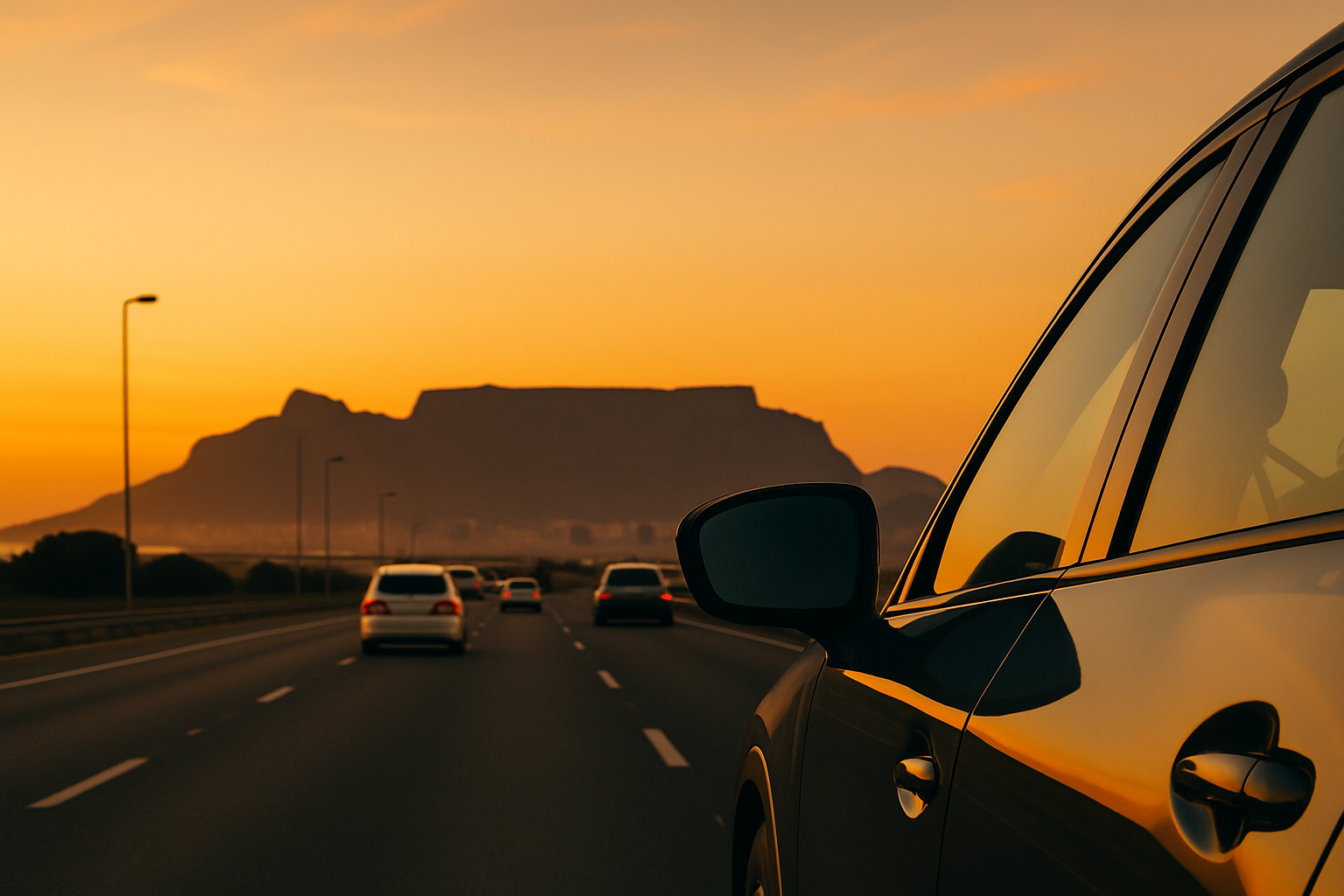
Driving in Cape Town & South Africa
Everything you need to know: left-side driving, safe routes from the airport, parking, night driving, and the latest security updates. Drive with confidence.
10 Essential Rules
Drive on the Left
Steering wheel on the right. Driver sits near the center line. Put a "Keep Left" note on your dash.
Lock Doors & Hide Valuables
Keep doors locked, windows up. Store bags in the boot. Nothing visible on seats.
Plan Safe Routes
Stick to N2/M3 from airport. Avoid R300 at night. Ignore GPS shortcuts through unknown areas.
Avoid Night Driving
Schedule long drives for daylight. If unavoidable, use main highways only.
Park Smart
Secure, well-lit areas. Tip car guards R5–10. Physically check doors locked (remote jamming exists).
Never Drink & Drive
Legal limit 0.05% BAC (~1 drink). Roadblocks frequent. Use Uber/Bolt instead.
Obey Speed Limits
120 km/h highways, 60 km/h cities. Enforcement is real. Speeding fines are common.
Watch for Pedestrians
~40% of SA road deaths are pedestrians. Stay alert, especially at night and in townships.
Save Emergency Numbers
112 (general), 10111 (police), 10177 (ambulance). City emergency: 021 480 7700.
Trust Your Instincts
Something feels off? Drive to nearest petrol station or police station. Don't stop on dark roads.
Driving in South Africa: The Basics
South Africa has an extensive, well-maintained road network. Major highways are paved and signed in English. Many visitors find driving here manageable and enjoyable — South African drivers are often courteous on open roads. That said, city centers like Cape Town can be chaotic with minibus taxis weaving through traffic.
Road Quality
National roads (N1, N2, etc.) are well-paved highways. Speed limits: 120 km/h highways, 100 km/h rural, 60 km/h urban.
"Robots" = Traffic Lights
Locals call traffic lights "robots." At 4-way stops, first arrival goes first. At roundabouts, yield to traffic from the right.
Toll Roads
Some highways have toll plazas. Keep Rand cash handy. Ask rental companies about electronic toll tags.
Adapting to Left-Side Driving
South Africa drives on the left-hand side. Vehicles are right-hand drive (steering wheel on the right). If you're used to driving on the right, give yourself time to adapt.
Reminder Techniques
- Stick a "Keep Left!" note on your dashboard
- Remember: driver sits near the center line
- Turn signal lever is on the right side of the steering column
Practice & Passing
- Practice in a quiet area or parking lot first
- Keep left lane for normal driving, right lane for overtaking
- Flash hazards briefly to thank drivers who let you pass
Pro tip: After a day or two, left-side driving will feel natural. Stay extra attentive at roundabouts and when turning into multi-lane roads — that's when mistakes happen.
From Cape Town Airport: Routes to Take & Avoid
Cape Town International Airport is about 20 km from the city center. The main route is the N2 highway. While thousands use it daily without incident, the airport sits near high-crime areas on the Cape Flats.
The N2 "Hell Run" — What You Need to Know
A section of the N2 near the airport has earned the nickname "Hell Run" due to stone-throwing attacks, robberies, and occasional shootings targeting motorists. Here's the reality:
Never stop on the N2 shoulder. If you have a breakdown, drive to the nearest petrol station — even on a flat tyre. Safety > rim damage.
Check tyres and fuel before departing. Most incidents target stranded vehicles. Full tank + good tyres = much lower risk.
Avoid Borcherds Quarry exit. Use the main Airport Approach Road (exit 16) instead. GPS may suggest Borcherds Quarry — ignore it.
Avoid the R300 at night. The UK government specifically advises staying on N2/M3 rather than R300 after dark.
Safe Route: To City Center / Atlantic Seaboard
This is the recommended route for Waterfront, City Bowl, Camps Bay, and Sea Point.
Follow signs from airport for N2 towards "Cape Town"
Stay on N2 westbound — do not take any exits through residential areas
For Southern Suburbs: take M3 south at University of Cape Town exit
Good news (Jan 2026): Cape Town allocated R114 million for N2 safety improvements including better lighting, pedestrian crossings, and 40+ Metro Police officers on 24/7 patrol. A proposed R180 million security wall is also under discussion.
Driving at Night
Both crime concerns and road hazards increase after dark. Plan to do most driving in daylight. If night driving is unavoidable, stick to well-lit, busy roads.
Why Night Driving Is Riskier
- Potholes and debris harder to see
- Pedestrians walking on roads without reflective clothing
- More drunk drivers on the road
- Stone-throwing incidents peak midnight–4am
If You Must Drive at Night
- Use main highways only — avoid side streets
- Keep doors locked, windows up
- Stay alert at traffic lights — don't get boxed in
- If breakdown: stay in car, call help, hazards on
Obstacles in the road: If you see large stones or debris placed on the road at night, do not stop. Criminals use this trick to ambush cars. Carefully drive around and continue.
Parking Safety Day & Night
The general rule: park in a secure, well-lit area and don't leave valuables visible. Car guards (informal attendants in vests) are common and helpful.
Secure Parking
- Official parking lots/garages are safest (many have 24/7 security)
- Tip car guards R5–10 when you return
- At night, use valet or park directly under lights
Lock Up & Double-Check
- Physically check the door handle after clicking remote (remote jamming exists)
- Nothing visible on seats — not even sunglasses
- At beaches/trails: lock luggage in boot before arriving
Remote jamming: Thieves use devices to block your remote signal so the car doesn't actually lock. Always physically test the handle before walking away.
Drinking and Driving Awareness
South Africa has strict drinking and driving laws. Alcohol is a major factor in road fatalities. Enjoy the wine farms and nightlife — just don't drive afterwards.
Legal Limit
0.05% BAC — roughly equal to one standard drink. Safer approach: don't drive if you've had any alcohol.
Enforcement
Roadblocks are frequent, especially at night and weekends. 173,695 drivers tested festive season 2025/26; 8,561 tested positive.
Alternatives
Uber and Bolt are widely available and affordable. For wine tours, book a driver or join an organized tour.
Penalties are severe: Hefty fines, immediate arrest, possible jail time, and a criminal record. The morning after a big night, you could still be over the limit — many arrests happen with "hangover" drivers.
Road Safety Statistics 2025
Good news: 2025 recorded the lowest road fatalities in five years. The festive season 2025/26 saw a 5% reduction in both crashes and fatalities compared to the previous year. However, pedestrian deaths remain a major concern — particularly in Cape Town, Johannesburg, and eThekwini. Human factors (speeding, drunk driving, reckless overtaking) contribute to ~87% of crashes.
Emergency Contacts
General Emergency
Works from any cellphone
Police (SAPS)
Report crime or accident
Ambulance / Fire
Medical & fire emergencies
Cape Town City
Local emergencies
Airport Control Room
ACSA emergencies
Provincial Traffic
Road conditions & closures
Useful apps: Download Namola — a free personal safety app with one-tap emergency assistance using your GPS location. Many locals and expats use it as a modern panic button.
News & Developments 2025–2026
R114 Million N2 Safety Investment
Cape Town allocates funds for 9km of N2 improvements: better lighting, pedestrian crossings, CCTV upgrades, and 40+ Metro Police officers on 24/7 patrol.
Proposed R180m Security Wall
Mayor proposes security wall along N2 "Hell Run" section to prevent stone-throwing attacks. Project faces community consultation requirements.
40 New N2 Metro Police Officers
Dedicated 24/7 deployment launched for N2, airport, and Borcherds Quarry precincts. Officers equipped with dashcam tech for stolen vehicle detection.
Lowest Road Deaths in 5 Years
2025 recorded 11,418 fatalities — a 6.2% decrease from 2024. Festive season saw 5% reduction in both crashes and fatalities nationally.
DUI Arrests Up 144%
Festive season roadblocks tested 173,695 drivers; 8,561 tested positive for alcohol — a dramatic increase from the previous year. Zero-tolerance enforcement continues.
1,350+ Arrests in Cape Town This Month
Cape Town law enforcement reports over 1,350 arrests in January 2026 alone, including 146 by Metro Police (22 for DUI).
The Bottom Line
Driving in Cape Town and South Africa can be one of the most memorable parts of your trip. From Chapman's Peak to the Garden Route, the freedom to explore is hard to beat. The key is preparation, not paranoia.
- Plan safe routes — N2/M3 from airport, avoid R300 at night
- Drive defensively — doors locked, valuables hidden, fuel full
- Avoid night driving when possible; use Uber/Bolt for nightlife
- Never drink and drive — enforcement is strict and penalties severe
- Trust your instincts — if something feels off, drive to safety
Thousands of tourists safely self-drive in South Africa every year. With these precautions, you can confidently enjoy the journey.
Disclaimer
This guide offers practical travel advice, not a safety guarantee. Conditions change. Always follow guidance from your accommodation, rental company, and local authorities. If you feel unsafe, drive to the nearest petrol station, police station, or 24-hour business and seek help.
More in Safety Playbooks & Tools
You May Also Like
Is It Safe to Stay in Bloubergstrand, Cape Town? 2026 Safety Evaluation
Photo courtesy of Wikimedia Commons contributor, licensed under CC BY 3.0 Is It Safe to Stay in Bloubergstrand, Cape Town? | 2025–2026 Safety Guide Western…
Read Article
Is It Safe to Live in Walmer Estate, Cape Town? 2025–2026 Safety Guide
Photo courtesy of Axxter99, Wikimedia Commons, licensed under CC BY-SA 4.0 Is It Safe to Live in Walmer Estate, Cape Town? | 2025–2026 Safety Guide…
Read Article
Is Sea Point Safe for Tourists? A Data-Driven Analysis (2024–2026)
Is Sea Point Safe for Tourists? A Data-Driven Analysis (2025–2026) | Cape Town Data ◆ Data Analysis — February 2026 Is Sea Point Safe for…
Read Article
Is It Safe to Live in Rondebosch, Cape Town?
Photo courtesy of Zaian, Wikimedia Commons, licensed under CC BY-SA 3.0 Is It Safe to Live in Rondebosch, Cape Town? | 2025–2026 Safety Guide Southern…
Read Article
Is It Safe to Live in Oranjezicht, Cape Town?
Photo courtesy of Hansueli Krapf, Wikimedia Commons, licensed under CC BY-SA 3.0 Is It Safe to Live in Oranjezicht, Cape Town? | 2025–2026 Safety Guide…
Read Article