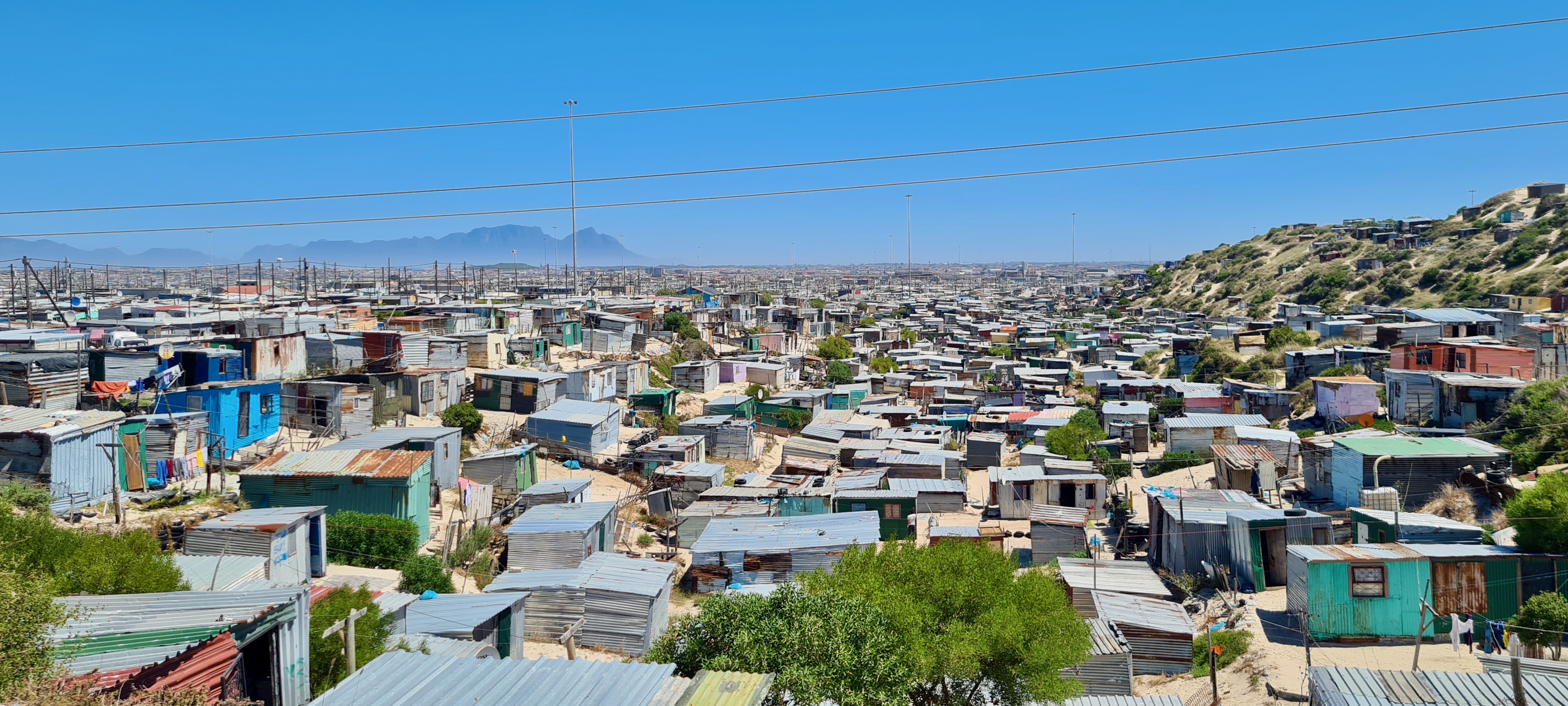
Demographics and economy
Khayelitsha — meaning "Our New Home" in isiXhosa — is located approximately 30 kilometres from Cape Town's city centre and the tourist areas around Table Mountain and the V&A Waterfront. The township is home to a large workforce that commutes daily to employment across the Cape Town metropolitan area.
The official census recorded 391,749 residents in 2011. Current estimates vary significantly, ranging from 500,000 to over one million, with some community organisations citing figures as high as 1.2 million residents. Population growth continues, with approximately 10,000 new arrivals settling here annually, predominantly from the Eastern Cape province.
Khayelitsha was established in the early 1980s during the apartheid era. The township's layout reflects the urban planning policies of that period, with limited access roads and considerable distance from major employment centres. Jobs remain concentrated in central Cape Town and Bellville, requiring lengthy commutes for many residents.
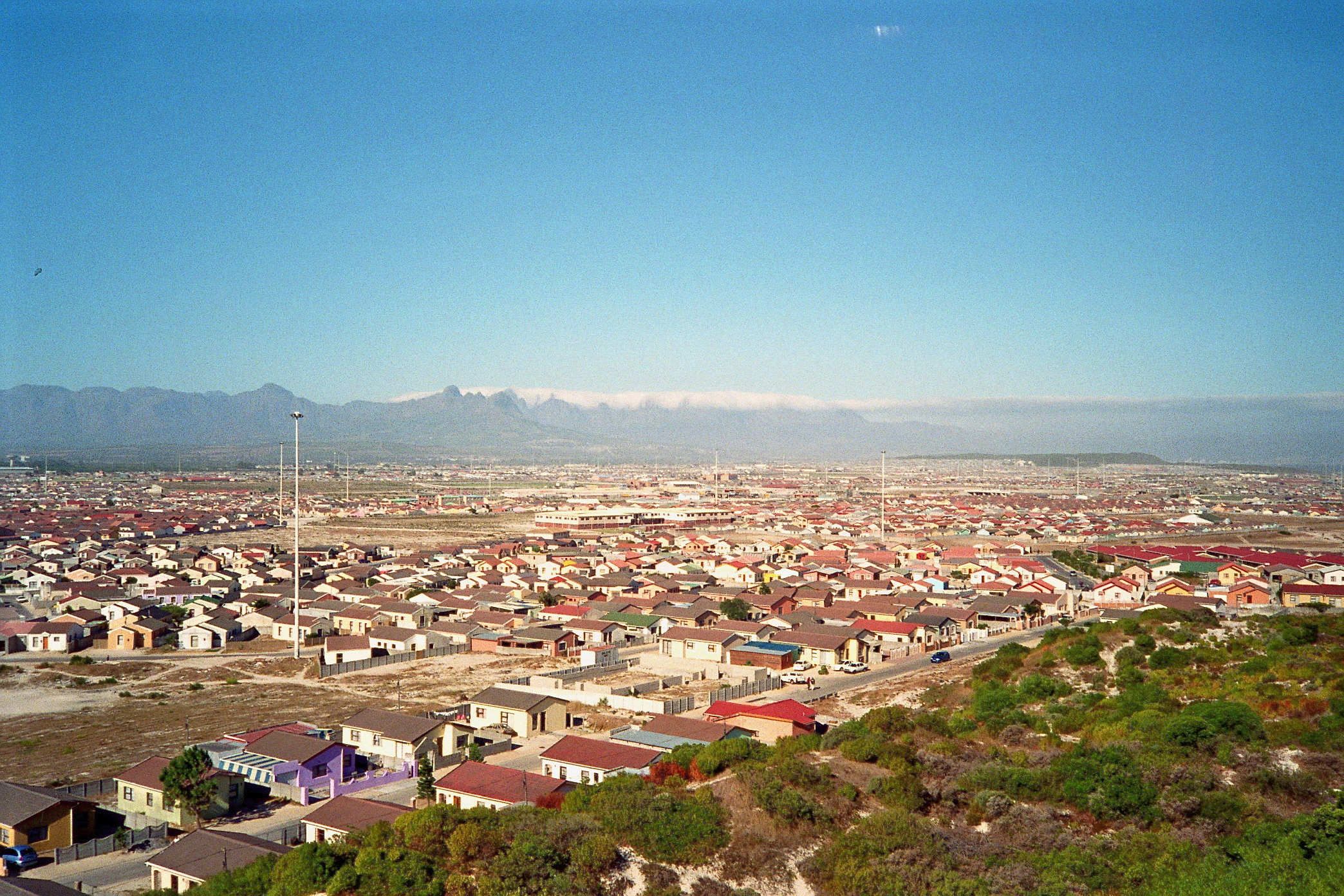
View from Lookout Hill over Ilitha Park. Photo by FreddieA, CC BY-SA 3.0
The five most common occupations reflect the township's role in the broader Cape Town economy: domestic work (19.4%), service work (15.2%), skilled manual labour (15.2%), unskilled manual labour (11%), and security services (10.4%). Many residents work in hospitality, construction, retail, and household services across the metropolitan area.
Current situation: 2025–2026
January 2026 has seen several significant events in Khayelitsha. On 4 January, a fire swept through the Tsepe Tsepe informal settlement along Phakamani Road. The blaze destroyed 177 structures and displaced over 550 people. Gift of the Givers described it as the largest fire of the season. Within two weeks, another fire in BM informal settlement displaced approximately 50 additional residents.
Key events include multiple fires displacing hundreds of residents, ongoing infrastructure challenges including a sewerage crisis requiring family relocations, and continued crime incidents including a shooting at a supermarket in Site B.
Informal settlements face recurring fire risks due to structural factors: dense construction using combustible materials, informal electrical connections, use of paraffin stoves and candles, limited firebreaks between structures, and narrow access roads that can impede emergency response. Some families in Taiwan informal settlement have experienced multiple fires over recent years.
Crime statistics show ongoing challenges. Khayelitsha police station recorded 68 murder cases in Q2 2024, compared to 47 in the same period the previous year. In July 2025, three people were killed in a shooting in Harare. In January 2026, four people were killed in a supermarket shooting in Site B.
Two known gang figures were killed by police in 2025: Yanga "Bara" Nyalara in the Eastern Cape in February, and Ayanda "Stix" Yisaka in July. Law enforcement continues to address gang activity in the area.
Extortion affecting local businesses
Spaza shops — small informal stores that serve as important retail outlets in the township — have faced increasing pressure from extortion in 2025. These shops, many operated by Somali, Ethiopian, or Bangladeshi immigrants, provide affordable goods to local residents, often selling items in small quantities suited to limited household budgets.
Throughout 2025, protection fees reportedly increased from around R1,500 per month to R3,000 or more. Some shop owners have reported being approached by multiple groups demanding payment. By June, over 30 shops in Site C and Makhaza had closed. In November, three Somali shop owners were shot within 48 hours in Taiwan informal settlement.
Business impact Documented
Protection fees have reportedly risen from R1,500 to over R4,500 monthly. Multiple groups may target the same businesses. Many shops have reduced hours or closed entirely.
Community impact Noted
Shop closures affect access to affordable goods. As one resident explained: "With Somalians, you can buy sugar enough for two cups of tea. With R5 you can still buy tea and coffee."
The Global Initiative Against Transnational Organised Crime has documented the spread of extortion networks across Cape Town. In Khayelitsha and other Cape Flats townships, various businesses face protection demands, from spaza shops to taverns to construction contractors.
Fire incidents
Seasonal pattern: Summer months typically see increased fire incidents in informal settlements. Factors include the materials used in construction, density of structures, and reliance on open flames for cooking and heating.
4 January 2026 — Tsepe Tsepe
177 structures destroyed, over 550 people displaced. Gift of the Givers provided emergency relief. Affected residents appealed for clothing, nappies, and school supplies ahead of the new school term.
19 January 2026 — BM Settlement
14 homes destroyed, approximately 50 people displaced. The fire is believed to have started when a child attempted to cook using a gas stove. The cause remains under investigation.
December 2025 — Mandela Park
Three fatalities including an infant. Separately, over 150 people were displaced in Donkey Square following a fire that reportedly originated from a domestic dispute.
October 2025 — Multiple areas
Two fatalities in Monwabisi Park. Separately, over 60 shacks destroyed in S informal settlement. An additional 80 structures were damaged in a separate incident.
Contributing factors to fire risk include: access roads that may be too narrow for emergency vehicles, structures built in close proximity without firebreaks, informal electricity connections, and children being left at home while parents work. The City of Cape Town conducts fire safety awareness campaigns, though structural challenges persist.
In early January 2026, the City worked to relocate families living above a main sewer line requiring maintenance. Temporary housing structures were erected in Green Point (a neighbourhood within Khayelitsha). Before relocated families could move in, some of the temporary units were vandalised and materials were taken by existing area residents.
Transport and employment
A significant portion of Khayelitsha's workforce commutes daily to employment across Cape Town. Residents use Metrorail trains, minibus taxis, and walking to reach train stations and taxi ranks, often beginning their journeys before dawn. Common destinations include the CBD, Bellville's industrial and commercial areas, and suburbs throughout the metropolitan region.
The township's location reflects urban planning decisions made during the apartheid era. Khayelitsha is situated approximately 30 kilometres from the CBD and is not optimally connected to Bellville's industrial areas, where many jobs are now concentrated.
Transport infrastructure faces ongoing challenges. Minibus taxi routes have experienced competition-related incidents. Metrorail services have been affected by infrastructure damage and service disruptions. The median household income in Khayelitsha is approximately R20,000 per year, which is about half the city average. According to surveys, approximately 89% of households experience some degree of food insecurity.
Gangs and gang violence
Yes, gang activity is present in Khayelitsha and contributes significantly to the township's crime statistics. While gang structures in Khayelitsha differ somewhat from those in other Cape Flats areas like Manenberg or Hanover Park, organised criminal groups operate throughout the township and are involved in various illegal activities.
Gang presence
Several gangs operate in Khayelitsha, though the landscape shifts as groups form, dissolve, and conflict with one another. Some of the groups that have been documented in recent years include the Boko Haram gang (unrelated to the Nigerian organisation, sharing only the name), which has been linked to extortion and violence in various sections of the township.
Gang activity in Khayelitsha often centres on control of economic activities: extortion of businesses (particularly spaza shops and taverns), drug distribution, and protection rackets. Unlike some Cape Flats gangs with multi-generational histories, Khayelitsha's gang structures are sometimes more fluid, with groups forming around specific criminal enterprises.
Violence statistics
Gang-related violence contributes to Khayelitsha's elevated murder rate. Khayelitsha police station recorded 68 murder cases in Q2 2024, up from 47 in the same period the previous year — a 44.5% increase. This placed the station fourth nationally for homicides during that period.
Recent incidents
July 2025: Three men shot dead in Harare section — one of four mass shootings in Cape Town that week. January 2026: Four people killed in a supermarket shooting in Site B. Such incidents, while not always confirmed as gang-related, reflect the prevalence of gun violence.
Law enforcement actions
In 2025, police killed two prominent figures: Yanga "Bara" Nyalara (linked to a 2021 mass shooting that left 12 dead) in February, and Ayanda "Stix" Yisaka of the Boko Haram gang in July. Such operations continue but have not eliminated gang activity.
Extortion networks
The extortion of local businesses represents a major gang-related concern. The Global Initiative Against Transnational Organised Crime has documented how extortion networks have become increasingly organised across Cape Town's townships. In Khayelitsha, spaza shops, taverns, construction sites, and even some municipal workers face protection demands.
Protection fees reportedly range from R1,500 to over R4,500 per month, with some businesses targeted by multiple groups simultaneously. The extortion crisis has forced many shops to close, affecting both business owners and residents who relied on these stores for affordable goods.
Contributing factors
Researchers and community organisations point to several factors that enable gang activity:
Economic conditions
High unemployment (approximately 47%) and limited economic opportunities make gang involvement attractive to some young people. The median household income of around R20,000 per year leaves many families in precarious situations.
Policing challenges
The ratio of police to residents in Khayelitsha is lower than in many other areas. Informal settlement layouts make patrolling difficult. Trust between police and communities has historically been strained.
Firearms availability
Illegal firearms circulate widely in Cape Town's gang networks. The prevalence of guns escalates conflicts that might otherwise be less lethal and enables armed extortion and robbery.
Limited alternatives
Youth programmes, recreational facilities, and employment pathways remain insufficient relative to the population. Young people may see few viable alternatives to involvement in illegal activities.
Community responses
Residents have responded to gang activity in various ways. Neighbourhood watches patrol some areas. Community meetings address safety concerns. In some cases, vigilante actions have been reported against alleged gang members or extortionists, though such responses carry their own risks and legal implications.
The LEAP programme has shown that increased, community-oriented policing can reduce violence. In LEAP deployment areas, murder rates dropped 9.4% year-on-year while rising elsewhere. However, the programme's limited coverage means most of Khayelitsha does not yet benefit from this approach.
Community, culture, and resilience
Khayelitsha is home to a vibrant community life that exists alongside its challenges. Social movements, cultural institutions, and grassroots organisations reflect the resilience and creativity of residents who have built networks of mutual support and cultural expression.
Community organisations
Several influential South African social movements have roots in Khayelitsha. The Treatment Action Campaign, which played a significant role in securing access to HIV/AIDS treatment nationally, was founded here. The Social Justice Coalition continues to advocate for improved services and safety. Neighbourhood watch groups operate across various sections, filling gaps in formal policing.
The Isivivana Centre serves as a community hub, housing activist organisations, a library, and the Bertha Movie House — a community cinema offering free screenings. Khaltsha Cycles operates cycling programmes with a particular focus on women's empowerment and mobility.
Music and performance
Khayelitsha has a rich musical heritage and continues to be a significant centre for South African music. The township has produced notable artists across genres including kwaito, hip-hop, jazz, and gospel. Local sounds blend traditional Xhosa music with contemporary styles, creating distinctive township music that has influenced South African culture more broadly.
Live music venues
Shebeens (informal taverns) and community halls host regular live performances. Local artists perform jazz, maskandi, and contemporary genres. Some venues have gained reputations beyond the township for authentic musical experiences.
Gospel and choral traditions
Churches throughout Khayelitsha maintain strong choral traditions. Gospel music is a significant part of community life, with Sunday services featuring powerful harmonies rooted in both Xhosa and broader African musical traditions.
The annual Cape Town International Jazz Festival and other city events regularly feature artists from Khayelitsha. Hip-hop and amapiano artists from the township have gained national and international followings, contributing to South Africa's contemporary music scene.
Arts and creative expression
Visual arts thrive in Khayelitsha. Murals painted by local artists appear throughout the township, depicting community history, cultural themes, and social commentary. These public artworks transform everyday spaces and preserve local stories.
Theatre and performance groups use drama to address social issues and celebrate cultural heritage. Storytelling traditions remain important, with elders passing down Xhosa folklore and history to younger generations.
Food culture
Khayelitsha's food culture centres on communal gathering. Shisa nyama stands — where meat is grilled over open flames — serve as social hubs where neighbours gather, music plays, and community bonds are strengthened. These informal braai spots are found throughout the township and represent an important part of social life.
Small businesses like Siki's Kofee Kafe have gained recognition for quality that rivals establishments in wealthier areas. Local entrepreneurs operate restaurants, catering businesses, and food stalls that serve traditional dishes alongside contemporary cuisine.
Resilience and mutual aid
Community resilience in Khayelitsha manifests in practical ways. When fires destroy homes, neighbours share resources and shelter. Stokvels (informal savings clubs) help members pool resources for emergencies, school fees, and major purchases. Burial societies ensure families can afford funeral costs. These informal financial networks provide security where formal systems are inaccessible.
After disasters, community response often precedes official aid. Residents organise collections of clothing, food, and building materials. Churches and community organisations coordinate relief efforts. This capacity for collective action reflects deep social bonds forged through shared experience.
Safety initiatives
The LEAP programme (Law Enforcement Advancement Plan) has shown measurable results in areas where it operates. In LEAP deployment areas, including parts of Khayelitsha, murder rates decreased by 9.4% between Q2 2024 and Q2 2025, while increasing 9.1% across the province overall. The programme's coverage remains limited relative to the township's size, but results suggest that adequately resourced, community-oriented policing can make a difference.
Location
The township is located on the Cape Flats between Table Bay and False Bay. The N2 highway runs along its edge. Travel time to central Cape Town is typically one hour or more, depending on traffic conditions and mode of transport.
Visitor information
Some tour operators offer guided visits to Khayelitsha, often marketed as "township tours" or "cultural experiences." Before booking such tours, visitors should consider several factors.
Considerations around township tourism
Township tourism is a subject of ongoing debate in South Africa. Critics, including many residents and academics, raise concerns about treating economically disadvantaged communities as sightseeing destinations. Key considerations include:
Dignity and consent
Residents going about their daily lives may find themselves photographed by tourists without consent. The dynamic between visitors from wealthier countries and people living in informal settlements can feel intrusive or exploitative to those being observed.
Economic benefit distribution
Research suggests that revenue from township tours often flows primarily to tour operators rather than to local communities. Visitors should ask operators directly how much of the tour fee goes to community members or local organisations.
Representation concerns
Brief tours may present a simplified or one-dimensional view of complex communities. Khayelitsha has vibrant cultural life, entrepreneurship, and community organisations that a two-hour tour may not adequately represent.
Safety realities
Parts of Khayelitsha have elevated crime rates. The extortion crisis affecting local businesses, ongoing gang activity, and other safety challenges mean that tourism involves real risks for visitors and may place additional burdens on communities.
We advise against typical township tourism visits. If your goal is to understand South African inequality or support local communities, more constructive alternatives exist that don't involve treating poverty as a spectacle.
Alternative ways to engage
For those genuinely interested in understanding or supporting Khayelitsha, consider these alternatives to tourism:
Direct donations: Several organisations work directly in Khayelitsha. Gift of the Givers provides disaster relief following fires and other emergencies. The Treatment Action Campaign focuses on healthcare access and advocacy. Equal Education campaigns for improved school infrastructure and funding. Donations to these organisations support ongoing work rather than one-time visits.
Support local businesses remotely: Some Khayelitsha entrepreneurs sell products online or through Cape Town markets. Purchasing from these businesses provides economic support without the complications of tourism.
Educational resources: Documentaries, books, and journalism from South African creators offer insight into township life without requiring your physical presence. Works by local journalists and filmmakers centre community voices rather than visitor perspectives.
Skills-based volunteering: Organisations occasionally seek volunteers with specific professional skills (medical, legal, educational, technical). These longer-term engagements differ significantly from tourism and should be arranged through established organisations with clear community relationships.
If you decide to visit despite these considerations, research operators carefully. Look for those with documented community partnerships, transparent revenue sharing, and that are led or co-led by residents. Ask specific questions about how communities benefit. Avoid photographing people without explicit permission. Be aware that your presence may not be welcomed by all residents.