How much Organised Crime is in South Africa?
March 25, 2026

Understanding South Africa’s Organised Crime Landscape, 2025–2026
From targeted killings and construction-sector extortion to a rising kidnapping economy and the arrival of international drug networks, South Africa’s organised crime landscape has evolved significantly. This analysis examines the key trends, data, and cases shaping the picture in 2025–2026, including what it all means for tourists and residents.
At a Glance: South Africa recorded 6,953 murders in the October–December 2025 quarter, though the murder rate has been declining for two years. Kidnappings have risen 264% over the past decade, with 4,775 cases in the same quarter. Targeted killings of legal professionals continue to raise concerns. Construction-sector extortion has been estimated to cost the economy R68 billion over the past decade. International drug networks, including elements linked to Mexican cartels, have established a growing presence in the country.
IN THIS ANALYSIS
The Changing Shape of Crime
South Africa in 2025–2026 presents a complex crime picture. While the country’s overall murder rate has begun a welcome decline after more than a decade of increases, the organised and professionalised character of several crime categories has deepened considerably. Targeted killings of lawyers, whistleblowers, and political figures have become a recurring pattern. Construction-sector extortion disrupts billions of rand in infrastructure projects. Kidnapping has grown into one of the country’s fastest-rising crime categories. And international drug networks have expanded their footprint, establishing manufacturing operations within the country’s borders.
What connects these different crime markets is their syndicated nature. These are coordinated enterprises that exploit institutional gaps, porous borders, and a criminal justice system where conviction rates remain low. Specialist investigator Mike Bolhuis noted in March 2026 that only around 10–15% of murders result in convictions, a ratio that naturally reduces the deterrent effect of law enforcement.
Provincial Crime Breakdown
Each province faces a distinct mix of organised crime categories. The breakdown below maps the dominant syndicated threats by region.
Gauteng
Over 52% of all kidnappings. 25% of CIT heists. 26 of the top 30 kidnapping hotspot stations are in Gauteng. Hub for targeted killings of professionals and business figures.
KwaZulu-Natal
Highest-risk for CIT robberies (34% of 2025 total). Major centre for taxi-industry violence and political assassinations. Origin of the construction mafia phenomenon.
Western Cape
90–130 active gangs, ~100,000 members. Centre of the synthetic drug (tik) economy. Four distinct extortion markets: nightlife, construction, transport, and township business.
North West & Limpopo
Epicentre of the zama zama crisis. Stilfontein mine disaster (78 dead). Bapong village destabilised by underground digging. Limpopo: site of Sinaloa-linked meth lab arrests.
Eastern Cape
Growing kidnapping problem, particularly around Gqeberha. Business leaders warn that abductions are deterring investment. 21% of CIT heists in 2024. 205 kidnappings in Q3 2024/25.
Targeted Killings: A Professionalised Market
On 24 March 2026, Chinette Gallichan, a 35-year-old labour lawyer for mining group Sibanye-Stillwater, was shot dead near the CCMA offices in Johannesburg’s CBD. She was exiting her vehicle when two unidentified gunmen opened fire at close range before fleeing in a getaway vehicle. No arrests have been made. Nothing was stolen. The incident bore the hallmarks of a targeted killing, a phenomenon that organised crime analyst Julian Rademeyer of the Global Initiative Against Transnational Organised Crime (GI-TOC) describes as an increasingly commercialised industry.
Gallichan’s death fits a documented pattern. In September 2025, attorney Bouwer van Niekerk was killed in his Saxonwold law offices while investigating alleged Ponzi scheme NTC Global Trade. In March 2023, insolvency practitioners Cloete Murray and his son Thomas were killed in Midrand while involved in investigating the Bosasa prison supply scandal. In each case, the approach was clinical: nothing stolen, perpetrators escape, no immediate arrests. The NPA has erected a Wall of Remembrance in Pretoria for legal professionals killed in the line of duty.
The GI-TOC recorded 131 targeted killings in South Africa in 2023, and its database stretching back to 2000 contains nearly 2,000 documented cases. These are categorised into four streams: organised-crime related (35% in 2023), minibus-taxi related (34%), politically motivated (24%), and personal (7%). Both political and organised-crime assassinations have trended upward over recent years.
Sibanye-Stillwater labour lawyer shot at close range by two gunmen. No arrests. Apparent contract killing linked to retrenchment dispute.
Attorney investigating alleged Ponzi scheme NTC Global Trade killed at his desk. No arrests.
Suspected organised crime figure killed in Cape Town, part of a chain of underworld violence linked to international drug trafficking disputes.
Prominent insolvency practitioners shot dead. Both involved in Bosasa investigation. Professional execution, no arrests.
ℹ Context: Only around 10–15% of murders in South Africa result in a conviction. For targeted killings specifically, the rate is believed to be considerably lower. The absence of a dedicated database, combined with limited witness protection and judicial delays, makes this category of crime particularly difficult to prosecute.
Construction-Sector Extortion: How It Works
Since around 2015, groups calling themselves “business forums” have been invading construction sites across South Africa, demanding cash payments or up to 30% of contract value in exchange for not disrupting projects. What began as localised shakedowns in the Durban area has expanded into a nationwide criminal enterprise that the Association of South African Quantity Surveyors estimates has cost the industry R68 billion over the past decade.
SAPS Response
Between October 2024 and January 2025, SAPS registered 745 extortion cases and made 240 arrests. A National Priority Committee on Extortion meets monthly. A dedicated hotline (0800 911 011) received 779 reports. But enforcement remains inconsistent.
GDP Cost
An estimated 0.7% of GDP is lost to construction mafia activity, equivalent to almost R49 billion annually. Foreign investors are deterred, skilled professionals emigrate, and community infrastructure projects are abandoned. The Inclusive Society Institute warns the problem now affects all nine provinces.
⚡ Spreading beyond construction: Extortion has migrated into retail, hospitality, transport, and the night-time economy. In Cape Town, the GI-TOC identified four distinct extortion economies: CBD nightlife, construction, transport, and township business shakedowns.
Restaurant, Retail and Township Extortion
While the construction mafia has attracted the most media coverage, extortion in South Africa has expanded well beyond building sites. In Cape Town, organised crime groups that historically ran protection rackets in CBD nightclubs have extended their reach into daytime restaurants, coffee shops, hotels, and property owners. The shift accelerated during and after the Covid-19 lockdowns: when nightclub revenue dried up, groups pivoted to targeting a broader range of businesses.
The most severe impact is felt in Cape Town’s township economies, which Standard Bank’s October 2025 Informal Economy Report valued at R1 trillion, providing nearly 19.5% of South Africa’s total employment. In areas like Khayelitsha, Philippi, Nyanga, and Gugulethu, criminal groups demand “protection fees” from spaza shops, hair salons, vegetable stalls, braai meat vendors, and even early childhood development centres. Payments range from R500 to R10,000 per month depending on the business type and perceived income.
ℹ Reporting extortion: The Western Cape Provincial Extortion Task Team has made 115 arrests since April 2024. The national extortion toll-free hotline is 0800 911 011. An additional Western Cape-specific line operates at 0800 314 444.
Kidnapping: South Africa’s Fastest-Growing Crime Category
A decade ago, kidnapping was a marginal entry in South African crime statistics. In 2014/15, SAPS recorded 4,692 incidents. By 2023/24, that number had reached 17,061, a 264% increase. In the October–December 2025 quarter, 4,775 kidnappings were recorded, roughly 53 per day. Gauteng accounts for over half of all cases.
However, the nature of kidnapping in South Africa is widely misunderstood. While high-profile ransom demands dominate headlines, the Institute for Security Studies (ISS) estimates that fewer than 5% of reported kidnappings are true ransom or human trafficking cases. The majority, approximately 66%, are linked to aggravated robberies, particularly carjackings — a pattern known as “express kidnapping.”
ℹ Why kidnapping is surging: Criminal syndicates have identified kidnapping as a high-reward, comparatively low-risk crime. When law enforcement hardened its approach to CIT heists and carjacking drew stiffer sentences, networks diversified into kidnapping. It requires minimal infrastructure: a vehicle, firearms, a safehouse, and a small team. Funds are extracted quickly via ATMs and mobile banking.
Cash-in-Transit Heists: A Persistent Challenge
Cash-in-transit (CIT) heists remain one of South Africa’s most spectacular and violent crime categories. More than 200 CIT robberies were recorded in 2024, with KwaZulu-Natal emerging as the highest-risk province at 27% of incidents, followed by Gauteng at 25% and the Eastern Cape at 21%.
In 2025, the overall number of CIT robberies decreased by an estimated 13%, but the violence deployed in each incident intensified. Firearms were used in the majority of heists, and explosives were deployed in numerous on-the-road attacks. In KwaZulu-Natal alone, at least four CIT heists were reported in the first week of March 2025, including bombings on the N2 near Mtubatuba and the R74 near Stanger.
Illegal Mining and the Zama Zama Crisis
An estimated 30,000 illegal miners, known as “zama zamas,” operate in some 6,000 abandoned mine shafts across South Africa. The trade accounts for an estimated $4 billion per year in gold lost to criminal networks.
The Stilfontein mine disaster of late 2024 to early 2025 brought the human cost of this trade into sharp focus. When a court-ordered rescue operation concluded in January 2025, 78 miners had died and 246 were brought up alive, many severely malnourished.
ℹ Understanding the zama zama hierarchy: The estimated annual income of a zama zama (US$15,000–$22,000) significantly exceeds a legal miner’s typical wage (US$2,700), creating a powerful economic incentive that enforcement alone is unlikely to eliminate.
International Drug Networks and South Africa’s Growing Role
South Africa is no longer merely a transit point for narcotics. It has increasingly become a manufacturing hub. Evidence gathered by the Hawks, Daily Maverick, and international agencies links two prominent Mexican drug organisations, Sinaloa and Jalisco, to operations on South African soil. In July 2024, three Mexican nationals were arrested in Limpopo for allegedly running an industrial-scale crystal methamphetamine lab.
Fentanyl Enters South Africa
Hawks head Lieutenant General Godfrey Lebeya confirmed in October 2024 that fentanyl had entered trafficking conveyor belts in South Africa, with an arrest made in Cape Town in July. One kilogram of fentanyl can kill 500,000 people.
Heroin and the Broader Market
South Africa is both a transit hub and destination for heroin entering through Mozambique and Tanzania. The Journal of Illicit Economies reports that 400,000 South Africans use heroin daily. Durban and Cape Town are the primary trafficking and consumption centres.
2025–2026 Crime Statistics: What the Numbers Show
The most recent SAPS data covers October–December 2025 (Q3 of the 2025/26 financial year), released on 20 February 2026 by Acting Police Minister Firoz Cachalia.
The Positive Signal: Murder Declining
Murder fell 8.7% year-on-year in Q3 2025/26, representing 602 fewer lives lost compared to the same quarter the previous year. Over two years, murder in this quarter has dropped by 17.6%. The SAPS annual report for 2024/25 recorded a full-year decline of more than 10%, down from 27,621 murders to 24,692.
✓ Positive trend: The ISS notes that this is the first sustained decline in murder since 2011, and it may correlate with improved governance and enhanced policing operations like Operation Shanela. But analysts caution that two years of improvement does not yet constitute a structural turning point — even at its lowest modern point (2011), South Africa’s murder rate was five times the global average.
State Response and Outlook
The GNU government has identified organised crime as a priority, with specialised SAPS units established to address illegal mining, essential infrastructure offences, drug trafficking, CIT heists, firearms smuggling, and human trafficking. Operation Shanela continues as a national policing initiative.
What’s Working
Murder has been declining for two years. Anti-kidnapping task teams in Gauteng rescued 77 victims in Q4 2025 and arrested over 170 ransom kidnappers in two years. CIT heists fell 13% in 2025. SANDF deployments have disrupted illegal mining operations. An R150 million reprioritisation to the DPCI supports anti-corruption work.
What’s Not
No dedicated assassination database exists. Conviction rates remain abysmally low. Extortion hotlines receive complaints but prosecutions are rare. Forensic labs are under-resourced, creating DNA backlogs. Police corruption at all levels erodes public confidence. Witness protection is inadequate.
Is South Africa Unsafe? What the Data Actually Means
South Africa’s crime statistics generate international headlines that can paint a monolithic picture: a country uniformly dangerous, uniformly violent, best avoided. That picture is both accurate and wildly misleading, depending on context. South Africa is simultaneously one of the most dangerous countries by statistical measure and one of the world’s most-visited tourist destinations, with over 8 million international arrivals annually. Understanding the difference between what the numbers describe and what visitors and residents actually experience requires disaggregating the data.
The short answer: South Africa is not uniformly unsafe. Crime is geographically concentrated, socioeconomically stratified, and predominantly affects South Africans in specific communities rather than being randomly distributed across the population. The risk profile of a tourist staying in the V&A Waterfront, visiting Table Mountain on a guided tour, and dining in De Waterkant is fundamentally different from that of a township resident in Philippi or a minibus-taxi operator in Durban.
⚡ The honest framing: South Africa’s murder rate is approximately five times the global average. But 80% of murders occur within communities and social networks directly connected to gang activity, drug trade, domestic violence, or taxi industry disputes. The risk to an international tourist visiting established destinations is real but significantly lower than headline figures suggest.
For International Tourists
Organised crime as analysed in this article — assassinations of professionals, construction-sector extortion, cartel drug networks, illegal mining — is almost entirely invisible to the average tourist. These are criminal economies operating in business and industrial spaces, not in the wine estates of Stellenbosch or the game lodges of Kruger. The crime categories that do directly affect tourists are: smash-and-grab vehicle break-ins, opportunistic mugging (particularly after dark or in isolated areas), express kidnapping (a brief vehicle-based robbery forcing ATM withdrawals), and occasionally residential robbery at guesthouses or Airbnb properties.
Safer Zones & Contexts
Established tourist areas in Cape Town (Waterfront, City Bowl, Sea Point, Atlantic Seaboard), the Garden Route, Stellenbosch wine country, Kruger National Park, Johannesburg’s Sandton and Rosebank, Durban’s Umhlanga. Guided tours, reputable hotels, resort areas. Daylight hours in busy public spaces.
Elevated-Risk Situations
Walking alone after dark in CBDs. Displaying expensive equipment (cameras, phones, jewellery) in public. Using ATMs in isolated or poorly lit areas. Stopping on unfamiliar roads. Unsecured accommodation without security infrastructure. Hitchhiking or using unregulated transport.
Travel advisories from major governments (UK FCDO, US State Department, German Auswärtiges Amt) all rate South Africa as a country requiring “high degree of caution,” not a “do not travel” destination. The distinction matters. Countries in the same caution tier typically include Jamaica, Kenya, Mexico, Brazil, and the Philippines — all of which receive tens of millions of tourists annually. South Africa’s tourism infrastructure, medical facilities, and road network are among Africa’s most developed, which provides real practical advantages for visitors.
For South African Residents
For South Africans, and particularly for those living in urban townships, the organised crime picture described in this analysis is not abstract. Extortion affects spaza shops and hair salons directly. Construction workers face physical intimidation. Taxi commuters are caught in industry violence. The criminal justice system’s low conviction rates mean that in many communities, justice is experienced as a theoretical concept rather than a functional reality.
The burden falls most heavily on the people with the fewest resources to absorb it. A restaurant owner in Camps Bay who pays protection money has margins to survive it. A vegetable stall operator in Khayelitsha paying R2,000 per month to three different gangs does not. The township economy, valued at R1 trillion by Standard Bank’s 2025 Informal Economy Report, is being materially damaged by protection rackets that target exactly the businesses that provide livelihoods to South Africa’s most economically vulnerable workers.
Primary Concerns
Residential burglary (42,969 cases in Q3 2025/26), vehicle hijacking (5,973 in Q3), express kidnapping tied to carjacking, and house robbery. The private security industry — now employing over 500,000 people, more than double the SAPS — reflects the degree to which security has become a private market in South Africa.
Primary Concerns
Gang violence, protection racket extortion, proximity to drug distribution networks, and interpersonal violence with a structural dimension (unemployment at 32%, housing density, policing gaps). Murder rates in areas like Nyanga, Philippi, and Delft are among the highest of any police precinct globally.
Practical Safety Guidance
Use hotel-recommended transport rather than hailing cabs at street level. Be aware that kidnapping syndicates occasionally target foreign business visitors; avoid predictable travel routes. Meetings in unfamiliar locations should be verified. Keep a low profile regarding the nature and timing of cash transactions.
Keep doors locked and windows up in urban areas. Do not stop if bumped from behind in isolated areas — drive to a petrol station or police station first. Do not pick up strangers. In Gauteng particularly, be alert at traffic lights in residential and industrial areas after dark.
Use the room safe. Do not open doors to unannounced visitors. Verify the security protocols of self-catering or Airbnb accommodation before booking. In Cape Town, beware of locksmith-scam variants where criminals disable locks to gain entry.
Express kidnappings often target individuals specifically for mobile banking access. Enable transaction limits and two-factor authentication. Do not display flagged amounts in your mobile banking app in public. Be cautious about using mobile phones at traffic lights.
National police emergency: 10111. Ambulance: 10177. General emergency (toll-free): 112. Extortion hotline: 0800 911 011. Most hotels and guesthouses have private security response contracts with faster response times than SAPS.
✓ The broader picture: South Africa remains a country of extraordinary natural beauty, cultural richness, and economic dynamism. It ranks among the world’s top-five destinations for wildlife tourism, wine tourism, and adventure tourism. The risks described in this analysis are real — but they coexist with a country where millions of people live, work, and travel safely every day. Informed precaution, not avoidance, is the appropriate response for most visitors and many residents.
Frequently Asked Questions
Sources & References
All primary sources for this analysis are listed in the full version of this article on capetowndata.com. Key sources include: SAPS crime statistics releases (Q3 2025/26, Feb 2026) · GI-TOC South Africa Observatory · Institute for Security Studies (ISS) Africa · Africa Organized Crime Index 2025 · Daily Maverick · EWN · IOL · GroundUp · Al Jazeera · Africa Defense Forum · Inclusive Society Institute · UCT research on CIT networks · Standard Bank Informal Economy Report 2025 · Parliamentary Monitoring Group (PMG) · Corruption Watch · ENACT Africa.
You May Also Like
Is Sea Point Safe for Tourists? A Data-Driven Analysis (2024–2026)
Is Sea Point Safe for Tourists? A Data-Driven Analysis (2025–2026) | Cape Town Data ◆ Data Analysis — February 2026 Is Sea Point Safe for…
Read Article
Hout Bay, Cape Town: A Safety FAQ (Frequently Asked Questions) 2026 Update
Image attribution: kallerna (CC BY-SA 4.0) — “Hout Bay sunset 2019” • Map: Hout Bay Hout Bay • Cape Town • Safety (Updated Jan 2026)…
Read Article
Sea Point, Cape Town: FAQ (Frequently Asked Questions) on Safety 2026 Update
Sea Point, Cape Town: A Safety FAQ (2026 Update) Photo courtesy of: David Stanley (CC BY 2.0) Sea Point • Cape Town • Safety +…
Read Article
Quarterly Interim Safety Report for Cape Town (Oct–Dec 2025): What Changed, Where It Concentrated, and What Tourists Should Actually Do
Photo courtesy of: Daniel Manners (CC BY 2.0) Cape Town • Safety • Consolidated Operational Report (Q4 2025 + Festive Season 2025/26) Safety in Cape…
Read Article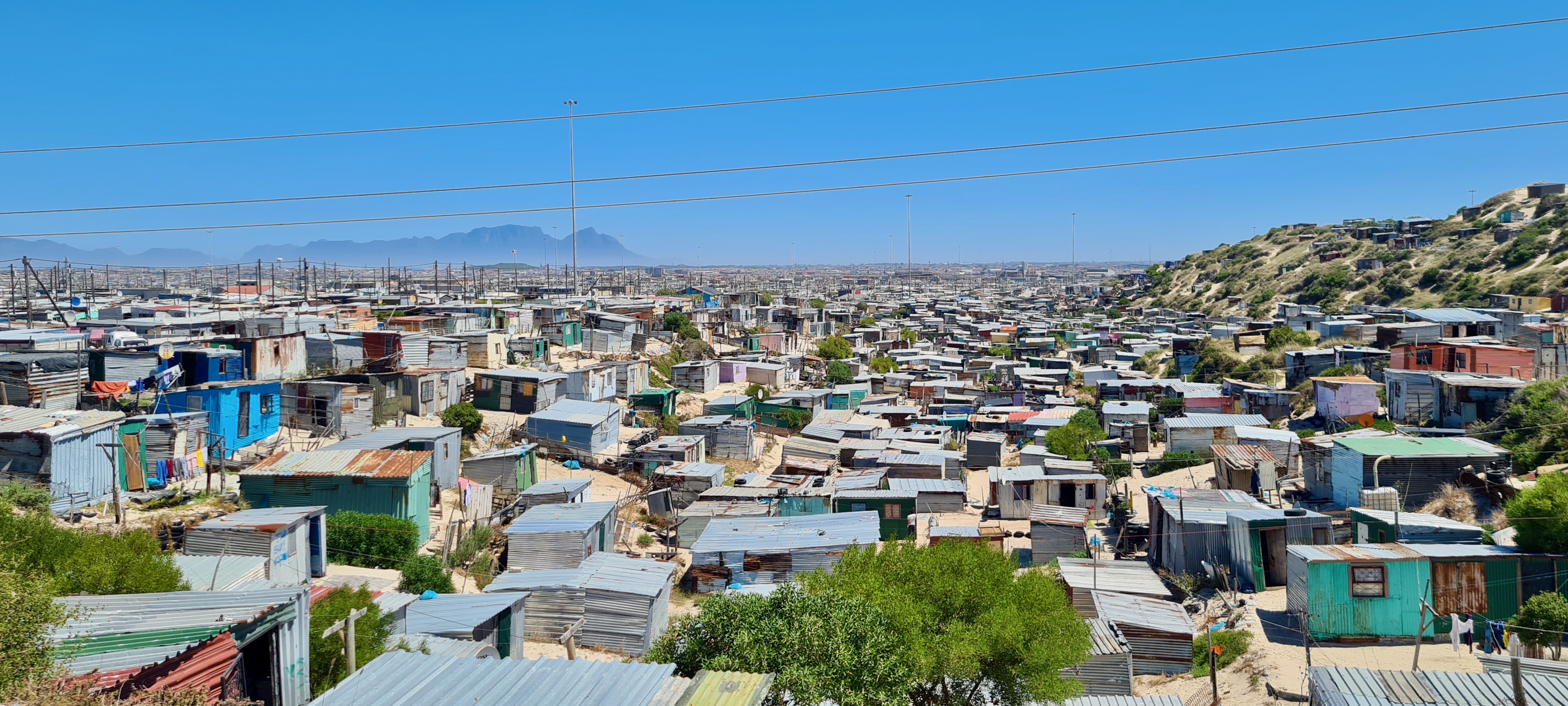
Khayelitsha: Cape Town's Largest Township
Cape Town Areas and Regions Updated January 2026 Overview Current Situation Extortion Fires Gangs Workers Community Map 2026 Update Khayelitsha — Cape Town's Largest Township…
Read Article