Magic Blue Glow - Bioluminescence causes Neon Nights in False Bay & Cape Town (2025)
October 15, 2025
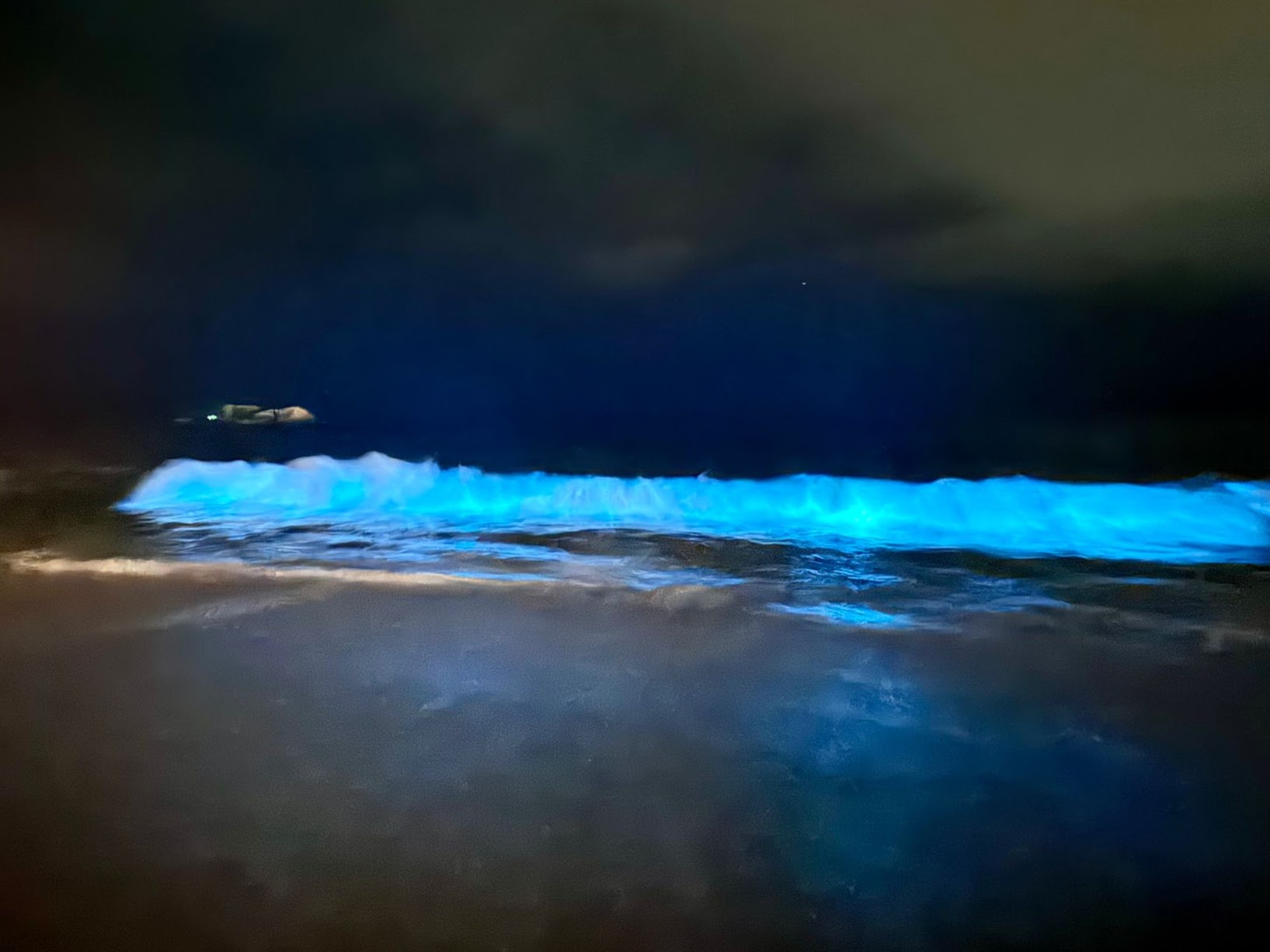
Neon Nights: Cape Town’s Magic Blue Glow (2025)
Updated 15 October 2025 — Cape Town, South Africa (UTC+02:00)
TL;DR: Those electric-blue waves around Muizenberg, St James, Fish Hoek and sometimes Kogel Bay (and, this week, Clifton)? That’s bioluminescence - most often from the dinoflagellate Noctiluca scintillans (sea sparkle). It tends to pop after warm, calm spells, looks best on dark (new-moon) nights, and often shows up at least once a year for 3–5 days at a time. Please enjoy it responsibly: don’t eat washed-up marine life during red tides and check official advisories before swimming.
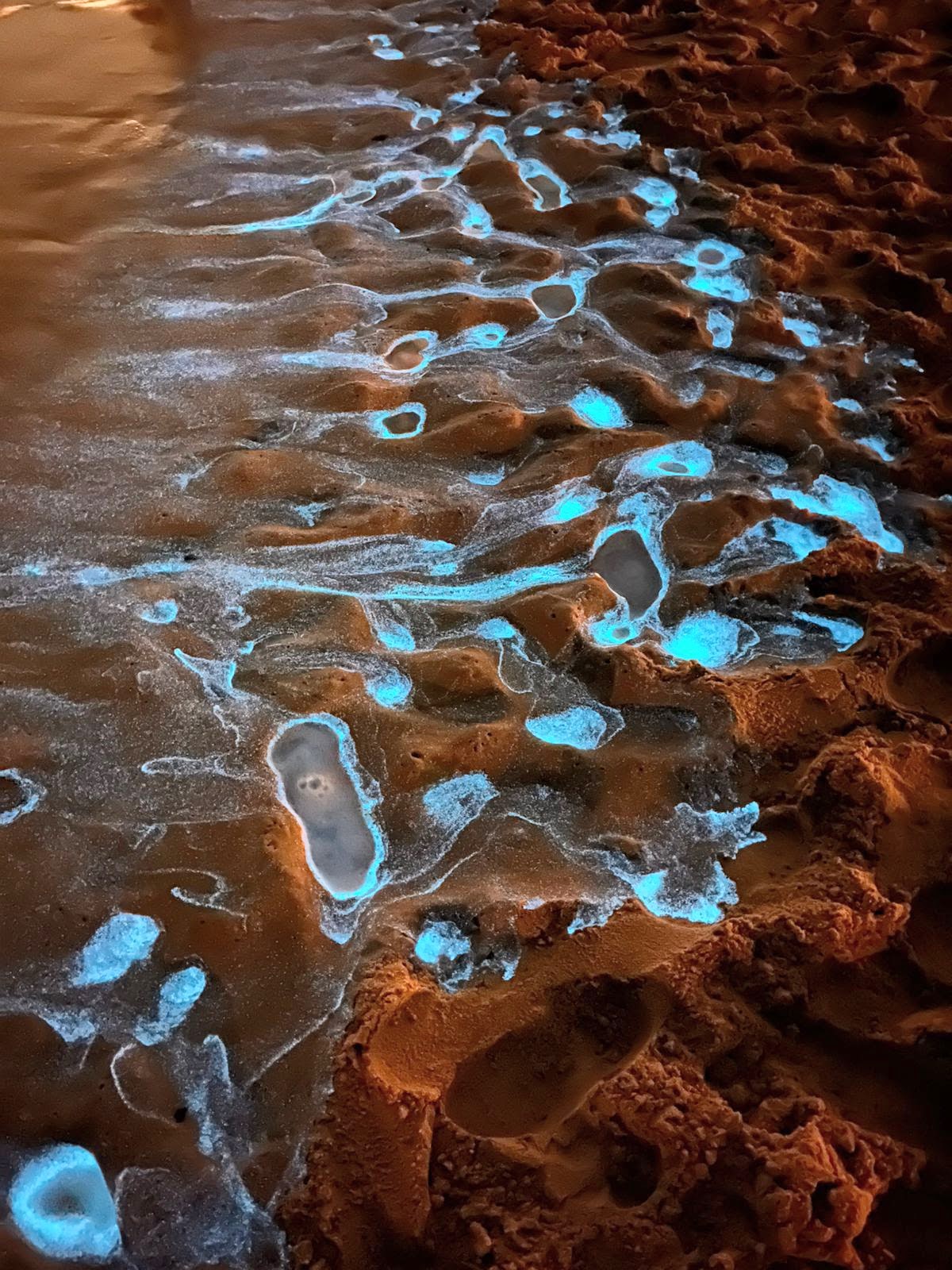
Credit: Dr Mario Giuricich
Table of Contents
- At-a-Glance Overview
- Latest Sighting — Clifton (Oct 2025)
- Where to See It (with Map Pins)
- What Causes the Glow? (The Science)
- When to Go (Season, Moon, Conditions)
- Safety, Etiquette & Pets
- How to Photograph the Glow
- Pro Tips (Pack Smart)
- Media Gallery (with credits)
- FAQ
- Official Links & Live Tools
- Sources
At-a-Glance Overview
| Item | Details |
|---|---|
| What | Night-time glow in waves (sea sparkle) from bioluminescent plankton on the Cape coast it’s most often Noctiluca scintillans. See the species explainer on Wikipedia. |
| Where | False Bay hotspots: Muizenberg St James Kalk Bay Fish Hoek often Kogel Bay (Koëlbaai) and occasionally the Atlantic side (e.g., Clifton/Camps Bay) when conditions align. Good Cape overviews: GroundUp photo report and CapeTownEtc explainer. |
| When | Typically after calm, warm spells; many local sightings cluster late summer → autumn, but events also occur outside that window (e.g., Jan 2024 and Aug 2025). |
| How long | Often 3–5 nights per episode if weather holds (per UCT’s Dr Emma Rocke in GroundUp/News24 pieces). |
| Daytime clue | Rusty/brown “red tide” water by day can precede a blue glow after dark if wind and swell stay gentle. |
| Swim? | Noctiluca blooms are usually non-toxic, but decaying blooms can deplete oxygen and irritate some people. Do not eat stranded marine life during red-tide events; heed official notices. |
| Best tools | Track moon phase (new moon improves contrast), wind/swell, and fresh local reports. Live tools below. |
Why Cape Town’s glow is special: You don’t need a boat tour—our beaches deliver shoreline-level bioluminescence where the thin, breaking shorebreak flips from slate grey to electric blue with each ripple. It’s fleeting, hyper-local, and addictive.
🔵 Latest Sighting — Clifton (Atlantic Seaboard, 14–15 Oct 2025)
The Atlantic Seaboard lit up this week, with reports and fresh clips from Clifton and Camps Bay on Tue 14 and Wed 15 Oct 2025. While most season highlights sit in False Bay, these Atlantic pop-ups do happen—usually on light-wind evenings with a small, clean swell and minimal city light bleed. For moon contrast, note the next new moon is 21 Oct 2025 (timeanddate).
Planner’s note: When the Atlantic glows, a short walk/drive loop Bantry Bay → Clifton (1st–4th) → Camps Bay lets you check multiple pockets quickly. Look for glassy water and a crisp, thin shorebreak.
Where exactly?
- Clifton 1st–4th Beaches (promenade access; paid/limited parking; expect crowds on calm, warm nights).
Quick conditions snapshot (what helped)
- Light winds + small-to-moderate swell → clearer, glassy shorebreak where the glow pops.
- Timing: best after astronomical dusk; new moon 21 Oct 2025 will further enhance visibility later this month.
🗂️ Sightings Log (2025) — Now includes Clifton
| Date (Local) | Location | Notes | Source / Credit |
|---|---|---|---|
| 14–15 Oct 2025 | Clifton & Camps Bay (Atlantic Seaboard) | Multiple same-night social clips and local reports of active glow. | Example recent clip: Clifton bioluminescence (YouTube) — credit on video page. https://www.youtube.com/watch?v=lxxXaBKzf7A |
| Late Aug 2025 | Muizenberg / Glencairn (False Bay) | Strong glow documented across False Bay; widely shared images and video. | Cape{town} Etc report on Glencairn (28–29 Aug 2025): https://www.capetownetc.com/news/glencairn-beach-glow-with-mysterious-blue-light/; Getaway recap: https://www.getaway.co.za/travel-news/watch-glencairn-beach-glows-with-luminous-blue-light/ |
| Jan 2024 | Muizenberg / Fish Hoek (False Bay) | Photo essays; expert quotes (Dr Emma Rocke) on timing and 3–5 day duration. | GroundUp: https://groundup.org.za/article/in-photos-beautiful-bioluminescence-at-muizenberg/; CapeTownEtc photo story: https://www.capetownetc.com/things-to-do-cape-town/outdoors/in-photos-beautiful-bioluminescence-at-muizenberg/ |
Tip: Daytime “tea-coloured” slicks off Bantry Bay sometimes show up before an Atlantic glow. If you spot that, plan an evening check at Clifton within 6–12 hours—earlier if the wind is due to pick up.
Where to See It (with Map Pins)
-
Muizenberg Beach (False Bay)
-
St James Tidal Pool / Kalk Bay promenades
-
Fish Hoek Beach
-
Kogel Bay (Koëlbaai) pull-offs (Clarence Drive, R44)
These False Bay spots feature repeatedly in recent reports and photo stories; the Atlantic side (Clifton/Camps Bay) lights up during the right wind/swell windows.
What Causes the Glow? (The Science)
- The headliner is Noctiluca scintillans, a bioluminescent dinoflagellate. When water is disturbed (a breaking wave, your foot at the shoreline, a paddle stroke), a reaction between luciferin and luciferase emits light—the neon-blue flashes you see. Intro and mechanism: Wikipedia.
- Red tide by day; blue by night: dense plankton concentrations can tint water brown/red in daylight. After sunset, mechanical agitation triggers blue luminescence in the same water.
- Toxicity nuance: Noctiluca itself is typically non-toxic, but big blooms can drop oxygen as they decay, stressing marine life. Elsewhere, other bioluminescent species can produce toxins.
- Global context: Massive Noctiluca events also appear in places like Tasmania, thrilling to watch but with ecosystem implications—see this 2025 overview from The Guardian: https://www.theguardian.com/environment/2025/jan/01/bioluminescence-bloom-tasmania-australia-algae-blue-lights.
Why it flickers: Each flash is a tiny “alarm” response. Multiply that by billions of cells rolled by a wave, and the surfline becomes a live wire.
When to Go (Season, Moon, Conditions)
- Seasonal rhythm (Cape Town): Sightings cluster after warm, calm periods, often late summer → autumn. That said, Jan 2024 and Aug 2025 show the Cape can glow outside the classic window if conditions line up.
- Moonlight matters: Aim for the darkest nights. The next new moon is 21 Oct 2025 (local) — a great window for contrast (check the calendar).
- Wind & swell: Light wind and a small, tidy shorebreak help. A messy onshore or big, frothy surf will wash the effect out. For same-day calls, keep Windguru (Muizenberg) open: https://www.windguru.cz/131594.
Rule of thumb: Warm calm day + brownish water + light wind after dark = go look.
Safety, Etiquette & Pets
- Don’t eat washed-up marine life during red-tide events. The SA Department of Forestry, Fisheries & Environment warns of health risks from stranded lobsters and other species during low-oxygen events. See DFFE advisory: https://www.dffe.gov.za/mediareleases/redtideseason_westcoastrocklobster.
- Swimming: Many local glow-ups involve non-toxic Noctiluca, but decaying blooms can irritate some people. If the water smells bad or you have skin/respiratory sensitivities, skip the swim.
- Keep it low-impact: Stay off dunes, avoid blinding white torches on the surfline (use red light), and pack out all litter.
- Pets: Don’t let dogs drink discoloured water; rinse after beach play.
How to Photograph the Glow
For cameras - Starter settings: RAW, manual focus (infinity), f/1.8–f/2.8, ISO 3200–6400, 1–3 s shutter. Adjust shutter for wave shape; push ISO only as needed to keep the shoreline crisp. - Stabilise: Tripod or a solid rock. Trigger with a timer/remote to avoid shake. - Compose for motion: Aim where whitewater curls; that’s where agitation (and light) will be strongest. - Make your own “spark”: Kick a tiny wavelet, toss a pebble into the water (never at people/rocks), or swirl a stick to trigger the glow.
For phones - Night/long-exposure mode, brace the phone (mini-tripod helps), tap-to-focus on the whitewater edge. Try multiple short bursts vs one very long exposure.
Local masterclass: Cape shooter Kyle Goetsch has a Cape-specific tutorial (gear, scouting, safety): https://www.kylegoetsch.com/blogs/photography-stories/how-to-photograph-the-bioluminescence-in-cape-town.
Pro move: Shoot a short 0.5–1 s burst as waves collapse, then a 2–3 s frame to pick up lingering trails—blend later if you edit.
Media Gallery (with credits)
** Species close-up (science visual)**
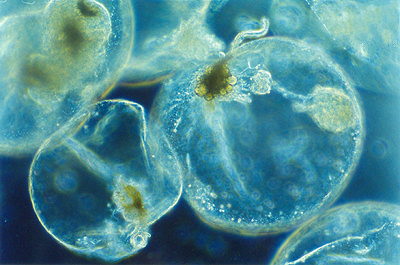
Image credit: Maria Antónia Sampayo via PlanktonNet — Wikimedia Commons (CC BY 3.0).

**Recent Cape Town sighting **
- October 2025: Clifton - thanks to Dr Mario Giuricich for the footage
- Glencairn lights up (Aug 2025) - Cape{town} Etc: https://www.capetownetc.com/news/glencairn-beach-glow-with-mysterious-blue-light/
- Glencairn video recap (Aug 2025) - Getaway: https://www.getaway.co.za/travel-news/watch-glencairn-beach-glows-with-luminous-blue-light/
4) 2025 clip (False Bay)
- Muizenberg/Glencairn bioluminescence - see “Sightings Log” links above
FAQ
Is the glow predictable?
Not to the day. In the Cape, it follows calm, warm spells and often shows at least once a year for a few nights. Watching wind/swell + real-time local reports is your edge.
Which beaches are best?
False Bay is the most consistent (Muizenberg → Fish Hoek), with Kogel Bay producing dramatic nights when conditions align. Clifton/Camps Bay can light up during the right Atlantic conditions (light wind + tidy swell).
Is it safe to swim?
If you swim, do so cautiously. Noctiluca blooms are usually non-toxic, but conditions vary. Avoid water that smells bad or looks murky, and never eat stranded shellfish/fish during red tides. Check the City’s water-quality updates and DFFE statements below.
Official Links & Live Tools
- Moon phase (Cape Town) — new moon 21 Oct 2025: https://www.timeanddate.com/moon/south-africa/cape-town?month=10
- Wind forecast (Muizenberg, False Bay) — Windguru spot: https://www.windguru.cz/131594
- Coastal water quality (City of Cape Town) — reports & dashboards: https://www.capetown.gov.za/Explore%20and%20enjoy/nature-and-outdoors/our-precious-biodiversity/coastal-water-quality
- DFFE advisories (red tide / strandings) — media releases & cautions: https://www.dffe.gov.za/mediareleases/redtideseason_westcoastrocklobster
Sources
Local reporting & expert commentary
- GroundUp photo essay with Dr Emma Rocke (UCT) on timing/duration (3–5 days): https://groundup.org.za/article/in-photos-beautiful-bioluminescence-at-muizenberg/
- Cape{town} Etc overview (why/where it glows; False Bay & Atlantic spots): https://www.capetownetc.com/things-to-do-cape-town/why-some-cape-waters-are-glowing-bright-blue/
- Glencairn Aug 2025 coverage: Cape{town} Etc https://www.capetownetc.com/news/glencairn-beach-glow-with-mysterious-blue-light/ and Getaway https://www.getaway.co.za/travel-news/watch-glencairn-beach-glows-with-luminous-blue-light/
Science/background
- Noctiluca scintillans (mechanism, luciferin/luciferase): https://en.wikipedia.org/wiki/Noctiluca_scintillans
- Global context — Tasmania’s 2025 “sea sparkle” bloom (The Guardian): https://www.theguardian.com/environment/2025/jan/01/bioluminescence-bloom-tasmania-australia-algae-blue-lights
Public safety & environment
- DFFE red-tide caution (stranded lobsters not for consumption): https://www.dffe.gov.za/mediareleases/redtideseason_westcoastrocklobster
- City of Cape Town coastal water-quality portal: https://www.capetown.gov.za/Explore%20and%20enjoy/nature-and-outdoors/our-precious-biodiversity/coastal-water-quality
Photography know-how - Kyle Goetsch’s Cape-specific guide (updated Oct 2025): https://www.kylegoetsch.com/blogs/photography-stories/how-to-photograph-the-bioluminescence-in-cape-town
Credits & Use
- Images: Wikimedia Commons files as credited in captions above (CC BY / open licenses), Dr Mario Giuricich
- Videos: Embedded YouTube/short-form clips, Dr Mario Giuricich
More in Ocean Phenomena & Safety
You May Also Like

Get Your Shoes Ready for the 2026 Two Oceans Marathon
Photo courtesy of Bernard303 , CC BY-SA 4.0 , via Wikimedia Commons Photo: „Clean water for a village in West Lombok“ , author Josh Estey/AusAID…
Read Article
What are the Biggest Events in Cape Town in 2026?
Cape Town • 2026 • What’s On Cape Town’s Big Events in 2026: The Complete Guide Plan your year around Cape Town’s headline moments. From…
Read Article
What and where are Cape Town’s Blue Flag Beaches (2025/26)?
Cape Town • Coastal Standards & Sea Days Cape Town’s Blue Flag Beaches (2025/26) Eight beaches around the metro carry the Blue Flag this season…
Read Article
Beaches & Local Know-How : Clifton 1 - 4 Explained: Which Beach Is For You?
Cape Town | Beaches & Planning Clifton 1–4 Explained: Which Beach Is For You? Four coves, four moods. From sporty First to family-friendly Fourth, here's…
Read Article
Don't miss the 2025/26 Season of Kirstenbosch National Botanical Garden Summer Sunset Concerts
Cape Town • Live Music The 2025/26 Season of Kirstenbosch Summer Sunset Concerts Don't miss these unforgettable Cape Town evenings on the lawns beneath Table…
Read Article