PART I: The South African Miracle: Lessons in Forgiveness, Unity, and Nation-Building
August 6, 2025
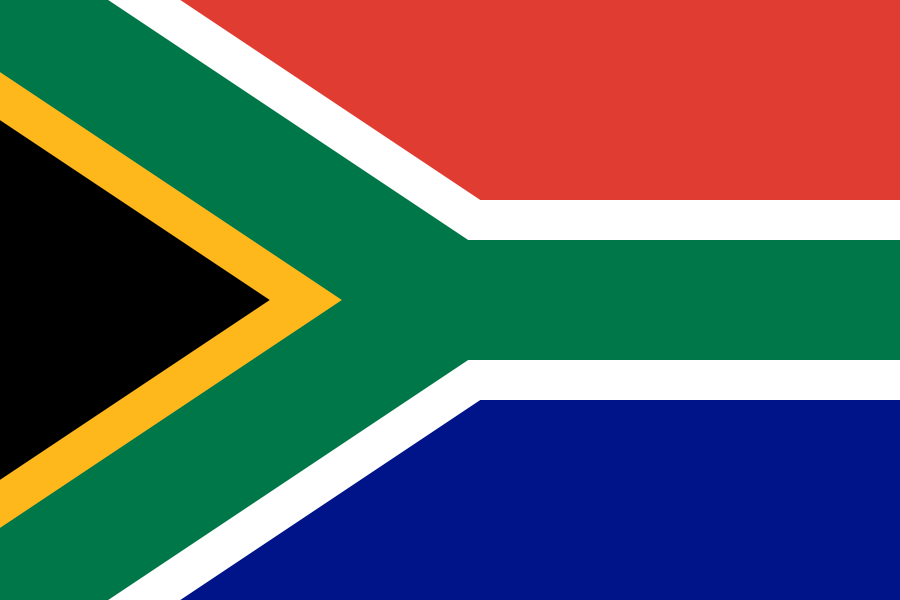
The South African Miracle — Part 1: Introduction & The Need for Hope
TL;DR: From legalized segregation to shared queues at the ballot box, South Africa’s path to democracy begins with ordinary people choosing ballots over bullets — and leaders choosing reconciliation over revenge.
Table of Contents
- Introduction
- The Legacy of Apartheid and the Need for Hope
- Transformation Begins: 1994’s Breakthrough
- Preview: Truth & Reconciliation (next post)
Introduction
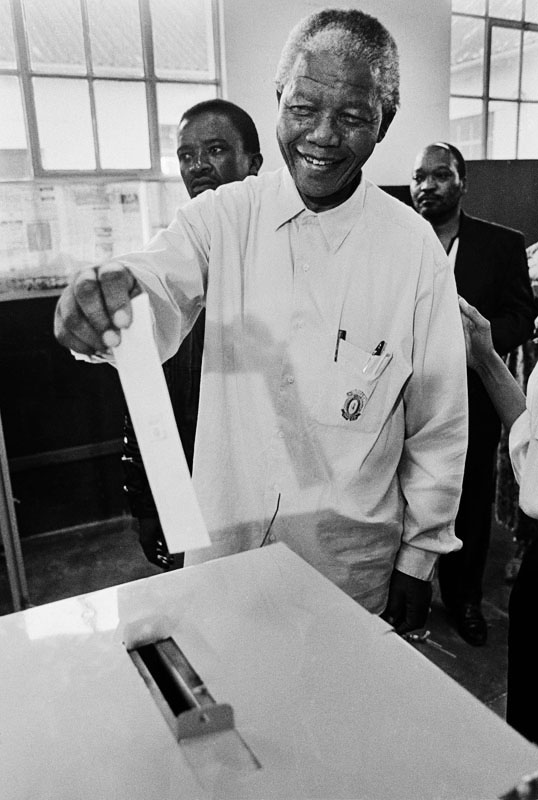
Picture the scene: April 27, 1994. Millions of South Africans of every race stand in snaking queues under the sun, waiting patiently to cast a vote for the first time in their lives. For four days, the polling stations stay open as 19.7 million ballots are cast — the first fully democratic election in the nation's history. It is nothing short of a miracle for a country that had been torn apart by decades of institutionalized racism. When Nelson Mandela emerged from prison to become the country's first Black president, he spoke of his vision for a “rainbow nation at peace with itself.” Thus began South Africa's journey of hope — a journey from the injustice of apartheid to the hard-won reconciliation of a divided people.
In this blog series, we explore how South African society transformed itself after so much suffering. It is a story of hope, of finding unity after strife, and of a people determined to work together toward prosperity. We will see how South Africans chose forgiveness over vengeance, how they live their diversity as a source of strength, and why — despite many challenges — they remain proud and optimistic about the country's future. This inspirational journey carries lessons for the world on healing deep social fractures and learning to live together in peace.
The Legacy of Apartheid and the Need for Hope
To understand the magnitude of South Africa's transformation, one must first grasp the legacy of apartheid. From 1948 to 1994, apartheid was an official policy that enforced strict racial segregation and white supremacy. Under apartheid, the white minority government classified people by race and reserved full citizenship and voting rights only for whites. Black South Africans (nearly 80% of the population) were disenfranchised and often forcibly removed to impoverished rural “homelands,” losing access to decent education, jobs, and land. Over 80% of South Africa's land was set aside for white ownership, while Black families were crammed into crowded townships or bantustans. Racial oppression was maintained through harsh laws and brutal police crackdowns; dissent was met with bannings, imprisonment, or worse. By the 1980s, the country was engulfed in unrest and violence — township uprisings, states of emergency, and armed resistance — as the apartheid regime fought to hang onto power.
Decades of institutionalized injustice left deep social fractures. The Black majority emerged from apartheid economically marginalized and scarred by trauma, while many whites feared retribution in a future Black-led nation. Inequality was (and remains) staggering — a lasting “huge gap in living standards between rich and poor, a legacy of the apartheid era.” As apartheid was ending, South Africa was a tinderbox of mutual distrust, grief, and anger. In the early 1990s, negotiations between the outgoing white government and liberation leaders were tense and uncertain. A major question loomed: How would this divided nation heal? There were genuine fears that years of oppression would be followed by vengeance and civil war. Elements of the security forces warned they would not relinquish power without guarantees; demands for amnesty collided with demands for justice.
It was in this climate that leaders and citizens recognized the urgent need for hope and unity. The country stood at a crossroads: to either succumb to bitterness or find a way to forgive and move forward. Nelson Mandela, who had suffered 27 years in prison, astonished the world by advocating reconciliation rather than revenge. “Courageous people do not fear forgiving, for the sake of peace,” he famously said — an ethos that would guide the transition. Ordinary people, too, yearned for a peaceful future after so much turmoil. Out of this crucible was born a collective resolve to choose a different path — one of truth, forgiveness, and rebuilding. As Archbishop Desmond Tutu reflected, “If miracles had to happen anywhere, then it's here that they would have to happen.” South Africa was ready to attempt the “impossible”: to transform its pain into a shared hope.
Pull-quote
“Courageous people do not fear forgiving, for the sake of peace.” — Nelson Mandela
Transformation Begins: 1994’s Breakthrough
South Africa's peaceful transition in the mid-1990s is often called the “Rainbow Nation miracle.” The first milestone was the 1994 election. During those historic days, people of all races — Black, white, Coloured, Indian — stood side by side in voting lines that stretched for miles. There were scenes of jubilation as citizens dipped their fingers in ink to mark ballots for a free South Africa. Altogether, 19.7 million votes were cast, an astonishing turnout that symbolized the rebirth of the nation. The ANC won decisively, and Nelson Mandela was elected President — but in an important gesture of inclusion, a Government of National Unity was formed. Even the former ruling National Party was given cabinet positions to signal that everyone had a place in the new South Africa. Freedom Day (27 April) marked the end of the long night.
Supporting graphic (CC BY-SA 4.0)
Image: Minnekon via Wikimedia Commons — CC BY-SA 4.0. File page


What to Remember
- Universal franchise replaced racial exclusion.
- A shared civic ritual — queuing and voting together — kick-started a new national story.
- Early compromises (like a unity government) helped avert civil war and bought time to build trust.
Powerful Nelson Mandela Interview (YouTube)
Media & Attribution (Part 1)
- Nelson Mandela voting in 1994 — Photo: Paul Weinberg (IEC) via Wikimedia Commons — CC BY-SA 3.0. File page
- 1994 ballot paper (sample) — Minnekon — CC BY-SA 4.0. File page
- Whale watching Hermanus — YouTube embed (rights per YouTube/creator).
Preview: Truth & Reconciliation (next post)
In Part 2, we continue with your detailed account of the Truth and Reconciliation Commission (TRC) — the televised testimonies, unimaginable grace, and Mandela’s Springbok jersey moment that turned a rugby final into a national embrace.
More in Culture & Identity
- Navigating Cultural and Racial Sensitivity as a Foreigner in Cape Town, South Africa
- PART II: The South African Miracle: Lessons in Forgiveness, Unity, and Nation-Building
- Who are Afrikaners and what is Afrikaans culture in South Africa
- Are White People Oppressed in South Africa ?
- Racism Part 3: A Guide for Foreigners Navigating South Africa’s Racial Dynamics
- Racism Part 2: Recent Incidents and Current Racial Tensions
You May Also Like

Abdullah Ibrahim in 2026: A Living Legend Returns to Cape Town International Jazz Festival CTIJF
Editorial feature · capetowndata.com · March 2026 Photo courtesy of Patrick Scales, Wikimedia Commons, licensed under CC BY 3.0 CTIJF 2026 · Cape Jazz ·…
Read Article
Miriam Makeba: the life, the voice, the fight and the songs that carried a country
Photo courtesy of: Roland Godefroy (CC BY 3.0), via Wikimedia Commons South Africa • Music • Resistance Miriam Makeba: the life, the voice, the fight…
Read Article
What is a good gift for a South African sports fan? 10 ideas for this Christmas
Hero image credit: Matti Blume, CC BY-SA 4.0, via Wikimedia Commons South Africa • Sport • Christmas gifts What is a good gift for a…
Read Article
The Cape Doctor: Why is Cape Town so windy?
Photo courtesy of: KodachromeFan, CC BY-SA 3.0 , via Wikimedia Commons. Cape Town • Weather • Wind & Seasons The Cape Doctor & Cape Town…
Read Article
Navigating Cultural and Racial Sensitivity as a Foreigner in Cape Town, South Africa
Cape Town • Culture & Context Navigating Cultural and Racial Sensitivity as a Foreigner in Cape Town, South Africa Cape Town is dazzling—and complicated. The…
Read Article