Do you know South Africa's hottest jazz pianist Kyle Shepherd - Is he the new Abdullah Ibrahim?
June 26, 2025
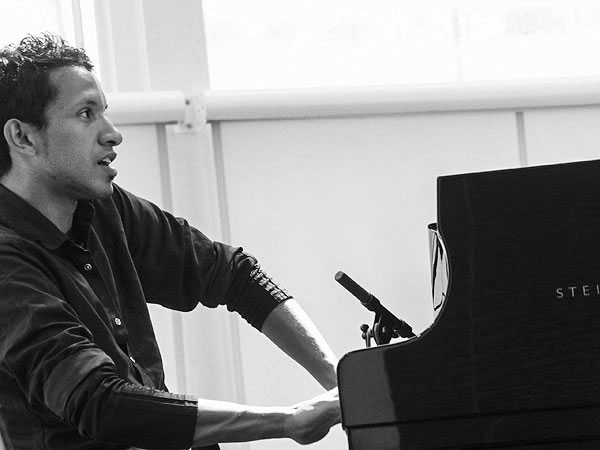
Is Kyle Shepherd the New Abdullah Ibrahim?
At 38, Kyle Shepherd has eight albums, an Olivier Award, film scores streamed over 60 million hours on Netflix, and the artistic directorship of South Africa's most purposeful jazz festival. As Abdullah Ibrahim headlines CTIJF 2026 at 91, we explore what it means to carry the Cape jazz torch into a new era.
Who Is Kyle Shepherd?
Kyle Shepherd is a South African jazz pianist, composer, and film scorer from Cape Town, born on 8 July 1987. Over the past seventeen years he has built one of the most versatile careers in contemporary African music — moving between jazz clubs, film studios, opera houses, and festival stages with a fluency that few of his generation can match. By March 2026 he has released eight jazz albums, performed in 41 countries, scored hit Netflix series collectively watched for more than 60 million hours, and co-composed a chamber opera that won the UK's Laurence Olivier Award.
His venues read like a bucket list of world music: Carnegie Hall in New York, the Barbican in London, Théâtre du Châtelet in Paris, the Sydney Opera House, the Tokyo Jazz Festival, and stages across Germany, Switzerland, India, Malaysia, and China — including eleven separate concert tours in Japan alone. At home in South Africa, Shepherd has become something more than a performer. He is the resident Artistic Director of the Journey to Jazz Festival in Prince Albert, a role that positions him as a curator and mentor shaping the next wave of South African jazz.
His film and television work has brought jazz sensibility to a mass audience. As a composer, he scored Netflix series Blood and Water, Unseen (which reached #3 on Netflix's global chart in April 2023), and Savage Beauty. His feature film scores include Barakat — South Africa's official entry for the 2022 Academy Awards — Fiela se Kind, and Noem My Skollie, South Africa's entry for the 2017 Oscars. More recently, he collaborated with Oscar-winning director Darrell Roodt on Greytown Girl. He was awarded the 2018 South African Humanities and Social Sciences Award for his Noem My Skollie score, and received Best Score honours at the Silwerskerm Film Festival for both Fiela se Kind and Barakat.
At a GlanceQuick Profile: Two Generations of Cape Jazz Piano
- Genre
- Contemporary Cape jazz, post-bop, film/theatre scores
- Key influences
- Abdullah Ibrahim, Zim Ngqawana, goema rhythms, Keith Jarrett
- Notable works
- Dream State (2014), After the Night… (2021), A Dance More Sweetly Played (2024)
- Awards
- Olivier Award 2023, Standard Bank Young Artist 2014, UNISA Piano Competition 2015, multiple Silwerskerm awards
- Genre
- Cape jazz, bebop/post-bop, African folk, spiritual jazz
- Key influences
- Thelonious Monk, Duke Ellington, Cape carnival music, African hymns
- Notable works
- Mannenberg (1974), Jazz Epistle Verse 1 (1960), Water From an Ancient Well (1986)
- Awards
- SA Music Lifetime Achievement, Order of Ikhamanga, Nelson Mandela's "SA's Mozart"
The comparison card above reveals shared roots and divergent paths. Both pianists were shaped by the same city, the same streets, even the same music school — Shepherd's mother worked at Ibrahim's M7 academy in Cape Town. But half a century separates their debuts, and with it, entirely different relationships to exile, apartheid, digital media, and the global music economy.
Kyle Shepherd performing "Zimology" — an early piece honouring his mentor, saxophonist Zim Ngqawana.
HeritageEarly Influences and the Cape Jazz Legacy
Kyle Shepherd's musical identity is inseparable from the layered soundscape of Cape Town — the festive goema rhythms of the Kaapse Klopse, the melodic contours of the Islamic call to prayer drifting across Bo-Kaap, and the deep well of jazz tradition that runs through the Cape Flats. Growing up, Shepherd was immersed in this world naturally. His mother Michele, a violinist, worked at Abdullah Ibrahim's M7 music school, placing young Kyle in the orbit of Cape jazz's greatest living figure from childhood.
As a teenager, Shepherd studied the work of Abdullah Ibrahim and the late saxophonist Zim Ngqawana, who became a friend and mentor before his untimely death in 2011. That mentorship is audible in pieces like "Zimology" and "Spirit of Hanover Park" — compositions that carry the DNA of Cape Flats jazz traditions while pushing toward something unmistakably personal. Critics have long noted his rolling left-hand patterns and the modal phrases reminiscent of Cape Muslim melodic traditions — sonic signatures shared with Ibrahim, drawn from a common well of Cape Town's multicultural heritage.
But Shepherd has always been more than a custodian. He first picked up the piano at fifteen after starting on classical violin at five, and his ear rapidly absorbed everything from church hymns and marabi piano traditions to electronic music and experimental techniques. In live performance, he has been known to pluck piano strings, integrate visual art projections, and move from a Cape folk melody to a contemporary classical motif to a driving jazz improvisation within a single set. This restless exploration — grounded in tradition but unconstrained by it — is what distinguishes Shepherd from the "next Abdullah Ibrahim" label that has followed him since his debut.
Rise to Fame and Key Works
Shepherd's discography tells a story of steady, earned growth. His debut fineArt (2009) arrived when he was just 21, followed by A Portrait of Home (2010) and South African History !X (2012) — each album pushing further into the space between Cape jazz tradition and contemporary experimentation. But it was Dream State (2014), a sprawling 21-track double album recorded with his trio, that announced Shepherd as a major voice. The album earned nominations at both the South African Music Awards and the Metro FM Music Awards, and its far-reaching compositions — from "Re-Invention/Johannesburg" to "Xamissa" — explored South African themes with a confidence and ambition that turned heads internationally.
That same year, at just 26, Shepherd received the Standard Bank Young Artist Award for Jazz, one of South Africa's highest honours for emerging talent. The following year he won the UNISA National Piano Competition in the jazz category. He went on to graduate with a Masters in Music (cum laude) from Stellenbosch University in 2018, on a scholarship from York University in the UK in collaboration with the Africa Open Institute. By his late twenties, the accolades, the academic rigour, and five albums had established him as the leading pianist of his generation.
The Trio Returns: A Dance More Sweetly Played (2024)
A pivotal chapter in Shepherd's career is the Kyle Shepherd Trio — his long-running partnership with bassist Shane Cooper and drummer Jonno Sweetman. The three first jammed in small Cape Town venues around 2007–2008 and developed a chemistry that transcends the usual jazz sideman relationship. After Dream State, the trio entered a decade-long recording hiatus, though they continued performing live while Shepherd focused on film scoring and theatre. Their return came with A Dance More Sweetly Played, launched at the Baxter Concert Hall in Cape Town in November 2024 — Shepherd's eighth jazz album and the trio's first studio recording in ten years.
The album's twelve tracks range from a haunting jazz reworking of Massive Attack's "Teardrop" to a joyous tribute, "For Oumou Sangaré," that reflects Shepherd's growing interest in West African musical traditions. The title itself nods to his collaboration with visual artist William Kentridge, drawn from the phrase "More Sweetly Play the Dance." Reviewers praised its breadth: one critic called it a kaleidoscope of sounds spanning themes from South African jazz history to Senegambian vocal traditions to film soundtrack tension. Since the album's release, the trio has been working consistently together and building a dedicated live audience.
The Kyle Shepherd Trio performing "For Oumou Sangaré" from A Dance More Sweetly Played (2024).
The Solo Voice: After the Night, The Day Will Surely Come
Shepherd's 2021 solo album, released on the boutique Matsuli Music label, was a continuous solo recital — a seamless medley of new improvisations and reinterpreted earlier compositions. The format inevitably invites comparison to Ibrahim's celebrated solo concerts, but the content is firmly Shepherd's own. Partly inspired by the passing of pianist Keith Jarrett's performing career and the trials of the COVID-19 pandemic, the album weaves through moods of loss and hope, culminating in "Zikr" — a spellbinding piece channelling Sufi spiritual themes through the piano. Critics described it as a compelling and genuinely hopeful recording that established Shepherd's voice beyond any question of imitation.
William Kentridge, the Olivier Award, and the Opera Stage
Perhaps the most significant artistic partnership of Shepherd's career is his collaboration with William Kentridge, the internationally renowned South African visual artist. Together with co-composer Nhlanhla Mahlangu, Shepherd created the score for Waiting for the Sibyl, a chamber opera that premiered at the Teatro dell'Opera di Roma and has since toured to Les Théâtres de la Ville de Luxembourg, Dramaten in Stockholm, the Théâtre du Châtelet in Paris, Cal Performances at UC Berkeley, and Powerhouse Arts in New York (October 2025). In 2023, the production won the Laurence Olivier Award for Best New Opera Production — one of the most prestigious prizes in world theatre.
The collaboration continues to deepen. At the Journey to Jazz Festival in May 2026, Shepherd will present a live score for four short Kentridge films — a performance that will be partly composed and partly improvised, creating real-time dialogue between Shepherd's piano and Kentridge's iconic charcoal animations. This ongoing partnership demonstrates something important about Shepherd's trajectory: he is not simply a jazz musician who occasionally composes for other media, but an artist whose musical thinking operates fluidly across disciplines.
Kyle Shepherd — intimate piano performance showcasing his lyrical, deeply personal style.
AnalysisComparisons to Abdullah Ibrahim: Torch, Not Copy
Abdullah Ibrahim — born Adolph Johannes Brand in Cape Town in 1934, later known as Dollar Brand — is by any measure the most important jazz musician South Africa has produced. His career spans nearly seven decades and includes milestones that reshaped the country's cultural landscape: the first black South African jazz LP with the Jazz Epistles (1960), discovery by Duke Ellington in Zürich (1962), exile during apartheid, and the composition of "Mannenberg" (1974), which became an unofficial anthem of the liberation struggle. Nelson Mandela called him "South Africa's Mozart." At 91, Ibrahim continues to perform — he headlines the Cape Town International Jazz Festival on 27–28 March 2026, with further concerts scheduled in Stuttgart in April.
So how does Kyle Shepherd sit alongside this towering legacy? The honest answer is that the comparison was once a burden he had to shed, and is now a relationship he can engage with on his own terms. In his early career, the parallels were drawn reflexively — same city, same piano tradition, same rolling left-hand patterns, same meditative solo concert format. The comparisons were, by Shepherd's own account, something that haunted his career for years. But by 2026, the critical consensus has shifted decisively. Shepherd has carved out a distinct identity that Ibrahim's generation could not have arrived at.
What They Share
Cape Town roots, emphasis on melody and mood, pride in African identity within jazz, the solo piano recital as art form, mentorship of younger musicians, and a spiritual dimension to performance.
Where They Diverge
Shepherd's film/TV scoring career, his electronic and experimental influences, his cross-continental collaborations (Kentridge, Lionel Loueke), his engagement with West African music, and his generation's comfort with genre-fluidity.
Ibrahim's playing, especially in later years, has become increasingly minimalist and distilled — a quality one scholar compared to well-matured brandy, where you only need a sip and everything is there. Shepherd's playing can be more densely layered and experimental, reflecting a man in his late thirties surrounded by twenty-first-century influences. He is as likely to reference Massive Attack or Denis Villeneuve in an interview as he is to mention a jazz standard. His trio album includes jazz transformations of pop songs ("Teardrop," "Don't Stop Believing") that show a sensibility Ibrahim would never have pursued. And his dual career as a film/TV composer gives him a harmonic vocabulary inflected by narrative tension, suspense, and cinematic emotion that is absent from Ibrahim's more purely meditative approach.
Cape Jazz in 2026: A Vibrant Scene
One of the most important things about Kyle Shepherd's story is what it reveals about the health of South African jazz as a whole. Far from being a lone torchbearer, Shepherd exists within a thriving ecosystem of musicians, festivals, educators, and audiences that is arguably stronger in 2026 than at any point in the past two decades.
The Festival Landscape
The Cape Town International Jazz Festival — often called "Africa's Grandest Gathering" — enters its 23rd edition on 27–28 March 2026 at the CTICC. The lineup for 2026 is a statement of intent: Abdullah Ibrahim headlines alongside UK multi-instrumentalist Jacob Collier, South African pianist Nduduzo Makhathini, legendary jazz fusion band the Yellowjackets (returning for the first time since 2005), the Afro-psychedelic collective BCUC, bassist Carlo Mombelli, and saxophonist Jasmine Myra making her South African debut. The festival's four stages — Kippies, Manenberg, Moses Molelekwa, and Rosies — are named after South African jazz legends, a constant reminder that this is a tradition that honours its own.
Meanwhile, the Journey to Jazz Festival — where Shepherd serves as Artistic Director — returns for its fourth edition from 30 April to 3 May 2026 in Prince Albert, in the Karoo. Under the banner "True Jazz. True Karoo. True Purpose.", the festival has grown from a boutique gathering into one of South Africa's most thoughtful, place-responsive jazz events. The 2026 lineup includes Vusi Mahlasela, Paul Hanmer (celebrating the 30th anniversary remaster of Trains to Taung), vocalist Nomfundo Xaluva, Linda Sikhakhane, Amy Campbell, and Ntone Edjabe of Pan African Space Station. Performances unfold across historic churches, art galleries, a prehistoric quarry, and a restored Art Deco showroom — with a new Noordeinde Stage in 2026 extending the festival into the township.
Music as South Africa's Favourite Pastime
The audience for live music and streaming in South Africa is robust. According to BrandMapp — the country's largest survey of the tax-paying consumer base — 58% of South Africans rank music as their top pastime, ahead of travel, movies, cooking, reading, and dining out. Over 62% of adults intended to attend a large-scale live music event in 2025, and Ticketmaster South Africa reported selling more than 500,000 live music tickets in 2024, a figure up over 50% from the previous year. The Africa music streaming market as a whole is projected to grow from $1.25 billion in 2025 to nearly $5 billion by 2031.
Jazz occupies a specific and durable niche within this landscape. While Amapiano and Afrobeats dominate streaming charts, jazz maintains a loyal and growing listenership — particularly in Johannesburg, Cape Town, and Pretoria. User-created Spotify playlists in South Africa frequently reference local jazz subgenres with terms like "African Jazz," "Marabi," "Kwela," and "Jive," suggesting that younger listeners are actively seeking connections to the country's jazz heritage even as they consume global pop music. Global recorded music revenues grew 4.8% in 2024, reaching $29.6 billion — the tenth consecutive year of growth — and within that expansion, African music streaming is among the fastest-growing segments anywhere in the world.
Shepherd himself is generous in naming his peers. He has pointed to trumpeter Feya Faku, bassist Carlo Mombelli, younger artists like Mandla Mlangeni, Benjamin Jephta, Shane Cooper, Claude Cozens, Bokani Dyer, and many others as co-creators of a vibrant jazz community. This is not a scene with a single torch — it is a constellation, with Shepherd as one of its brightest points.
Kyle Shepherd performing "Xamissa" — one of his most celebrated compositions, exploring South African themes.
ConclusionTorch, Not Replacement
The question "Is Kyle Shepherd the new Abdullah Ibrahim?" turns out to be the wrong question — or at least an incomplete one. Shepherd is not a replacement for Ibrahim; he is evidence that Ibrahim's legacy succeeded. The whole point of a tradition is that it produces artists who can take it somewhere its founders couldn't. Ibrahim took Cape Town street music and Monk-inflected piano into exile and turned it into a global language of resistance and meditation. Shepherd has taken that same inheritance and woven it into film scores, chamber operas, Kentridge animations, West African vocal traditions, and an intimate festival in the Karoo where jazz meets youth development.
In March 2026, both men are performing within days of each other — Ibrahim at the CTICC for CTIJF on 27–28 March, Shepherd at the Montreux Jazz Festival Franschhoek on 28 March, with Benjamin Jephta on bass. A few weeks later, Shepherd takes the stage in Prince Albert to premiere his live score for Kentridge's films. The proximity is poetic: the tradition at its most venerable, and the tradition at its most restless, separated by a short drive through the Winelands.
Rather than crowning Shepherd as the next Ibrahim, we might celebrate what the existence of both artists — performing, composing, mentoring, and building institutions in 2026 — says about the health of Cape jazz itself. The music did not end with the legends of the twentieth century. It is alive, evolving, and inviting each generation to discover its magic anew.
Career Timeline
Sources & References
Wikipedia: Kyle Shepherd · Kyle Shepherd official biography (kyleshepherdmusic.com) · Journey to Jazz Festival (journeytojazz.co.za) · Cape Town International Jazz Festival (capetownjazzfest.com) · WeekendSpecial: Kyle Shepherd pre-Montreux Franschhoek interview, March 2026 · Cape Times: "Why Abdullah Ibrahim at CTIJF 2026 marks a defining moment for Mzansi jazz," March 2026 · Capetowner: "CTIJF continues to unite Cape Town through music and culture," March 2026 · My Cape Town Stay: CTIJF 2026 lineup · SisgwenJazz review of A Dance More Sweetly Played, November 2024 · The Conversation: "Abdullah Ibrahim: South Africa's master pianist is going on a world tour at 90" · Design Indaba: Kyle Shepherd interview (2016) · Quicket event listings · Cal Performances artist biography · BrandMapp / WhyFive: "Music Tops the Charts for SA's Consumer Class," May 2025 · Spotify Wrapped 2025 Africa data · Martin Myers: album launch announcement, November 2024 · Powerhouse Arts: 2025 Artists Celebration (Sibyl NYC premiere) · SA Music Zone: Journey to Jazz 2026 lineup · IMDB: Kyle Shepherd credits · Ticketmaster South Africa: CTIJF 2026 event listings
More in Music & Icons
You May Also Like

Cape Town Live Music 2026: Best Venues by Genre & Area
Music · Cape Town · 2026 Cape Town Live Music Guide: Best Venues by Genre + Neighbourhood Where to find jazz, amapiano, house, indie rock…
Read Article
Abdullah Ibrahim in 2026: A Living Legend Returns to Cape Town International Jazz Festival CTIJF
Editorial feature · capetowndata.com · March 2026 Photo courtesy of Patrick Scales, Wikimedia Commons, licensed under CC BY 3.0 CTIJF 2026 · Cape Jazz ·…
Read Article
Sun-EL Musician: Under the Sun, Album ReviewNew Music Releases South Africa 2026
Album Deep Dive • 2026 Sun-EL Musician Under the Sun A warm, immersive Afro-house journey built for golden hour drives, late-night dance floors, and headphone…
Read Article
New Music Releases South Africa 2026 | What to Stream Now
Music Guide 2026 New Music from South Africa Amapiano anthems, Grammy-winning popiano, Afro-house explorations, and the sounds shaping Mzansi in 2026 — with videos to…
Read Article
What is the difference between Amapiano and Kwaito: Explained
Photo courtesy of: meshugas, CC BY 2.0, via Wikimedia Commons South Africa • Music History • Genre Comparison What is the difference between Amapiano and…
Read Article